
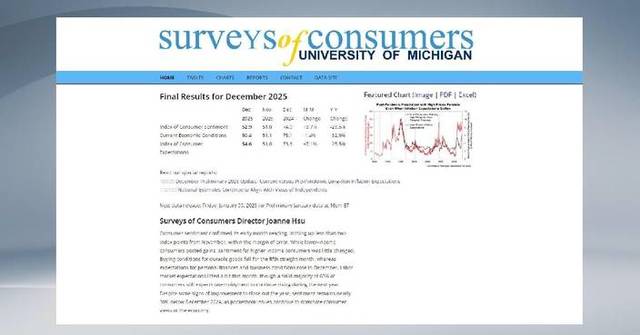
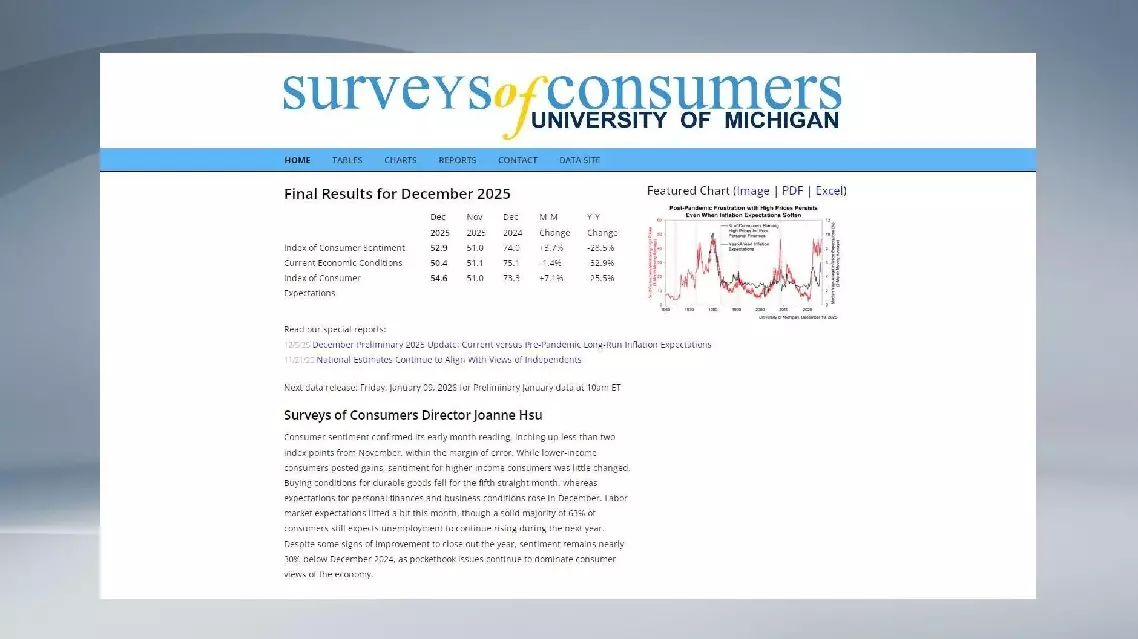
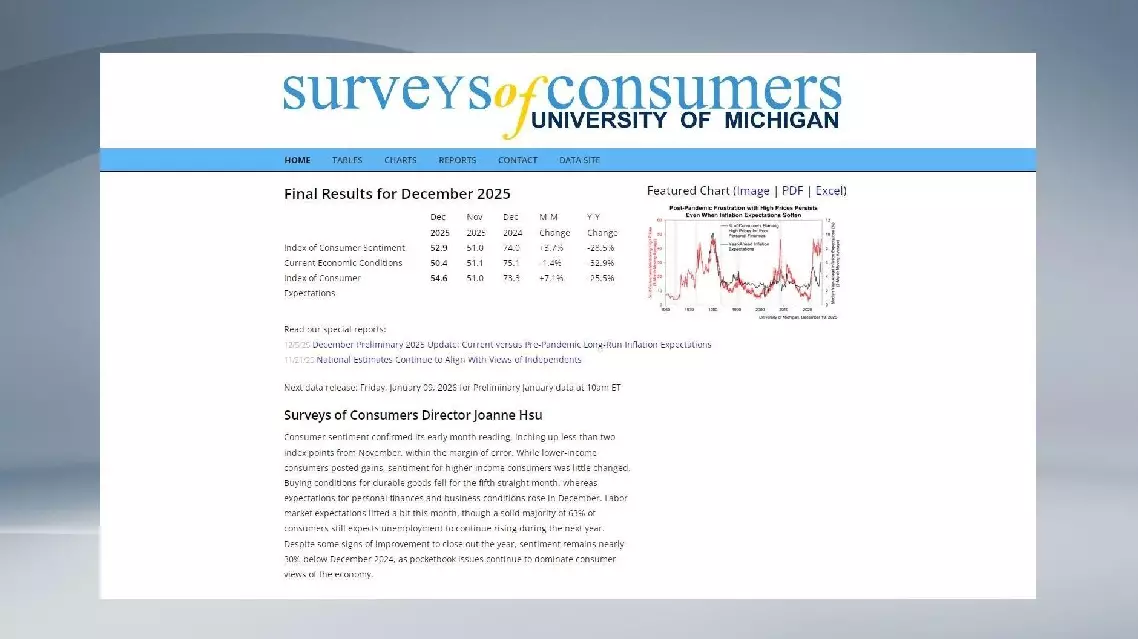
The U.S. Consumer Sentiment Index released Friday by the University of Michigan (UM) Surveys of Consumers rose to 52.9 in the December 2025 survey, up from 51 in November but below last December’s 74.
Consumer sentiment remains nearly 30 percent below December 2024, in large part due to continued concerns about pocketbook issues, particularly the strain of high prices and the prospect of further weakening of labor markets, said Joanne Hsu, director of the UM’s Surveys of Consumers.
The Current Economic Conditions Index fell to 50.4, down from 51.1 in November and below last December’s 75.1. The Index of Consumer Expectations rose to 54.6, up from 51 in November and below last December’s 73.3.
About 47 percent of consumers spontaneously mentioned that high prices are weighing down their personal finances, unchanged from November and well above the 35 percent seen a year ago. High prices as well as the impact of tariffs continue to be top issues for consumers when it comes to major purchases, the survey shows.
Throughout 2025, consumers have anticipated that a deterioration in labor markets loomed ahead. In December, about 63 percent of consumers expected unemployment to worsen in the year ahead, up from 40 percent a year ago.
“The escalation of tariffs in this past spring spurred fears of catastrophic inflation among consumers,” Hsu said. “While those fears abated as tariff policy have since eased, consumers are still expecting inflation to remain elevated for the foreseeable future, thus diluting the potential purchasing power of their budgets.”
U.S. consumer sentiment rises slightly in December: survey
U.S. consumer sentiment rises slightly in December: survey
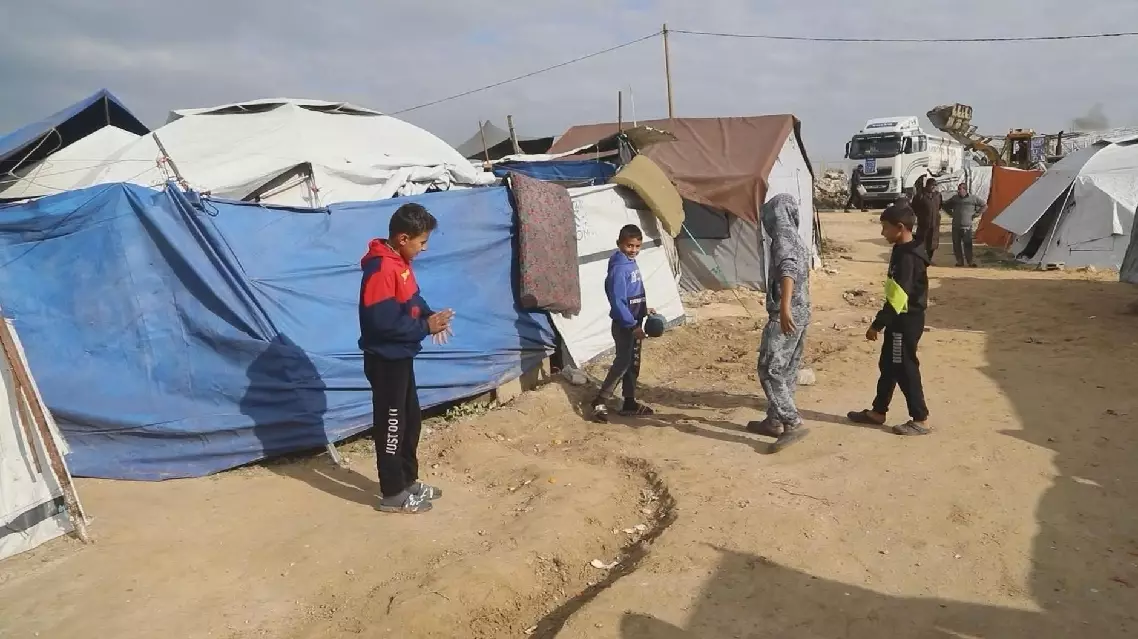
Gazans living in tent camps are facing a lethal threat from extreme cold as they lack access to essential humanitarian aid, adequate clothing to stay warm, while the fragile tents provide little protection against the bitter cold and heavy rain.
A severe storm that hit the war-torn Gaza Strip over the past few weeks has already killed 13 displaced children in tent camps, according to local medics.
“We often receive children suffering hypothermia at the hospital, and unfortunately some of them couldn’t survive the coldness. In some instances, children were found deceased upon their arrival at the hospital. This has become an extremely harsh reality for children in the Gaza Strip,” said Mohammed Jarbooa, doctor from Al-Rantisi Children’s Hospital in Gaza.
The most recent victim was a toddler in the Khan Younis area, where tens of thousands of makeshift displacement tents have been set up since the conflict between Hamas and Israel erupted more than two years ago.
These tragedies highlighted the vulnerability of the temporary shelters to cold weather and the lack of supplies, winter tents, mobile homes and the territory that need to enter the Gaza Strip based on the recent agreement between Israel and Hamas mediated by the U.S., Egypt and Qatar in October.
Many displaced residents in Gaza have voiced their concerns on the worsening situation.
“I’m so worried about my children. As you can see, my son is not adequately dressed. I wish we can at least receive blankets for the children to withstand the cold weather. Our tents still have several leaks and our clothes and blankets have not yet dried from the last rain,” said Hanadi Al-Jamal, a displaced Palestinian.
Another displaced mother, Um Fadi al-Ghoul, described similarly harsh conditions.
“During the rain, both we and the children were practically swimming in rainwater during the rain. We have been left helpless with no aid to turn to. When it rains, we could be drowned and we have nothing to stay warm. We only received one blanket in the camp and we are a family of five, how can one blanket be adequate? I also have one child dealing with disability and kidney condition,” she said.
The International Committee of the Red Cross has called for the concerned authorities, particularly the Israeli authorities, to allow more aid supplies, tents, mobile homes and displacement materials into Gaza. Meanwhile, Hamas also urged the U.S. to intervene immediately and pressure the Israeli government to allow those aid supplies and uphold commitments to the ceasefire reached between Hamas and Israel.
Despite a peace agreement was reached between Israel and Hamas, the dire humanitarian situation in Gaza is yet to see improvements.
Extreme cold poses lethal threat to displaced Gazans in tent camps