
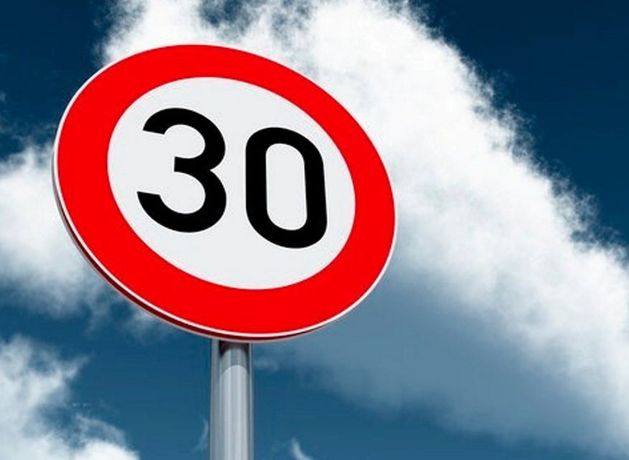
Councillors will be taking part in workshops next year to discuss how the speed limit review will be implemented across the county
Following an announcement by the Department of Transport in October, councils have until March 31, 2027, to implement the new urban speed limits.
The move follows changes introduced earlier this year, when the speed limit on many rural and local roads was reduced from 80kmh to 60kmh.
Mayo councillors have been told they will take part in workshops in the second quarter of 2026 to determine how the urban speed limit review will be applied across each municipal district.
Assistant Head of Roads at Mayo County Council, Conrad Harley, explained the process at a December meeting of the Westport and Belmullet Municipal District.
The urban limits will be implemented differently from the local road speed limit review, which saw some local roads’ speed limits decrease from 80kmh to 60kmh.
Mr Harley explained that the process, which saw all local roads brought down to 60, and then byelaws were used to allow certain roads to return to their original 80kmh speed limit, would be different from how the speed limit for urban roads will be set.
“In the urban street limit review, they have taken away the change of speed limits, and they are asking us to do byelaws for anywhere we want to bring down to 30kmh,” he said.
This means that the local authority must facilitate statutory public consultations where members of the public can be involved in the decision-making process and make representations on proposed speed limit changes.
Mr Harley said the department has provided a “specific methodology” for delivering the new limits, and that the focus will be on the “fringes of towns where vehicles are breaking the speed limit”.
However, unlike the rural and local road change, reducing speeds will be a second priority.
“The department wants to bring in safety measures to reduce the speed of the road first, and then bring the speed limit down as a second measure,” Mr Harley explained.
This includes implementing measures such as pedestrian crossings, speed bumps, narrowing curbs, and narrowing junctions.
He acknowledged that these measures often “aren’t that appetising for the people who live locally”, but acknowledged that these measures have a positive effect in bringing down speeding vehicles.
Concerns were raised that responsibility for traffic calming and speed reduction measures is being placed back on local authorities, despite earlier promises that these changes would be delivered at a national level.
“I make no apology in saying this, our national TDs have let us down,” said Cllr Peter Flynn.
“We have delayed this countywide scheme for the best part of five years on the basis that the Government will enact some form of traffic calming around our schools and urban areas,
“Now they are coming back after five years, saying ‘sorry, we are going to give it back to you as local councillors to figure out’, it really is unacceptable”
“It is beggars belief that we are back here, five years on, and the Government has effectively washed their hands of it,” he added.
The upcoming 30kmh speed limit change will apply to all urban areas across County Mayo, including towns, villages, and the areas around schools.
Schools located within urban zones will have a permanent 30kmh limit. For schools outside of these areas, a temporary 30kmh limit will be introduced during morning drop-off and afternoon pick-up.
The speed limit review forms part of the Government’s Road Safety Strategy, which aims to halve fatalities and serious injuries on Irish roads by the end of the decade.
This article has been funded by the Local Democracy Reporting Scheme.