
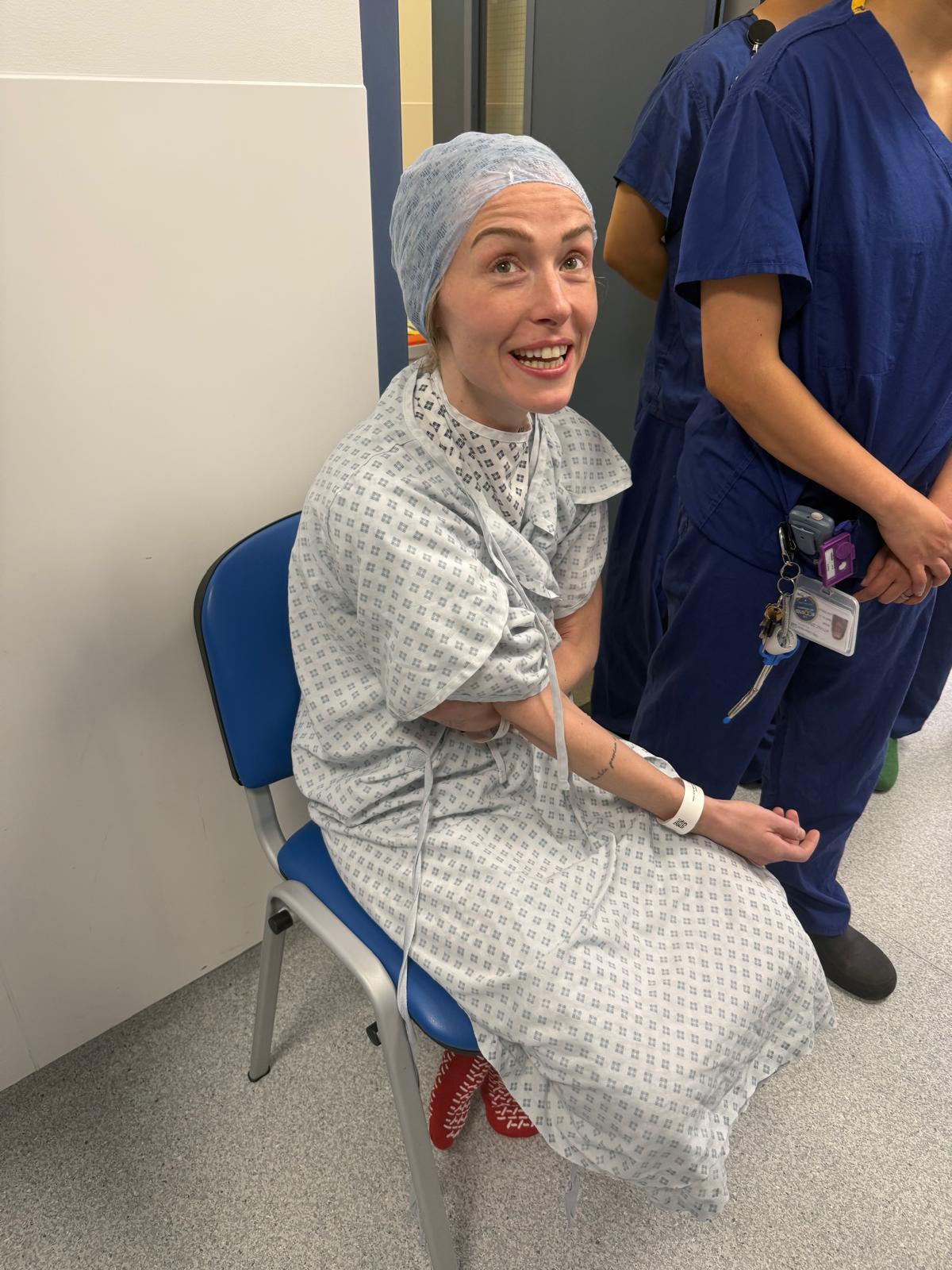
Waking to the sound of the surgeons and anaesthetists greeting me, I was aware of the bright overhead lights, but I also couldn’t seem to see anything. There was a searing pain across my chest and upper abdomen. I began to feel a rising sense of anxiety — not just about my own wellbeing, but because I wasn’t the only one in our family undergoing major surgery that day. Just down the corridor, in a larger operating theatre, my baby daughter Ruby was about to become the recipient of the segment of liver that had just been removed from my body.
That day, Wednesday, June 11, was the culmination of months of worry, research and preparation as we undertook the life-changing journey of living donor transplant surgery in an attempt to improve my adored, medically complex little girl’s quality of life.
When Ruby was born in October 2023 we had no knowledge of what was to come regarding her health. She was discharged as normal the day after her birth and followed up by community midwives, who were happy with her initial progress. The first alarm bells began to sound at around three to four weeks, when weight gain and feeding were proving to be a significant challenge. At the time, her only diagnosis was that of an “un-greedy baby”. That changed dramatically at around two months, when ultrasounds showed that she had huge volumes of fluid in her abdomen and around her heart, and she was rushed to Great Ormond Street Hospital (GOSH) for immediate life-saving treatment.
Our first Christmas morning as a family was in intensive care. At just under three months she was diagnosed with the rare metabolic condition known as PMM2-CDG, a diagnosis she shares with an estimated 1,000-2,400 others worldwide, and one that threw up so many complications that it has seen her spend most of her young life at GOSH, where my husband, Steve, or I would take turns staying in a single bed in her room.

Ruby was diagnosed with the rare metabolic condition known as PMM2-CDG
Ruby’s condition is multi-systemic, and had a particularly detrimental effect on her liver from a very early stage. This turned out to be the cause of the dangerous episodes of fluid retention, inability to gain weight or grow muscle, and also two catastrophic seizures, which saw her requiring full resuscitation and admission to the paediatric intensive care unit (PICU), because her liver could not adequately filter her blood, resulting in a toxic level of ammonia in her system. These were the most terrifying times of my life.
At first, a transplant was discussed only as a last resort (“We do not expect that to be the case,” the consultant said), but as time passed it became clear that it had the potential to be, not an all-out cure, but transformative within the context of her condition. Sure enough, after an in-patient assessment in King’s College Hospital’s Rays of Sunshine Ward, including extensive scans and blood tests, as well as careful discussions about the efficacy and safety of this major procedure, it was confirmed that Ruby was indeed a candidate for a liver transplant. She would be the first PMM2-CDG patient in Europe to receive one.
• Born an addict, my adopted daughter’s heartbreaking struggle
I knew immediately that I wanted to be her donor. As well as being in good health, and a close genetic match, I felt that any other option such as waiting for a deceased donor would simply delay things for too long. I also instinctively felt that, as her mother, it had to come from me.
My work-up began the following week, starting with a day of imaging and tests. The living donation process is complex and considered high risk, not just for the recipient, but the donor as well. Of course, the benefit of helping my child to become well was worth any risk, but I found that my deeply emotional connection to the whole process was often tempered by the surgeons’ meticulous precision and logic. I was assigned a living donor transplant co-ordinator, the wonderful Matilda, who helped to humanise the process by translating clinical scenarios into words I could actually understand and thus helping me prepare mentally, allowing space for me to deal with the myriad and often conflicting emotions of excitement, fear, impatience and relief, alongside the many practicalities.
The first date we were offered was in April, which, when given in January, felt like a very long time to wait. Little did I know at the time, but we would end up waiting longer. Liver transplants in vulnerable babies are complex enough already, and the element of a live donor adds an extra layer, meaning that various things have to be in place, such as two surgical teams being available at the same time, plus two theatres in close proximity, two intensive care unit (ICU) beds for the aftermath, and so on. Only about 15 of these surgeries take place a year.
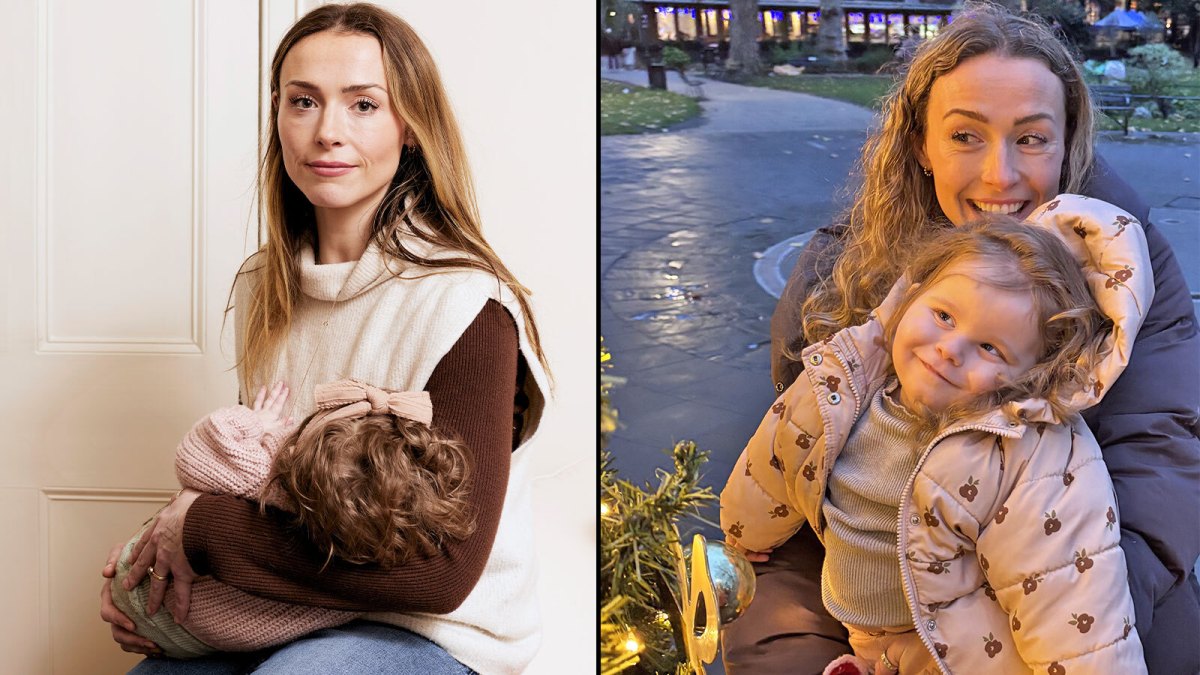
Being in good health and a close genetic match, Elle signed up to be her daughter’s liver donor
Although we were all ready to go in April, another child awaiting transplant had become more critical, and so urgently needed to take that slot. Our new surgery date was pushed back until May, which didn’t feel too long to wait by then, but the anxiety of trying to keep our daughter well, especially when we were spending so much time in hospital, was extreme. Even in protective isolation, she could easily destabilise in ways that would see the surgery cancelled.
On the eve of the May surgery date, one of Ruby’s blood tests came back with a value that didn’t give anyone the confidence that the surgery should go ahead on that date. No one expects medically complex patients to have perfect blood results, but one organ that must be functioning well — because of how it is initially “hit” by the immediate aftermath of the surgery — is the kidneys, and her kidney function was not as they would have liked it to be. As one surgeon said, “She would have probably been fine — but probably isn’t good enough.” I take great comfort from the care that they displayed with that decision. I attended the meeting with the surgeons, where the news of cancellation would be confirmed, fully gowned up and in compression socks, because I had to be fully prepared to go, just in case.
Another month passed, and this time, finally, we were good to go. I spent the night before in Ruby’s hospital room and had collected my gown and surgical wash in advance, so that I could spend the maximum amount of time with her before making my way down to be admitted. My surgery was to take place first in the schedule; they would remove the piece of my liver, check that it reflected everything they had on file, and only then would they bring her down to theatre.
When the time came, once I had kissed Steve goodbye, there was a surprisingly buoyant atmosphere among the surgeons and anaesthetists as they got to work — a bit like what you might find on the morning of a long-anticipated wedding day. I had assumed I would be asked to count down from ten while put to sleep, but instead I was cut off by a deep, chemically induced slumber mid-sentence, telling the medical staff about my job as a yoga teacher. The next thing I remember was being roused energetically, a nasogastric tube being pulled out of my nose as my eyes began to flicker open. It felt as though nothing had happened and no time had passed, but in fact my surgery alone had taken about four hours.
• Pioneering gene therapy tricks teen’s cells and transforms his life
News of Ruby’s surgery progressing well helped to bring me out of my daze. I was taken to ICU, where I remained pretty much bed-bound. Finally, after two days, I was reunited with my daughter in the PICU. I was pushed up in a wheelchair, and even sitting upright seemed to take all of my energy, but it was worth it to see Ruby. She was intubated, and hooked up to more IVs than I had ever seen, but I felt a wave of calm wash over me, because my mother’s instinct told me in that moment that she was going to be OK.
The days and weeks that followed were tough, not least because Ruby’s newly suppressed immune system meant that any virus or infection going latched onto her. Still recovering from my own surgery meant that picking her up to comfort her was a physical challenge. My energy and focus felt significantly depleted; trying to maintain advocacy for a child with a rare and complex condition in hospital asks a lot of you at the best of times, so it was during this period that I found myself truly at my limit. It was worth it.
They say that you get a completely different child post-transplant — but, while the changes are indeed remarkable, I would say that Ruby is more herself than ever before. Inside her previously poorly, undernourished body there had always been a vibrant, funny, kind and curious little girl with an incredibly mighty spirit, and now her body possesses the strength and energy to let her live fully. She is bigger and stronger, having gained two kilos in weight and added length to her frame in just a matter of weeks post-surgery. She feeds better and has much more energy.
Her cognitive development has accelerated significantly. It is clear that her eyesight has improved and that she is able to engage and interact more. She can now sit independently for short periods, there is a new stability to her spine and core, and as a result she is exploring more movement, thus able to really start embodying her clear curiosity for the world around her.
Although some very exciting and potentially curative treatments are now in trial, this liver transplant, for her, has been the most meaningful step forward in her condition so far, and it places her in the advantageous position of being well enough to really benefit from the many promising potential therapies on the horizon, such as gene therapy and novel work into brain organoids. We, and other families as part of CDG UK, are working hard to fund and collaborate with numerous research bodies.
There are still challenges. We were warned that the first year post-transplant is the toughest, as they keep the levels of immunosuppression particularly high to ensure her body doesn’t reject the transplanted liver. This has come with its own complications as she has become more susceptible to catching bugs with the winter months. While seeing her progress developmentally has been a joy, my main hopes for the transplant were that she would not be so frequently unwell and that she would not have to spend so much of her life confined to the four walls of a hospital cubicle.
After some joyful time at home as a family, there has been a lot more hospital time lately. We are looking at Christmas here at Great Ormond Street, which will be our second, as we were able to spend last Christmas at home. However, we know that this is just another bump in the road, of which we’ve endured many, and we are fortunate to have a lot of support from our family and friends.
• Hopes rise of a cheap cure for rare genetic diseases
As well as having her whole extended family around her, she is supported by an excellent community team of nurses, therapists and play workers, and, when at home, has ongoing outpatient monitoring from GOSH, King’s and University College Hospital. This has not been an easy journey, but one of its many gifts has been to remind me that real human kindness exists and it has introduced me to a wealth of individuals who make it their mission to care for you and to make your life that little bit easier.
I am frequently met with admiration when people learn that I was her donor, but I am simply doing what any parent would do for their child, given the chance. Fear simply isn’t an obstacle when your child’s life is at stake. On paper, PMM2-CDG can sound bleak, but when you meet my daughter, and all the other children like her, you realise that there is a whole, vital and life-loving person beyond the diagnosis.
You can support children living with PMM2-CDG by visiting cdg-uk.org/support-us and following @projectpmm2 on Instagram