
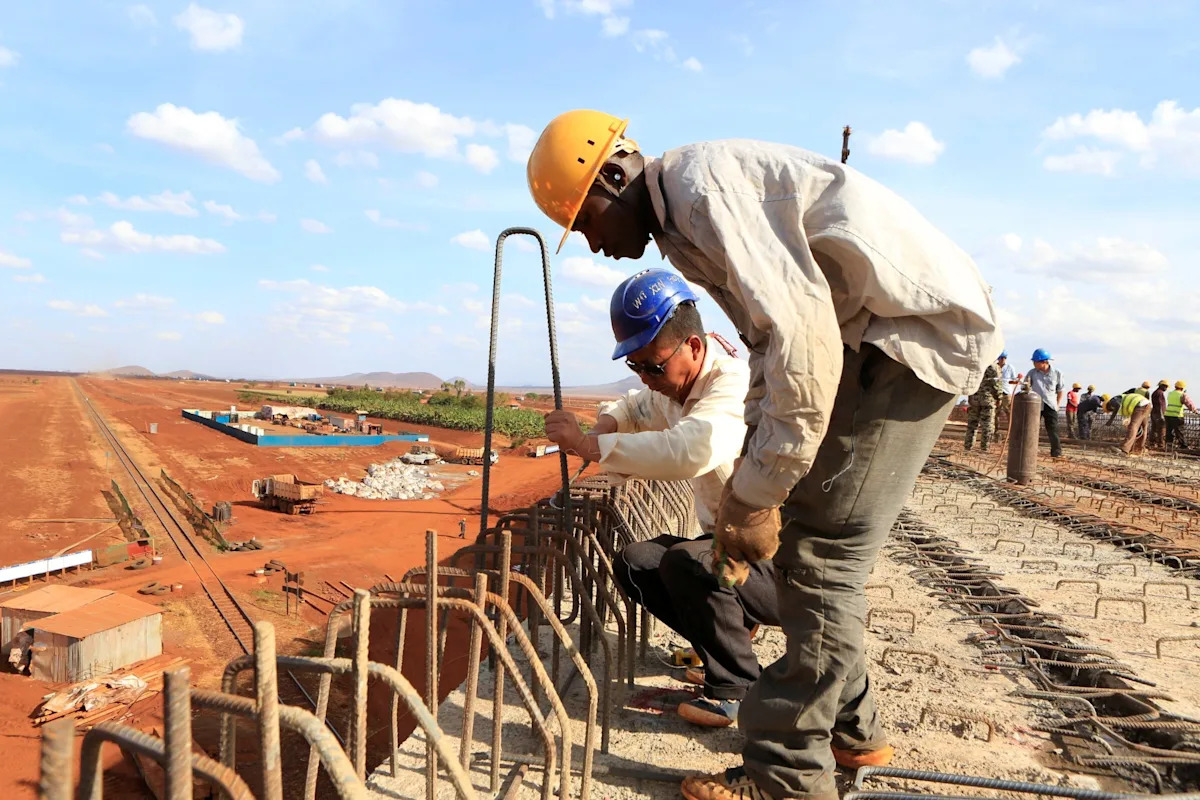
Chinese workers are returning to Africa in their thousands, reversing a decade-long decline and signalling a renewed focus on strategic mega-projects across the continent.
In 2024, there were 90,793 Chinese workers on contracted projects and labour services on the continent, an increase of about 4 per cent over the 87,078 recorded the previous year, according to data from the China Africa Research Initiative (CARI) at the Johns Hopkins School of Advanced International Studies.
The upturn marks the end of a downward trend that had persisted since 2015, when the workforce peaked at a record 263,696. This milestone coincided with China’s era of extensive bilateral lending, but it cooled as Beijing started adopting a more cautious approach to its financing for the Belt and Road Initiative projects.
Do you have questions about the biggest topics and trends from around the world? Get the answers with SCMP Knowledge, our new platform of curated content with explainers, FAQs, analyses and infographics brought to you by our award-winning team.
Now, as investment flows accelerate, mostly driven by Chinese state-owned enterprises, worker numbers are once again increasing in key countries across Africa.
Last year, nearly half of all Chinese workers on the continent were concentrated in five nations, namely Guinea (11,071), the Democratic Republic of Congo (9,694), Egypt (8,170), Angola (7,444) and Nigeria (6,035).
CARI clarifies that these statistics track personnel on formal state contracts, while excluding the broader population of informal migrants, including traders and shopkeepers.
The recent increase in Chinese workers is largely driven by major resource projects such as Guinea’s US$20 billion Simandou iron ore venture – an ambitious consortium-led operation that requires substantial skilled labour for its final construction phase.
Deborah Brautigam of CARI said this reflected the changing nature of Chinese overseas contracting, which was increasingly focused on large-scale, state-backed projects.
She noted that the high number of Chinese workers for Tanzania was likely related to the ongoing construction of the Standard Gauge Railway.
In contrast, Angola, which has historically been the biggest recipient of Chinese loans in Africa, often collateralised by oil, serves as a case study for earlier models of engagement.
From hosting more than 50,000 workers in 2013, the boom collapsed following the 2014 oil price crash and the subsequent tightening of Chinese credit. As a result, formal worker numbers fell to just 6,484 by 2023, with a modest rebound to 7,444 last year thanks to new energy projects.
Meanwhile, worker exits from Ethiopia, Nigeria, and Niger follow the completion of major infrastructure phases and the ripple effects of political instability.
Brautigam said she was in Ethiopia in September and was told the exodus of Chinese investors and workers was significant due to ongoing conflicts and the government’s precarious finances.
Similarly, in Niger, the departure of workers was closely linked to conflict and multiple attacks from insurgent groups following the 2023 military coup that ousted president Mohamed Bazoum, according to Brautigam.
Brautigam suggested a similar pattern in Nigeria. “I imagine this is also true for Nigeria where the security challenges have been ratcheting up.”
Looking ahead, the modernisation of the historic Tanzania-Zambia Railway, or Tazara, is expected to draw a further influx of skilled Chinese personnel. It required a workforce of about 50,000 Chinese workers when it was first built in the 1970s, marking the beginning of China’s long-term infrastructure legacy in Africa.
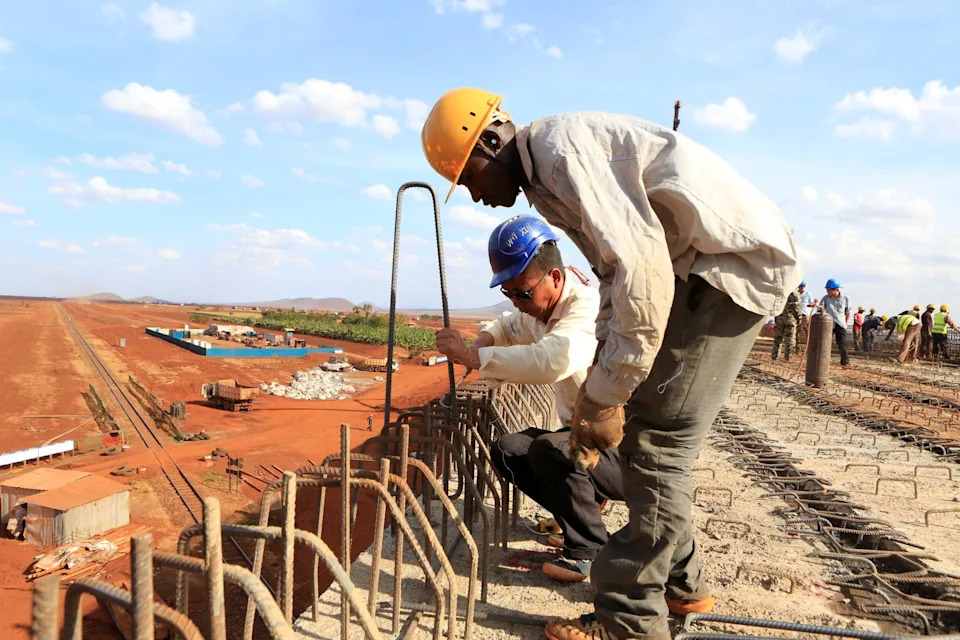
The high number of Chinese workers for Tanzania is likely related to the ongoing construction of the Standard Gauge Railway, according to researcher Deborah Brautigam. Photo: Reuters alt=The high number of Chinese workers for Tanzania is likely related to the ongoing construction of the Standard Gauge Railway, according to researcher Deborah Brautigam. Photo: Reuters>
Kai Xue, a Beijing-based investment lawyer, observed that despite the recent uptick, reported worker numbers remained in a “post-Covid plateau” well below 2019 levels.
He said this was not due to a loss in market share, as Chinese firms still secured 56.3 per cent of Africa’s international contractor revenue in 2023, citing a report by Engineering News-Record.
“A more plausible explanation for the lower worker numbers since Covid is labour localisation. Chinese construction firms have increasingly relied on local African labour rather than importing Chinese workers,” Xue said.
Official data sets only captured dispatched personnel, saying broader population estimates for Nigeria and Kenya had risen since 2017, he added.
Present estimates suggest there are 100,000 Chinese people in Nigeria and roughly 50,000 in Kenya – up from 2017 levels of about 40,000 in both nations – indicating a rise in long-term residents and independent migrants.
“The total Chinese population may still be growing through entrepreneurs and longer-term residents who are not captured in the NBS worker statistics,” Xue said, referring to China’s National Bureau of Statistics.
He said this shift towards independent migration was likely positive for community relations, as entrepreneurs were viewed as creators of local opportunity rather than competitors for technical roles.
This article originally appeared in the South China Morning Post (SCMP), the most authoritative voice reporting on China and Asia for more than a century. For more SCMP stories, please explore the SCMP app or visit the SCMP’s Facebook and Twitter pages. Copyright © 2025 South China Morning Post Publishers Ltd. All rights reserved.
Copyright (c) 2025. South China Morning Post Publishers Ltd. All rights reserved.