
By the time the end of year round-ups roll round, some of the stories that preoccupied us during the previous 12 months already seem to belong to a different era. These are the news stories that shouldn’t have been news – not because the media should not have covered them, but because it’s hard to believe these were real events and not a fever dream.
Ireland has always had talent for getting worked up about all the wrong things – particularly, it seems, where women are concerned – and this year was no exception.
Molly Malone
Ireland finally began to take sexual assaults on women seriously last spring. About time, you might think – except there was a caveat. A tiny one. The sexual assaults in question did not involve real women, or even a real woman, but a bronze statue of Molly Malone.
We have a long history of projecting all sorts of values on to statues in this country. Forty years ago, it was the statues of Our Lady that were seen to sway, raise their hands and cry blood read tears in places like Ballinspittle and Asdee. In the mid-1980s, moving statues became a battleground for the piety of a nation that found itself squarely divided into believers and sceptics, and a distraction, or maybe a purification, from the awful events in Tralee, where the revelations of the Kerry babies tribunal were laying bare the darkest corners of the Irish psyche.
In 2025, a year when woman after woman bravely waived her anonymity to go public with stories of violence and abuse, because they had had enough of the collective silence on this issue, a bronze statue of a voluptuous Molly Malone became an unlikely receptacle for anger about sexual assault. The groping was mostly being perpetrated in broad daylight by tourists who seemed to think that sexually assaulting statues is a quirky Irish tradition up there with kissing rocks, getting drunk and standing vigil outside Wilson’s Hospital School.
The great groping crisis lodged itself into the national consciousness in the first six months of the year in a way that actual sexual assaults on actual women rarely do. Campaigners who wanted the statue moved safely away from the grasping paws of tourists pointed out that children shouldn’t be exposed to daylight sexual assault, even of a statue. And Molly was, they insisted, “a national treasure” who deserved better.
 Molly’s minders: why the famous Dublin statue is being protected from tourists
Of course, Molly Malone isn’t a national treasure; she is a figment of our cultural imagination and a kitsch landmark. It’s also worth pointing out that if children are going to be exposed to the normalisation of sexual harassment, the device in their pocket is a more likely medium than a bronze statue.
In the event, far more effort was put into protecting the statue from sexual assault than doing anything about the women routinely being groped and harassed on our streets or subjected to unspeakable violence in their homes. Over the summer, Dublin City Council hired stewards to stand around and protect Molly, and hotly debated the merits of putting flower beds around the plinth at a cost of €20,000.
[ More than half of women have experienced sexual violence during lifetime – CSOOpens in new window ]
Meanwhile, research by Red C in October found that, in the past year alone, 19 per cent of women aged 18-34 – nearly one in five – had experienced sexual violence. A national survey in early 2025 found that 41 per cent of women have been harassed or intimidated while out walking or running. But look, as long as Molly is shielded from handsy tourists, the women of Ireland can all feel a bit safer.
A woman principal
Castleknock College, an all-boys fee-paying school in Dublin, made the news in October for doing something shockingly progressive. A mere 190 years into its existence, it appointed a woman principal. Is this a sign to the women of Ireland that one of us might one day get to be minister for finance or even president of the GAA? Or – who knows – a priest? Don’t panic, Pope Leo; I’m just kidding.
Skorts
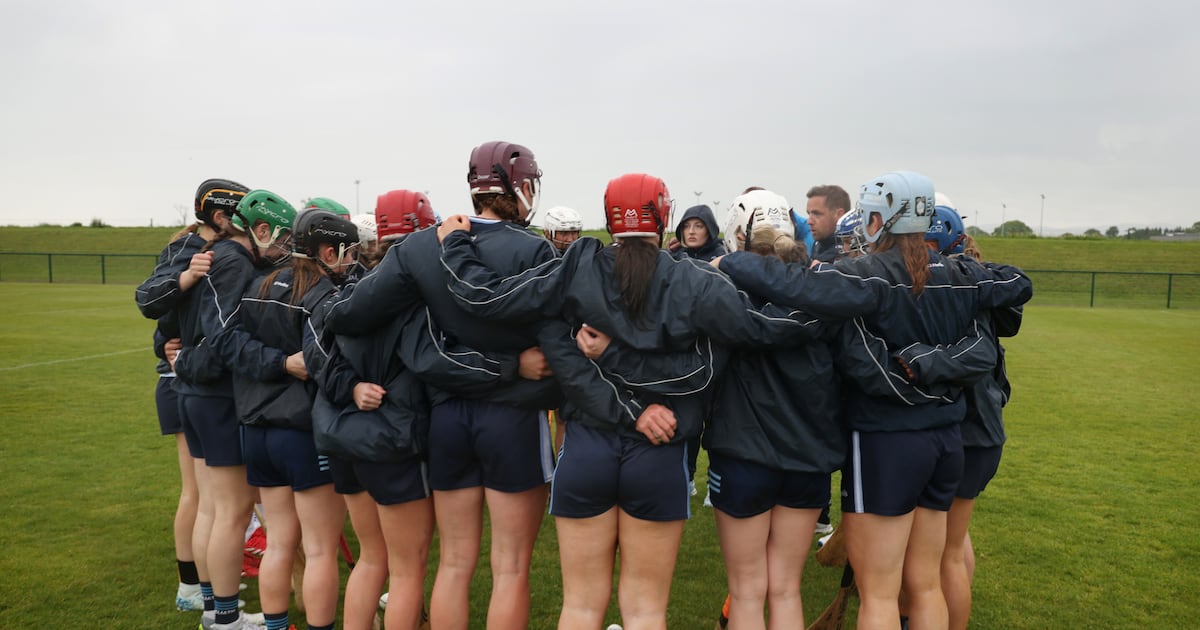
The blazing row over whether camogie players should be permitted to wear plain old shorts instead of awkward, uncomfortable skorts – which erupted during the Leinster senior camogie semi-final and rapidly ascended to what Malachy Clerkin has called “Saipan proportions” – was mystifying at the time and is no less baffling now. It was like opening the papers one morning to discover that the world was up in arms because Naomi Osaka had forgotten to put on her corset and bloomers to play at Wimbledon.
A brief recap in case you missed it (unlikely, since it dominated the news for days and was covered everywhere from the Financial Times to The New York Times): Dublin and Kilkenny players decided to take a stand on the back of a GPA report which showed that 70 per cent of them felt uncomfortable wearing a skort. So they decided that anyone who wished to should wear shorts; anyone who wanted to wear a skort could. So far, so uncontentious, you might think. But if you did, you wouldn’t be reckoning on the GAA’s nostalgia for a time when women knew their place and dressed like the “ladies” it still insists we are.
The issue ended up being the subject of a Special Congress on May 22nd at Croke Park, where a resolution was overwhelmingly passed in favour of allowing players to choose what they wear. The fact that there even had to be a discussion – let alone a Special Congress, a secret ballot and weeks of media coverage – about whether it was fine to force women to wear a garment that most see as uncomfortable, ugly and signalling them out as somehow not full athletes tells you everything you need to know about the GAA’s attitude to gender equality.