
New plans drawn up to help the State handle extreme weather and climate change are severely inadequate, a damning assessment by the climate change watchdog has found.
The Climate Change Advisory Council (CCAC) argues the sectoral adaptation plans (SAPs) lack detail, funding and clarity around who is responsible for delivering them.
In a letter to the Government, the CCAC said it was “extremely disappointed” with the plans, which it said contained “limited commitment to tangible actions”.
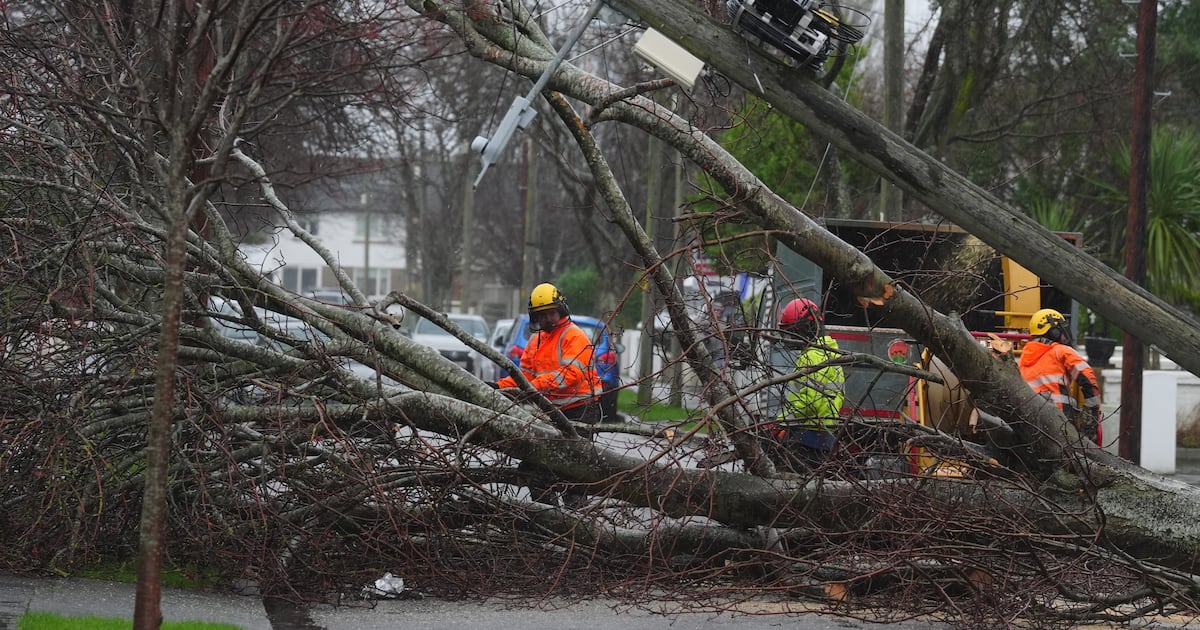
The letter was sent shortly before Christmas, several weeks away from the first anniversary of Storm Éowyn, which revealed serious weaknesses in the country’s power, communications and water services.
It also comes as a report published at the weekend showed climate-related disasters inflicted huge economic harm around the world in 2025, with the 10 costliest causing more than €100 billion in damage.
That bill, calculated in an analysis for Christian Aid, covered only insured losses and not the incalculable cost of lives lost and communities uprooted.
Storm Éowyn caused more than €300 million in damage to insured property in Ireland.
To prepare for similar extreme weather events and other climate change impacts such as drought, flooding, sea level rise and heatwaves, the Government last month published 10 SAPs. They cover homes, businesses, farming, road, transport, schools, hospitals, water supplies, telecommunications and electricity networks, and the natural and built heritage.
They are meant to ensure all sectors are resilient to extreme weather events and can adapt to longer-term climate changes.
However, the CCAC’s assessment says: “Visions of resilience remain generic, and specific resilience targets are not defined.”
The council’s letter said: “Without greater ambition, resourcing and a more systemic approach, the suffering of our vulnerable communities will increase further and the economic, health and environmental impacts from extreme weather events will continue to mount.”
It expressed particular concern about the protection of homes, especially those in coastal areas.
“Issues such as coastal erosion are not dealt with,” its assessment says.
It says the plans do not properly address disaster risk reduction or look beyond the country to see how climate impacts elsewhere risk disrupting life in Ireland.
The letter and assessment report were addressed to Minister for the Environment Darragh O’Brien and copied to Taoiseach Micheál Martin and Ministers Jack Chambers, James Browne, Jennifer Carroll MacNeill, Martin Heydon, Patrick O’Donovan and Peter Burke.
CCAC chair Marie Donnelly, and the chair of the council’s adaptation committee, Prof Peter Thorne of Maynooth University, signed on the council’s behalf.
[ ‘It’s like Noah’s Ark’: The man saving every native seed in IrelandOpens in new window ]
They point out that the council met departmental officials to help with the plans, made recommendations for inclusion and critiqued the draft versions, and still they came up short.
“There is no clear costing of activities within the SAPs, no indication of investment needs and no clear commitment of available funding to support implementation,” the assessment says.
“This is concerning, as lack of financing was already identified as a key constraint to the implementation of the first iteration of SAPs [in 2019].”
It says most SAPs “lack specific actions and defined milestones” and “focus heavily on risk identification and information gathering, with limited commitment to tangible adaptation actions”.
In a statement, the Department of Climate, Energy and the Environment said the Government thanked the CCAC for its help in developing the plans.
“We will examine the report they have submitted to look at adaptation policy going forward,” it said.
It said actions in the SAPs would be funded from departmental budgets and the National Development Plan.
It added that from January a new national adaptation taskforce would “monitor delivery of the actions and address cross-cutting issues and risk ownership in a holistic way”.