
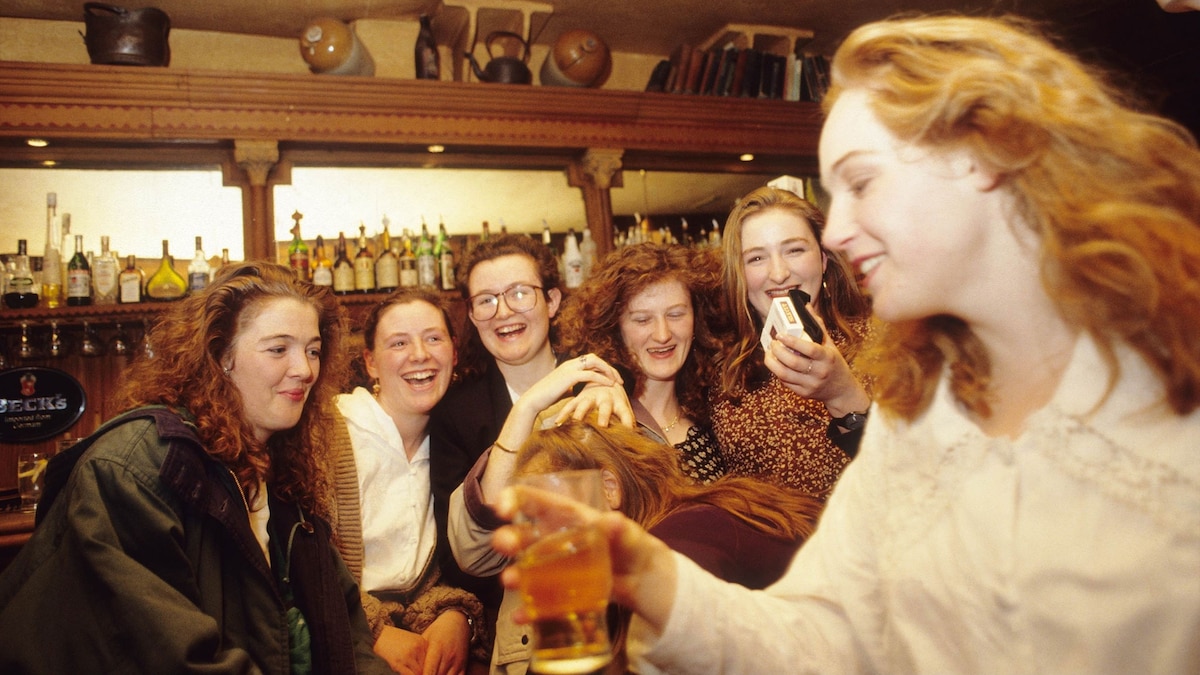
Groome’s father owned a pub, The Clodagh, in County Tipperary, where she grew up. (Groome moved to Cork for college when she was 18.) On Nollaig na mBan, her father cooked dinner and cared for the kids. Groome also recalls that the men left the pub early and headed home. “Women’s Christmas was the night that there would be no man in the pub,” she says, an unusual scene in Ireland where men predominantly filled the pubs until the late 1970s. A female-only holiday was an anomaly, notes Groome, especially in rural Ireland where traditional gendered roles dominated. “I think this quaint looking Irish tradition was quite feminist really in its own way,” says McGarry via email. Nollaig na mBan acknowledged women’s labor and even rewarded women for it, even if just for one day.
(National Geographic’s essential guide to visiting Ireland)
The (temporary) reversal of gender roles
By the mid-20th century, the holiday largely died out. McGarry it was less popular during her mother’s time, but that prior generations in her family celebrated. When McAuliffe first moved to Dublin in the 1990s as a student, no one knew about it, she says. In the last 20 years, a new generation discovered, or rediscovered, Nollaig na mBan, according to McAuliffe, who says it’s now celebrated nationally. “It’s pretty much written into the calendar,” she says.
Since the holiday’s inception, like in most parts of the world, gender roles have significantly changed: many more women work outside the home and many more men are involved with childcare. “It is a little bit outdated and we’re all aware of that,” says 24-year-old Vivienne Sayers, who was born in Cork and who now promotes Irish language and culture on social media where a quarter of a million people follow her. “So now we’re adapting it now to our more contemporary ideals of, ‘let’s just have it as a day to partake and enjoy ourselves and celebrate women’.”
It’s an inclusive celebration, notes McAuliffe. “Young women, older women, married, single, straight, gay, trans all celebrate,” she says. In its essence, Nollaig na mBan is about women supporting women, celebrating women’s contributions and female friendships, says McAuliffe, Groome and Sayers. “We are claiming [the holiday] more as part of our identity and because of this resurgence now in Irish culture and language,” Sayers adds who shared a short video about Nollaig na mBan on Instagram in January last year, which over 18 thousand people liked.