
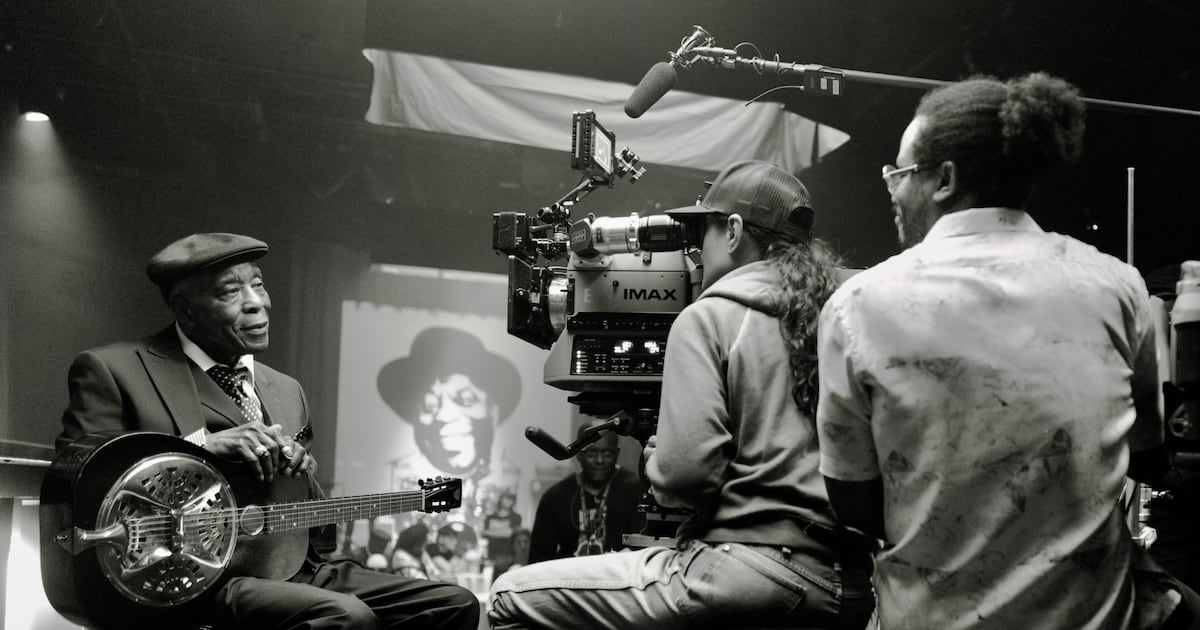
We could run up a few candidates for cinema’s person of 2025. Paul Thomas Anderson exceeded high expectations with One Battle After Another. Jessie Buckley confirmed her boss status in Hamnet. And so on.
But a strong case should be made for the continuing phenomenon that is Ryan Coogler.
The amiable African-American director, now 39, has been on a roll since his Fruitvale Station, a taut social-realist piece that introduced the world to Michael B Jordan, took the top prize at Sundance in 2013. Mainstream success came with Creed, his Rocky sequel, and Black Panther, for the Marvel Cinematic Universe.
Sinners, Coogler’s period horror epic, still felt like something of a gamble. Yes, it has Jordan, who also headlined Creed and Black Panther, in dual roles as shifty twins. But it is not part of an established franchise.
It breaks down into an extravagant musical that offers origin stories for a clutter of black music genres. It flitted across film genres. Nobody was sure, when it opened back in April, if it could make back its considerable budget.
“Everybody had skin in the game,” Coogler tells me. “But I would not have been comfortable inviting all these people to participate if I didn’t see a reasonable path to success – whatever that looks like. The whole time I was aware that it wasn’t guaranteed. We would need all hands on deck throughout every section of the process.”
Sinners duly became a phenomenon. It took $367 million (€315 million) at the box office. It received ecstatic reviews. But films this bloody and extreme don’t score with awards bodies. Right? It opened too early, anyway, for voters with famously short memories. Right? Think again. This month Sinners landed seven Golden Globe nominations, including those for best drama picture and best director.
It will surely score as well at the Oscars.
Such is the continuing buzz that, eight months after its release, Coogler and I are meeting to talk about the film and make sense of its impact.
“It’s rare for me to watch a movie after I’m done with it,” he says. “I’m usually sick of it. This movie I haven’t gotten sick of. If I had to watch it tonight I wouldn’t be bummed out. That’s got to count for something. Yeah, I like it quite a bit.”
The film follows twin brothers as, after the first World War, they return to Mississippi with plans to set up a speakeasy. On opening night the music summons up spirits who threaten the viability of the operation and the purity of the employees’ souls. It touches on racism. It wonders about the origin of the blues and soul music.
The biggest surprise for viewers in Ireland was its engagement with the Irish experience. Jack O’Connell plays Remmick, an Irish vampire – part of an unholy musical combo – who offers the speakeasy staff money to gain entry.
There is maybe something here about how white musicians appropriated black music. But there is also a sense of how African-Americans and Irish immigrants faced related challenges.
“I started thinking about Dracula,” Coogler says. “Bram Stoker is Irish. I was researching him and researching this Irish folklore character. The Abhartach? I have trouble saying the word. But a lot of people say that this is where he got the idea of Dracula from.”
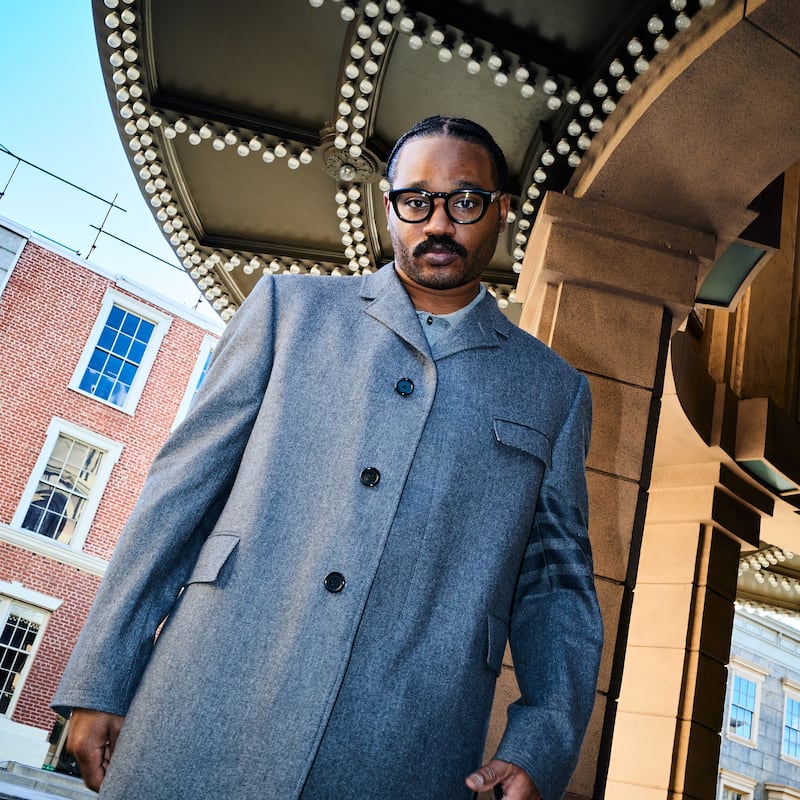 Sinners: Ryan Coogler. Photograph: Ariel Fisher/New York Times
I must be frank. This is all news to me. Patrick Weston Joyce, in his book The Origin and History of Irish Names of Places, which first appeared in 1869, speaks of Abhartach as “a magician, and a dreadful tyrant, [who] after having perpetrated great cruelties on the people … was at last vanquished and slain by a neighbouring chieftain; some say by Fionn Mac Cumhail.”
“He was this Irish nobleman who couldn’t be killed,” Coogler says. “I was doing that research, and it became very clear that this was a choice for this character’s backstory.”
As you may have gathered, Coogler, though gently spoken and thoughtful, is an intense sort of fellow. Raised in Oakland, California, as the son of a community organiser and probation counsellor, he did well academically at school, then initially entered college on a football scholarship.
After graduating in finance, he moved on to the University of Southern California’s school of cinematic arts. Acclaimed shorts eventually led to him shooting Fruitvale Station and to acclaim at Sundance.
He is a thinker. And he brings that rigour to his ponderings of the relationship between the Irish and black communities.
“We were able to interrogate the absurd nature of racism in the Americas,” he says. “It falls apart in so many different places. When you go back to certain areas you see how the concept of whiteness was fluid. When you look at certain groups of European immigrants they weren’t considered white.”
The Italians? The Irish?
[ The 50 best films of 2025: No 20 to No 11Opens in new window ]
“Yeah, Italians, Irish, Jewish folks, many groups from eastern Europe, Polish people,” he says. “It was a very fluid concept. I wanted the vampires to retain their humanity. I wanted these to be the most human vampires ever put in fiction, if that makes sense.
“I wanted the character to have a perspective on race that didn’t match his phenotype. I wanted him to be extremely confusing for these black characters – and for the white ones. I wanted him to be constantly modulating and changing, because that’s the immigrant story.”
This makes sense. Remmick, of the Irish undead, is saying “come with us” to the black characters. That is both a welcome and a threat.
I joke with Coogler that, after seeing Sinners, I found the phrase “Rocky Road to Dublin!?!!?” scrawled in my notebook. O’Connell and his crew perform a blasting version of that Irish song – a famously angry tale of exile – while lurking outside the speakeasy. It’s one of the most stirring moments from all cinema in 2025.
“I find Rocky Road to Dublin to be such a fascinating song,” Coogler says. “Because it’s very upbeat and it’s very powerful, especially Luke Kelly’s version. But, when you break down the lyrics, it’s f**king sad.
“That contrast is just like the blues. I can sing this and get fired up. But if I listen to what’s happening to this character, it’s got labour in there, it’s got migration, it’s got the longing for home. And it has affirmation of humanity. You know what I’m saying? And he’s about having a weapon to ward off ghosts and goblins. Ha ha!”
Sorrow and defiance together? Luke Kelly would have understood that.
“Yes, in lockstep with each other,” he says. “It is an affirmation of humanity, saying, ‘I’m a f**king human being. I shouldn’t be subjected to these indignities’.”
[ No, I didn’t watch Sinners all the way through before giving it five starsOpens in new window ]
Coogler has been an important figure for black cinema in this century. There was genuine celebration in the African-American community when Black Panther landed so successfully in 2018.
The film scored the best opening box office ever for a black director and went on to become the first superhero film to be nominated for the best picture Oscar. Sinners proves he can have similar success with original material.
Is black representation in the film industry now close to what it should be?
“No. No, probably not,” he says, cautiously. “I feel really fortunate to have made five movies that had theatrical releases. A lot of it for me was timing.
“I think if Fruitvale, my first film, had been made a year later, it probably would have been a different path for me. It would probably have been a streaming movie if it had been made a year later. That is the landscape now for young filmmakers coming up.”
We will, before moving quietly on, note that this conversation about a Warner Bros film takes place shortly before Netflix makes its enormous offer for that giant of the industry. On a happier note, Coogler is now moving hopefully through the rapids of Oscar season. My understanding is that awards strategists – there really are such things – will be hanging over his shoulder, nudging him in this or that direction.
“That’s not really my place,” he says. “The award strategists are more talking to other folks – marketing folks, people in the studio. I’m just promoting the movie. What that means is I’m just having conversations about a piece of filmmaking that I really love.”
He laughs contentedly. He has much to laugh about. It’s been some year for Team Coogler.
Sinners is available to rent on digital platforms