
More second-hand homes available to buy in Dublin than other areas, new report shows
House prices have risen in Dublin by 28pc since the beginning of the decade, according to the 2025 Q4 – The Year in Review Daft.ie Sales Report.
Dublin was far from the region with the greatest price increases, though, as Connacht (excluding Galway city) and Ulster have seen prices rise by 67pc since early 2020.
There were approximately half the number of properties available for sale in December 2025 when compared with the average for 2015 to 2019, the report found.
While prices are still increasing, economist and report author Ronan Lyons said the pace of increases may be slowing, from 8.7pc in 2024 to 7.4pc last year.
“Nonetheless, despite the modest decline in the speed of increases, the market remains very tight,” Mr Lyons said.
“As our market heat measure shows, the gap between the initial list price and the ultimate transaction price is close to a record high, at over 6pc.
“The volume of second-hand homes put up for sale over the course of the year was just over 53,000: this is down compared to a peak in early 2023 of 63,000, before the interest rate shock kicked in. And it’s also down about 10pc compared to the pre-Covid level.

Report author Ronan Lyons
“A fall-off in supply of about 10pc is one thing. But trends in availability on the market, which reflects both supply and demand, are worse.
“There were only 11,500 second-hand homes available to buy on December 1. While that’s up 7pc year-on-year, it is less than half the pre-Covid average of over 26,000. And Dublin partially offsets this, as its supply picture is rosier than elsewhere.”
And shortages in availability are much more acute outside Dublin.
Listed prices are now, on average, 41pc above pre-Covid levels and just 10pc below the Celtic Tiger peak.
The report highlights that in Dublin the average list price before sale for a three-bed semi in Q4 2025 was €611,000, 3.1pc higher than a year before.
Mr Lyons added: “The gap between the initial list price and the ultimate transaction price is close to a record high, at over 6pc.”
While there had been a “slight slowdown in inflation,” list prices rose by 5.5pc in 2025, compared with 6.8pc in 2024, he said.
The report noted it’s “consistently been the case for over a decade,” that prices rises “stem from a lack of supply”. “The typical gap between the initial listed price and the ultimate transaction price has grown sharply since 2003 and in late 2025, was 6.6pc nationally,” it added.
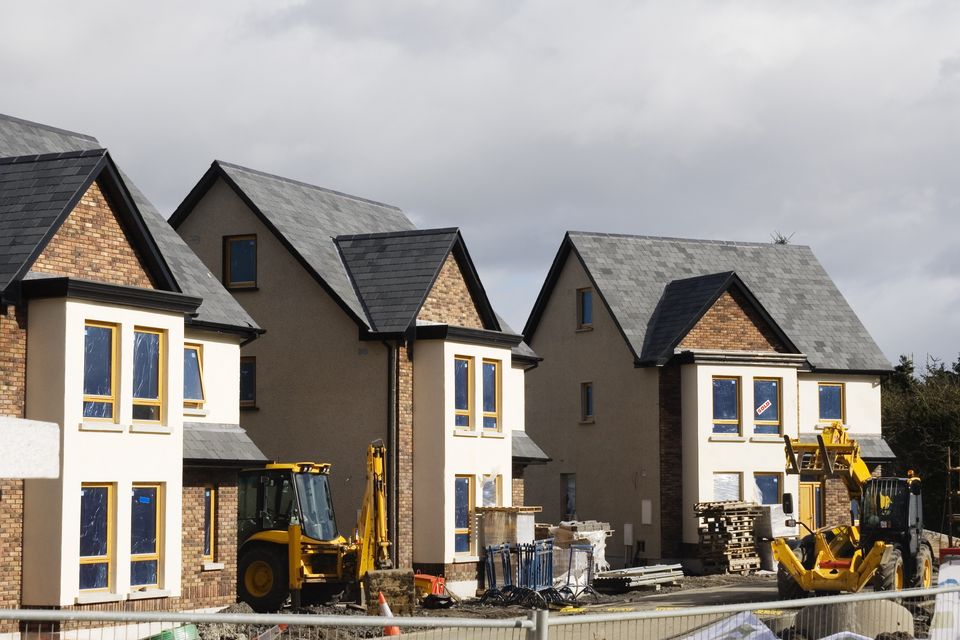
The average house transaction price increased by 7.4pc during 2025, as lack of supply fuelled hikes. Photo: Getty
Today’s News in 90 Seconds , Friday Januaray 2, 2026.
Nationally, the average price of a three-bed semi-detached house in the final quarter of the year was just over €423,000.
The report underscored Dublin had smaller percentage price rises in 2025 compared with other regions, due to an increase in supply there.
In Connacht-Ulster (excluding Galway), list prices for a three-bed semi rose by, on average, 11.6pc during the same period when compared with a year before. The average list price here was €246,000.
Leinster (excluding Dublin) recorded list prices of €363,000 for three-bed semis, with “for sale” prices on average 7.3pc higher than a year ago. Munster (excluding cities) recorded prices of €300,000 for the same type of properties.
List prices on average were 5.7pc higher than a year ago. In other cities the list prices were €390,000, on average 4.5pc higher than a year before.
The country requires, realistically, over 60,000 homes a year every year for decades
Mr Lyons said the “price dynamics” are a “reflection of the interaction between underlying demand and supply”.
“Much commentary, including much of mine, focuses on the supply of newly-built homes. And this is, of course, important,” he said.
“The country requires, realistically, over 60,000 homes a year every year for decades to address the housing deficit built up over the last generation and to meet new housing requirements. But the second-hand market is still the dominant source of supply for homes to purchase.”
Mr Lyons said report data showed “very different dynamics between Dublin and the rest of the country over the last 10 years”. He added: “Dublin saw a bigger increase in second-hand supply between 2017 and 2019 than elsewhere, where the gains were more incremental.
Covid lockdowns had a “big impact” and “recovery in 2022 was uneven,” with supply in Munster still 20pc below pre-Covid.
“In Dublin, second-hand supply is almost back to 2019 levels, while in Munster, it is still one-third below,” Mr Lyons said.
“Without supply, healthier conditions, more stable prices, will still be out of reach.”