
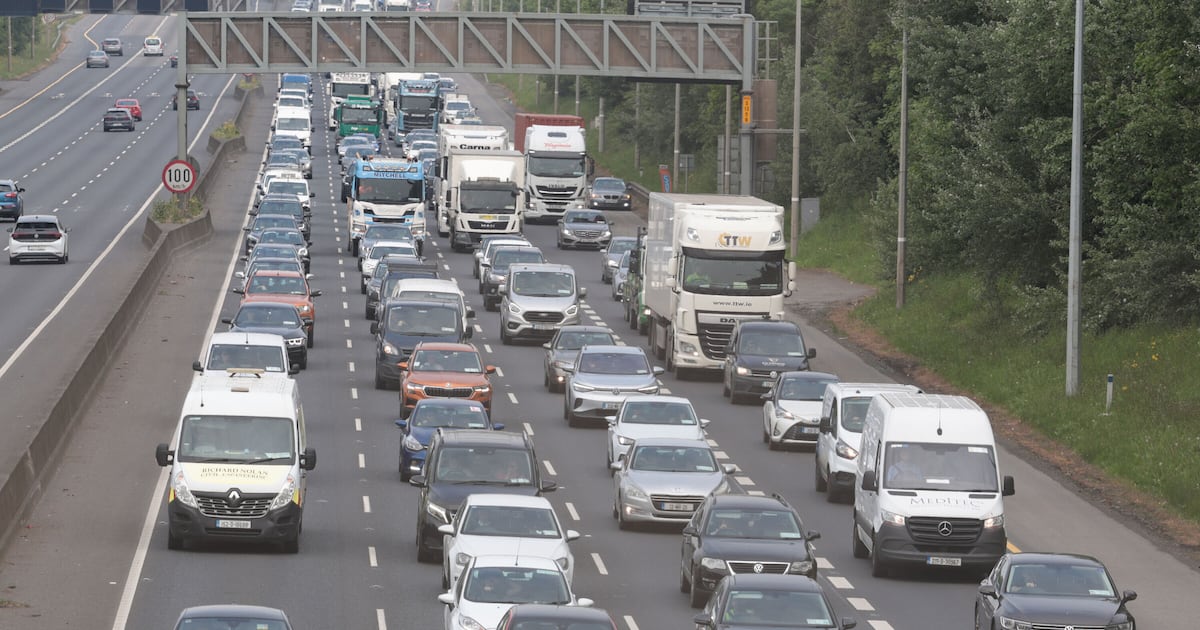
In a global sense, Irish car sales are blip. Our annual new car sales figures of in and around 125,000 cars is about the same number of new cars as are sold in one medium-sized British city, or one large US dealership.
Yet motoring is rarely out of the headlines here, whether it be congestion, electrification, or fatalities. So what’s going to change in 2026?
Will EV sales grow? Will chargers keep up?
It seems as if electric car sales will continue to grow in 2026. This year was actually a record year for EV sales in Ireland, with 23,431 new electric cars (and that’s fully battery-powered, we’re not rolling in hybrids and plug-in hybrids to bolster the figures) registered up to the end of November.
That’s a massive turnaround from 2023 and 2024, which saw EV sales plummet on a combination of concerns – the cost of the cars, the lack of a proper charging network, fiddling with the Government’s incentives to put buyers into electric cars.
EVs now make up 18.79 per cent of the total Irish new car market, which is getting closer to the still-dominant petrol-powered slice of the market – 25.14 per cent – and just ahead of diesel, on 17.1 per cent. Let’s not forget diesel. In 2015, and off the back of a vehicle taxation system that had been built around its lower carbon emissions compared to petrol, cars using the black pump achieved near total hegemony, with more than 75 per cent of new cars sold thus powered. It shows you just how quickly things can turn around.
According to the Society of the Irish Motor Industry (Simi), electric car sales have gone up in every single county, so at last battery power is spreading beyond its urban, short-range roots.
Opel Ireland’s managing director James Brooks told The Irish Times: “The rate of growth may taper somewhat, but we estimate fully electric passenger car models will equate to better than 20 per cent of the model mix in early 2026 with more new EV brands arriving in Ireland such as Leapmotor, together with a wider than ever choice in value-led electrified models.”
Opel is at the forefront of those value-led electric models – it’s just introduced a new Frontera, a small SUV with the badge from a 1990s classic (if the original Frontera can ever truly be called such). The all-electric versions of this new Frontera are actually cheaper, by a significant amount, than the petrol or petrol-hybrid powered versions.
That has been a growing trend throughout the year, as several very affordable electric models arrived on the scene. That was arguably kicked off by Renault’s temptingly priced new electric 5, but possibly the most significant affordable EV was the Hyundai Inster.
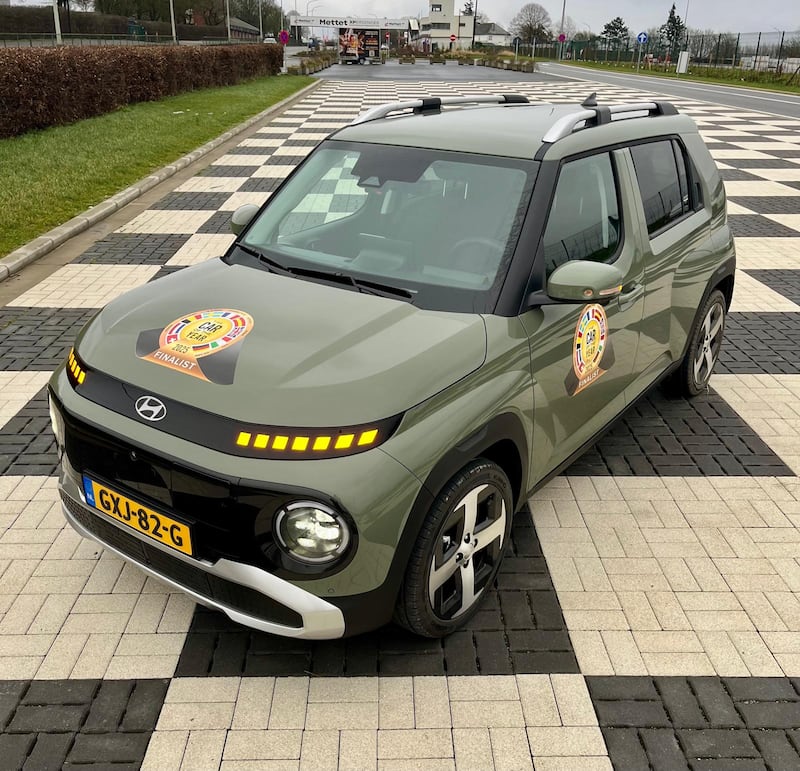 Hyundai Inster
The Inster is genuinely breaking down barriers in electric car ownership in Ireland.
“We’ve seen customers, certainly I can think of one in particular, who have been ready to sign on the line for a larger, used car and then, when they see an Inster in the showroom, they change their minds,” says Hyundai Ireland’s managing director, Stephen Gleeson.
“In Irish dealerships, the majority of people will come in and say, ‘What can you do for me in the line of a second-hand car, for around €15,000-16,000?’ Now, an Inster isn’t quite that cheap, but our dealers can then talk to a lot of those customers and do the right deal that puts a new, electric, car within their reach.”
However, charging remains an issue, especially if you’re not able to park off-street and charge at home using cheap night-rate electricity. In 2025, with the ESB putting up its public charging prices, The Irish Times calculated that it would actually be cheaper to run a petrol or diesel engined car than to charge an average electric model using only public charging points.
If you can charge at home, that equation dramatically reverses, and some EV owners have found that the combination of solar panels, an efficient electric car, and some clever gaming of the electricity supply rates means they can practically run their car for free (net of insurance and tax, of course, plus the upfront costs of installing solar panels and a home charger).
We do need more public chargers, though. Anyone who’s driven an EV on a long journey through the UK or France will all too well know that Ireland’s charging network is still too sparse. While the aspiration of a charger in every car parking space might be on some minds, according to the experts, that won’t work.
[ Gearing up for 2026: the most exciting cars launching next yearOpens in new window ]
Ivan O’Connor, commercial sales director of charging firm ePower, says “the grid simply wouldn’t take that”.
Circle K’s managing director Ciara Foxton recently told The Irish Times that it has installed charging kit in 10 forecourts that it cannot get connected to the grid.
However, O’Connor also says that work is afoot on a dramatic expansion of the fast-charging network, even at places which would once have been earmarked for slower destination chargers.
“We’re working with 200 sports clubs to install charging points, and we’re recommending that they put in a bank of slow chargers and also a fast charger, especially where they might be serving a local community where there are townhouses and apartments. It’s more cost effective, and it doesn’t put undue pressure on the grid,” he says.
O’Connor’s thesis is that instead of the sort of French model, which sees banks of ultra-high-speed chargers capable of 400kW charging power, servicing 16-24 cars at once, Ireland needs to focus on smaller hubs, with high-speed charging for maybe four or six cars at any one time – not least because the ESB is proving wary of connecting hubs with charging capacities above 200kVa to the network, fearful of the power drain they might cause.
EVs – even net of the EU’s decision to roll back on its 2035 combustion engine ban – aren’t going away. They’re going to become more and more popular, and the Government, the grid, and the charging providers are really going to have to step up.
What about new legislation?
While Budget 2026 was largely a quiet one for the Irish motorist – aside from the usual baked-in hike in fossil fuel costs thanks to the carbon tax uptick – there is some new legislation in 2026 that will need our attention.
The biggest change is to the learner driver system, where the Government is trying to prevent people from endlessly circulating on a provisional licence by making them restart the entire process of getting a learner permit and passing their theory test. The new regulations state that you have to take a test – and physically take it, not just book and cancel – within four years of getting your permit.
Will that make a difference to road safety?
Arguably not much, and it’s been a grisly year on that front, but such years will continue as long as the Government continues its long-standing policy of blaming the victims for road deaths.
The EU, having so far allowed something of a free-for-all when it comes to car makers fitting massive, distracting screens in cars (while simultaneously punishing mobile phone use) has seen the light, and from 2026 will require that car makers fit physical buttons for functions such as wipers, indicators, horn, hazard lights and emergency calls.
There will also be beefed up regulations surrounding camera systems that monitor driver distraction, but that will only be of use if the legislation includes careful calibration so that drivers are not chided for simply glancing out of the side window, or even for checking their rear-view mirrors, as often happens now.
European car makers seem to be in turmoil in the face of increasing Chinese success. With brands from MG to Xpeng to Geely all looking at European factory proposals, don’t expect the Chinese tide to recede any time soon
Such petty annoyances have seen a majority of drivers choosing to switch off such systems, negating any potential safety benefit.
Other legislation will allow for increased hands-off driving when using high-tech driver assistance systems. We’ve already sampled such tech, spending more than half an hour cruising along a Spanish motorway in a BMW iX3 electric SUV fitted with the new tech, hands firmly in our laps, the car steering itself happily.
It even works well on twisty roads with oncoming traffic, but there are limitations: one busy motorway junction threw the car’s systems into confusion, and was a stark reminder that such robotic set-ups only really watch the car directly in front, whereas a skilled driver would be looking three, four, even five cars ahead and better anticipating the situation.
Will China take over?
European car makers seem to be in turmoil in the face of increasing Chinese success. MG, which may have an old British badge but which has been an entirely Chinese brand since 2005, has at times in 2025 outsold the likes of Tesla and Fiat in Europe.
BYD, China’s biggest car maker, tripled its annual European sales last year. The EU responded with higher tariffs for EVs made in that country, suspicious of bushels of state cash being funnelled to Chinese car makers.
However, the move has largely backfired – the tariffs were also applied to cars built in China by European brands such as Dacia and Cupra, and tipped the big Chinese brands into setting up shop here. BYD has opened its first European factory in Hungary. “Localising in a mature region like Europe is a very important project. It requires knowledge, dedication, investments, and resources at all levels,” says BYD’s regional managing director for Europe, Maria Grazia Davino.
[ BYD hits sales goal, set to topple Tesla as biggest EV makerOpens in new window ]
More than that, BYD wants people to forget it’s Chinese at all. Stella Li, executive vice-president of BYD, and answerable only to the company’s founder, Wang Chanfu, previously told The Irish Times: “Our thinking is that if we want to be present in Europe, we must become a European company. Yes, labour is more expensive, but we have to be there, and we have the advantage that we make all of our components in-house, so that helps us to balance out the costs. But if you go to the market, you have to contribute to that community, to bring the jobs to that community, to that market where you are.”
With other Chinese brands, from MG to Xpeng to Geely, all looking at European factory proposals, don’t expect the Chinese tide to recede any time soon.
Will prices ever come down?
A big part of the appeal of the Chinese brands is that – just as with the Japanese brands when they broke through in the 1970s and the South Koreans in the 1990s and 2000s – they seem to offer better value for money. While driving enthusiasts might grumble that few, if any, Chinese-designed-and-made cars are much good from a driving point of view, most customers won’t care about that if they’re getting more tech for their money.
We have seen insane levels of price inflation in new cars in the past five years. Denis Le Vot, former chief executive of Dacia (who left under a cloud when he wasn’t promoted to the top job at Renault Group), noted at the beginning of 2025 that the average price of a family-sized SUV – and such cars are among the bestselling models in Ireland – have gone up by €10,000 since the turn of the decade.
A VW Golf now costs what a bigger Passat would have a mere decade ago. A humble Skoda Superb is now a €50,000 car. A mid-sized BMW now tops €60,000 or even €70,000.
Opel’s James Brooks hopes that the worst of the price inflation has now passed.
“There has been a lot of mandatory safety equipment added to vehicles in the last decade and, as such, there is an associated cost,” he says. “The industry has called time and time again for safety equipment to be exempt from VRT, to no avail. New vehicle price inflation has softened as chip shortages and other issues abated.”
Volkswagen Ireland, too, says it’s trying to bring down the cost of its cars.
“Over the past few years, price increases have largely been driven by global factors such as supply chain disruptions, rising raw material costs, and the transition to new technologies. While these pressures have eased somewhat, the industry is still adapting to stricter emissions regulations and advanced safety standards, which add value but also cost,” a spokesperson for VW Group Ireland says.
“That said, we have reduced the price on many of our electric vehicles in the past 12 months. For buyers seeking better affordability, we recommend exploring flexible finance options, competitive PCP plans, and our approved used car programme, which provides nearly new vehicles with full warranties.
“Additionally, we continue to introduce models with efficient powertrains and lower running costs, helping customers save over the lifetime of the car.”
Certainly, there are some strikingly affordable new models on sale now, including the Opel Frontera, the Dacia Spring, the Leapmotor T03, and the Dacia Bigster.
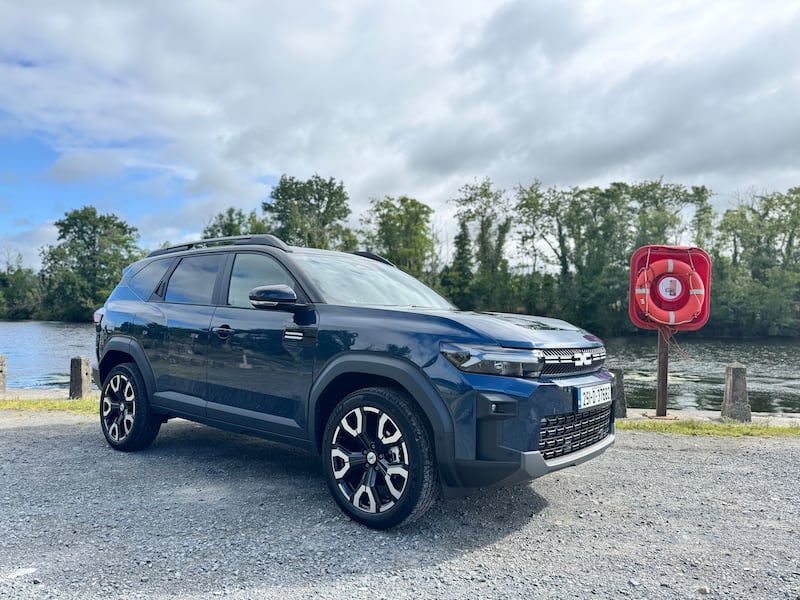 New Dacia Bigster
While Revenue remain deaf to pleas, it seems that the EU has listened and we’re waiting with bated breath to see new legislation which will encourage car makers to produce small, light, efficient cars to be sold in a new homologation category, which critically won’t require as much standard-fit electronic safety equipment, which is of dubious value at best anyway.
There’s an increasing focus on agency sales, whereby you purchase your car directly from the manufacturer (mostly online) and the dealer is there simply to hand over the keys. We’ll see more shifts to agency sales in 2026, including the likes of BMW, but there are mutterings about a loss of customer relationships and worries that agency sales don’t quite fit the tradition-bound Irish car market.
Then there’s the possible rise of biofuels and synthetic e-fuels. Such supposedly carbon-neutral fuels will gain huge publicity from March, when Formula 1 begins running its racing cars on them, but environmental activists decry the energy used to create such fuels and the potential for virgin palm oil to find its way into the biofuel supply chain.
Many companies in Ireland are touting the carbon-saving potential of hydrogenated vegetable oil (HVO) as a diesel substitute, but the jury’s still out on whether those carbons savings are genuine.
[ HVO is a climate ‘quick fix’ that could be worse than fossil fuelsOpens in new window ]
Then there are, more simply, the new cars to enjoy – the all-electric Range Rover, much delayed, should finally go on sale this year, adding electric power to one of the most desirable cars in the world. Volvo’s all-electric new XC60 will break cover in early January, but it will have to work hard to convince buyers that the Swedish company has fixed the software snafus that plagued its EX30 and EX90 electric models.
We might also see the new Alfa Romeo Giulia in both hybrid and electric forms, but that car will have its hands full with BMW’s all-electric new i3, which has a sexy, compact shape and a potential 900km range on one charge.
Cadillac, the great American luxury brand, also returns to Ireland in 2026, with a line-up of sybaritic electric SUVs, while Volkswagen – across its VW, Cupra, and Skoda brands – will unleash a new line-up of affordable small EVs, including the all-important new electric ID.Polo hatchback.
Possibly the most important electric car of all will launch in 2026 – Ferrari’s first ever electric model, the Elettrica. Ferrari calls it a four-door, four-seat sports car, but whatever it turns out to be, if the Prancing Horse can make batteries seem sexy, then maybe 2026 will represent a massive reset in motoring.