
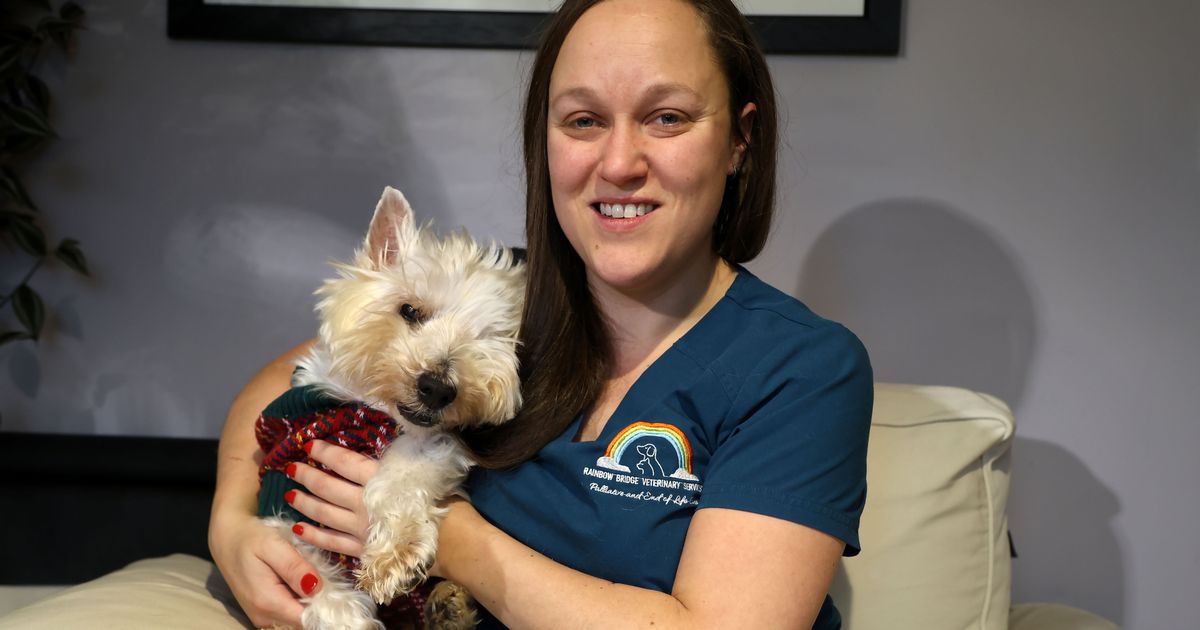
Dr Megan Anderson went about setting up Rainbow Bridge Veterinary Service after she welcomed Pip into her life at the end of 2023.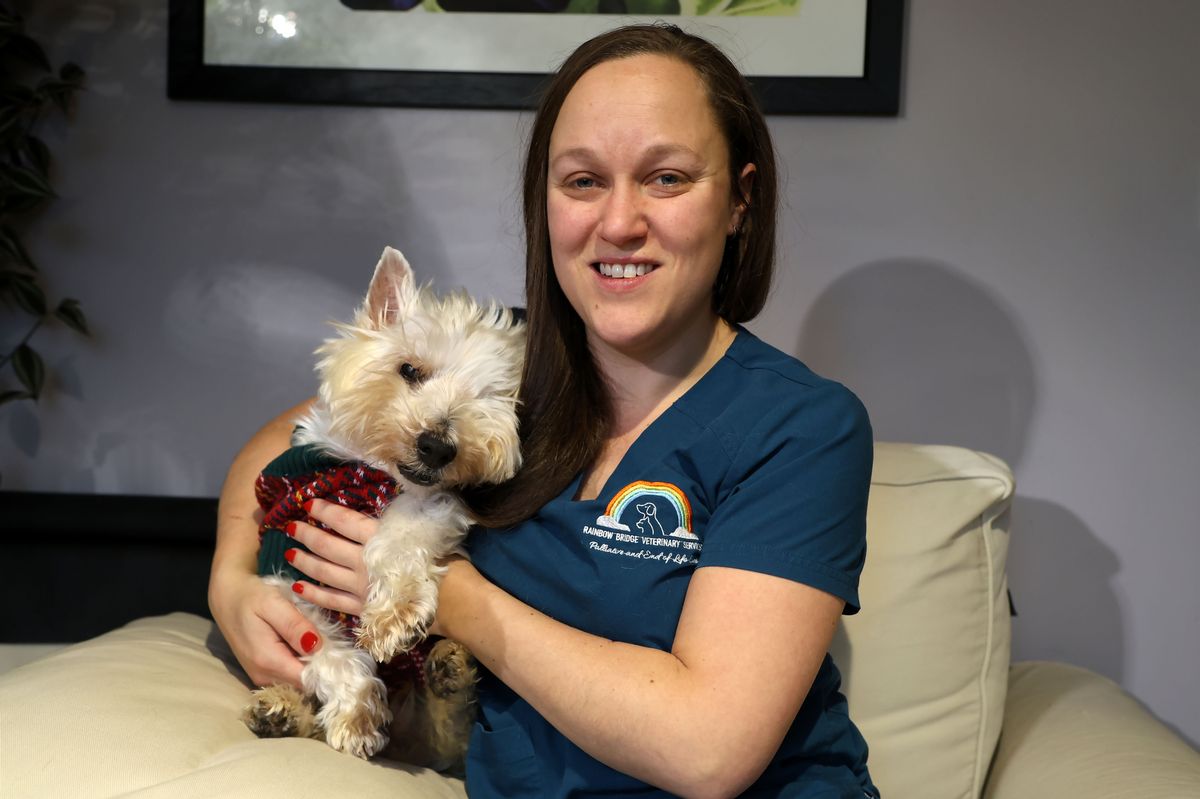 Dr. Megan Anderson of Rainbow Bridge VeterinaryServices, who runs Ireland’s only dedicated palliative hospice and end-of-life care service for pets with her 17 year old Westie, ‘Pip’
A vet who adopted a dog with health problems decided to launch Ireland’s first pet palliative service after seeing the significant improvement he made with proper treatment.
Dr Megan Anderson went about setting up Rainbow Bridge Veterinary Service after she welcomed Pip into her life at the end of 2023.
The Westie, who passed away at the age of 17, had a myriad of health problems, including a tumour on his shoulder, dementia, diabetes, and arthritis.
Initially, she only expected him to live for a couple of weeks, but soon realised that with proper management of his ailments, “time had reversed”.
After seeing firsthand how much Pip improved, along with the knowledge that there was a “gap” and “limbo period” between an owner receiving a chronic or terminal diagnosis for their pet and their death, she decided to take the leap.
The first-of-its-kind initiative, which was launched earlier this year to help pets through their final stages of life, means euthanasia isn’t the only option for aging and sick pets anymore.
She explained: “The first opinion vet has 20, 30, or 40 patients to see in a day, and they’re doing their best. There’s also a limit in terms of the amount of time that they can give you because they have lots of patients.
“Sometimes these pets just kind of disappear off their radar. They go home with some meds, and vets try to advise people on what could happen and what to look out for, and some of them they will see back regularly, and that’s great, but some of them they don’t see again.
“They don’t come back for meds, and then two, three, four months later they see them back, and you know it’s for euthanasia, or some of them you never see again.
“And you just wonder what happened there? Was it fear? Was it they they were afraid that if they came back, I was going to tell them they had no choice but to put them asleep? Was it that the pet passed away? Were they put asleep by another vet at home?
“There was this gap with these patients that we were just missing that last stage of their lives. I think it’s really important we do as much as we can for them because they’ve given us so much and we were missing it.”
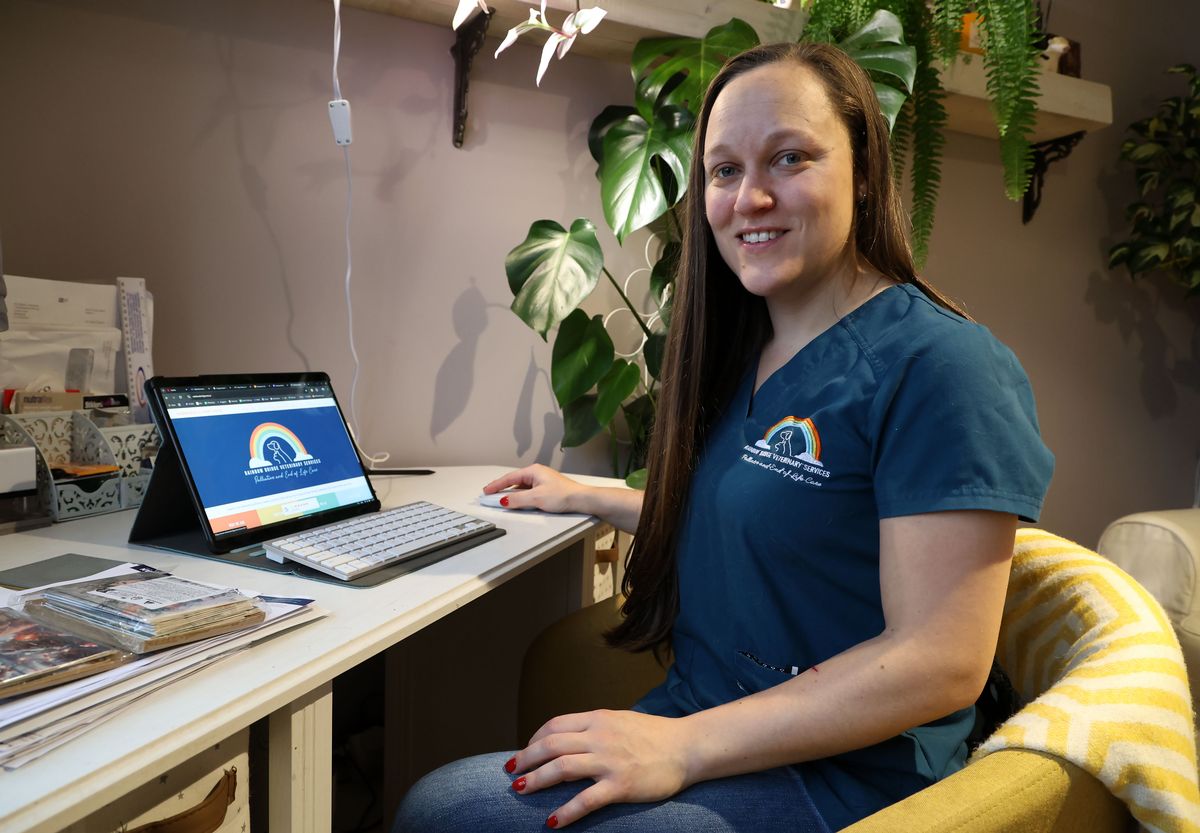 Dr. Megan Anderson set up Rainbow Bridge Veterinary Services earlier this year
Speaking about Pip, who passed away on December 14, she said: “He came to us with lots and lots of health issues, and I sat thinking ‘oh gosh, I will do my best to keep this dog alive for a couple of weeks over Christmas 2023.’
“Over a few weeks, he turned into a different dog, just good pain management, just proper management of his diabetes, treating his dementia. He was eating really well, he was engaging. It was like time had reversed for him.
“Like he still had all these issues, but he went from a dog where I was prepared to put to sleep at any minute to ‘oh, he’s actually fine’. But he just did so well, and I just thought, how many pets need this? We could make that end stage of life with them potentially so much better than what we’re doing at the moment.”
She described Pip as the “perfect case” but admitted there was some “luck involved” and stressed the results she got with him won’t be replicated with every dog.
She continued: “It does show what could be possible, especially when none of his diseases at that point were life-threatening. It was just his overall quality of life because (his illnesses) weren’t being properly treated, so he looked and felt awful.
“I couldn’t cure the fact that he had a tumour on his shoulder, I couldn’t cure his diabetes, I couldn’t cure his dementia, but I could manage the symptoms of them.
“Once he was happy and comfortable, none of those things were going to kill him. I kind of dug around, and realised services like this do actually exist in other countries, but nobody was doing it here. So yeah, I just kind of went for it.”
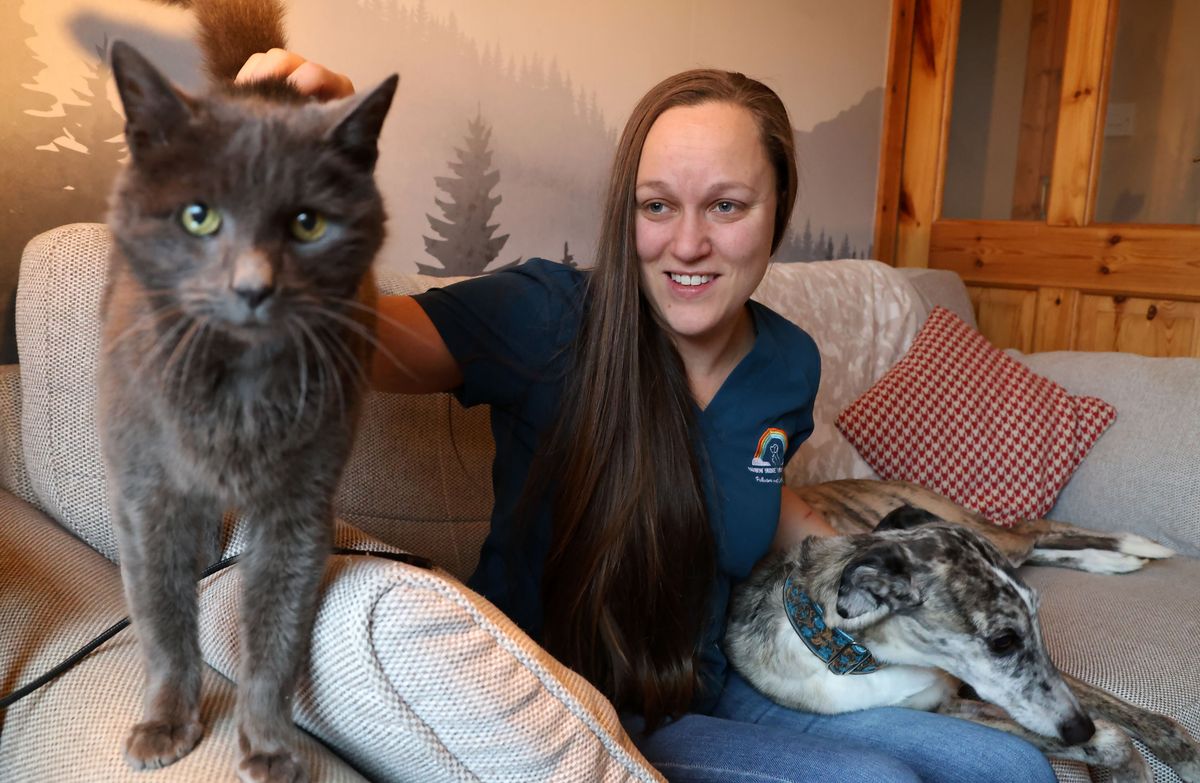 Dr. Anderson and with her cat ‘Mojo’ and dog’ Oliver
Dr Anderson offers both palliative and hospice care for pets. Her patients mainly consist of dogs and cats, but she has also had a rabbit.
Palliative care is for animals who have a chronic illness, and curative treatment is no longer in their best interest, so the focus shifts to keeping them as comfortable and pain-free as possible.
The hospice service is a step up, and it is for pets who have a life expectancy of less than three months, with more intensive care required.
Dr. Anderson remains on call to help with any queries, and home visits can be scaled up or down depending on the pet’s condition. She said the hardest part has been patients who reach out in the hope of buying more time for their pet, but Dr. Anderson made clear that she doesn’t have a magic cure.
She continued: “I think that’s the biggest challenge that I’ve encountered so far, just that people are leaving it too late. I think a lot of that is because people don’t realise that the option is out there.
“Some people are reaching out and hoping for a miracle. That I can offer them something, that I have some magic cure that will revive their pets and give them another year, that I just don’t have.”
But even in these cases, most just need Dr Anderson to tell them there’s nothing more that can be done in order for them to let go. She explained: “The family often knows themselves and they say it before I do.”
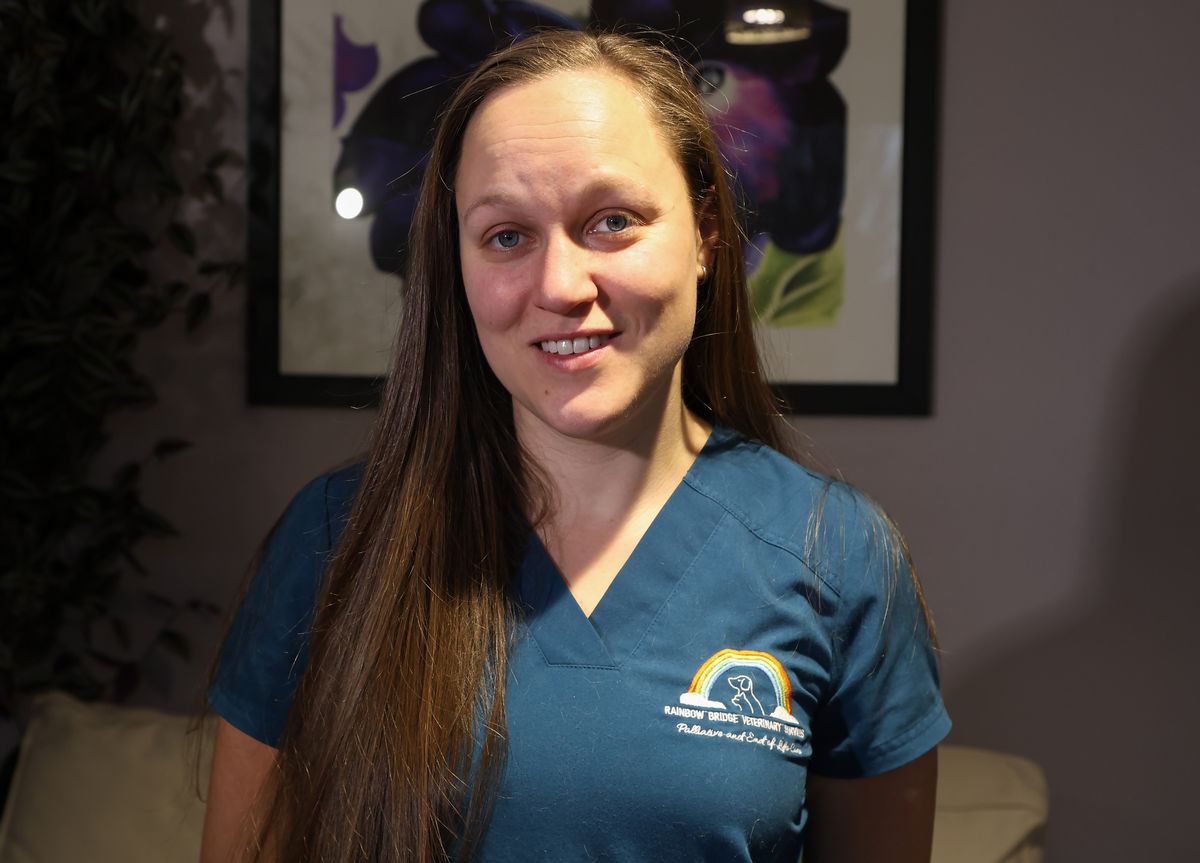 Dr Anderson runs Ireland’s only dedicated palliative hospice and end-of-life care service for pets
But for others, they need to be told “‘look, there’s nothing else that I can do that your primary vet hasn’t already done, and sometimes that’s all they need to hear to feel like they’ve exhausted every option, and that’s okay.”
When the time does eventually come, she also offers at-home euthanasia and said it allows pets to pass in a familiar setting rather than in a clinic.
Dr Anderson also said that while elements of her job, such as putting pets to sleep, are inherently sad, she reminds herself that she is doing them a “kindness”.
She explained: “It’s so rewarding in its own way because you know that you’re doing it for the pet. You’re trying to make the last moments of their lives as peaceful as you can and as comfortable as you can.
“To let them go with their dignity, with their families beside them in their own bed. We can’t do that for ourselves … It’s a kindness, and it doesn’t mean it’s not sad, and if you really believe it’s a kindness that sadness doesn’t linger.”
Dr Anderson, who operates in the Wicklow, North Wexford, and South Dublin areas, hopes to expand in the new year and says she has received inquiries from Donegal and Letterkenny.
She said: “I can only cover so much ground myself. I’m hoping over the next year to maybe expand that a little, and I know from talking to other colleagues they’d be interested in the field. Nothing is set in stone, but hopefully, because I do get inquiries from all over the country.”
Subscribe to our newsletter for the latest news from the Irish Mirror direct to your inbox: Sign up here.