
For decades, human betaherpesviruses 6A and 6B were thought to be relatively recent scientific discoveries, having only been identified in the 1980s and associated with mild childhood illness. A new study now pushes that documented history far further back in time. Reconstructing ancient viral genomes from archaeological human remains, researchers show these viruses have been circulating within human populations for over 2,500 years.
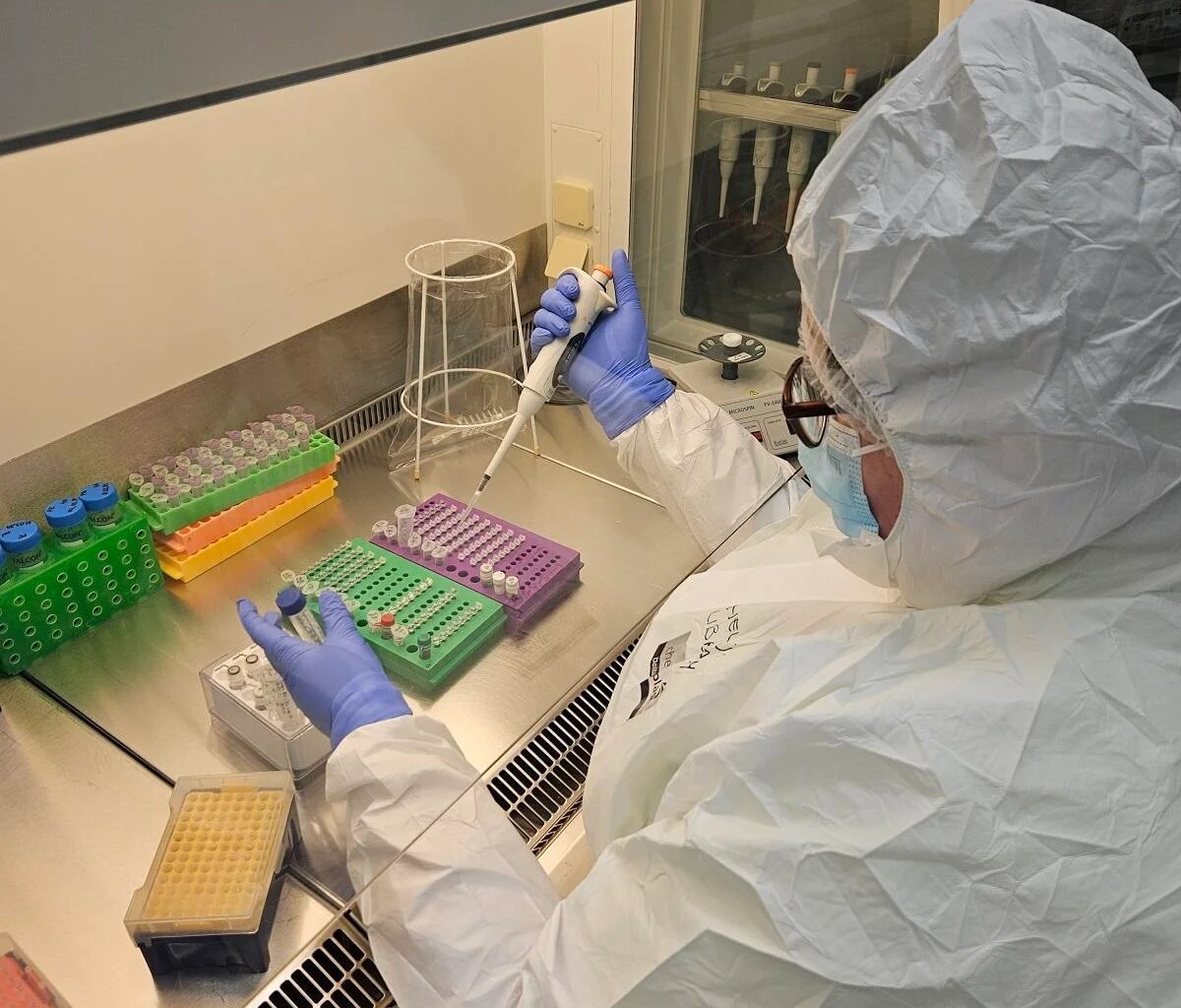
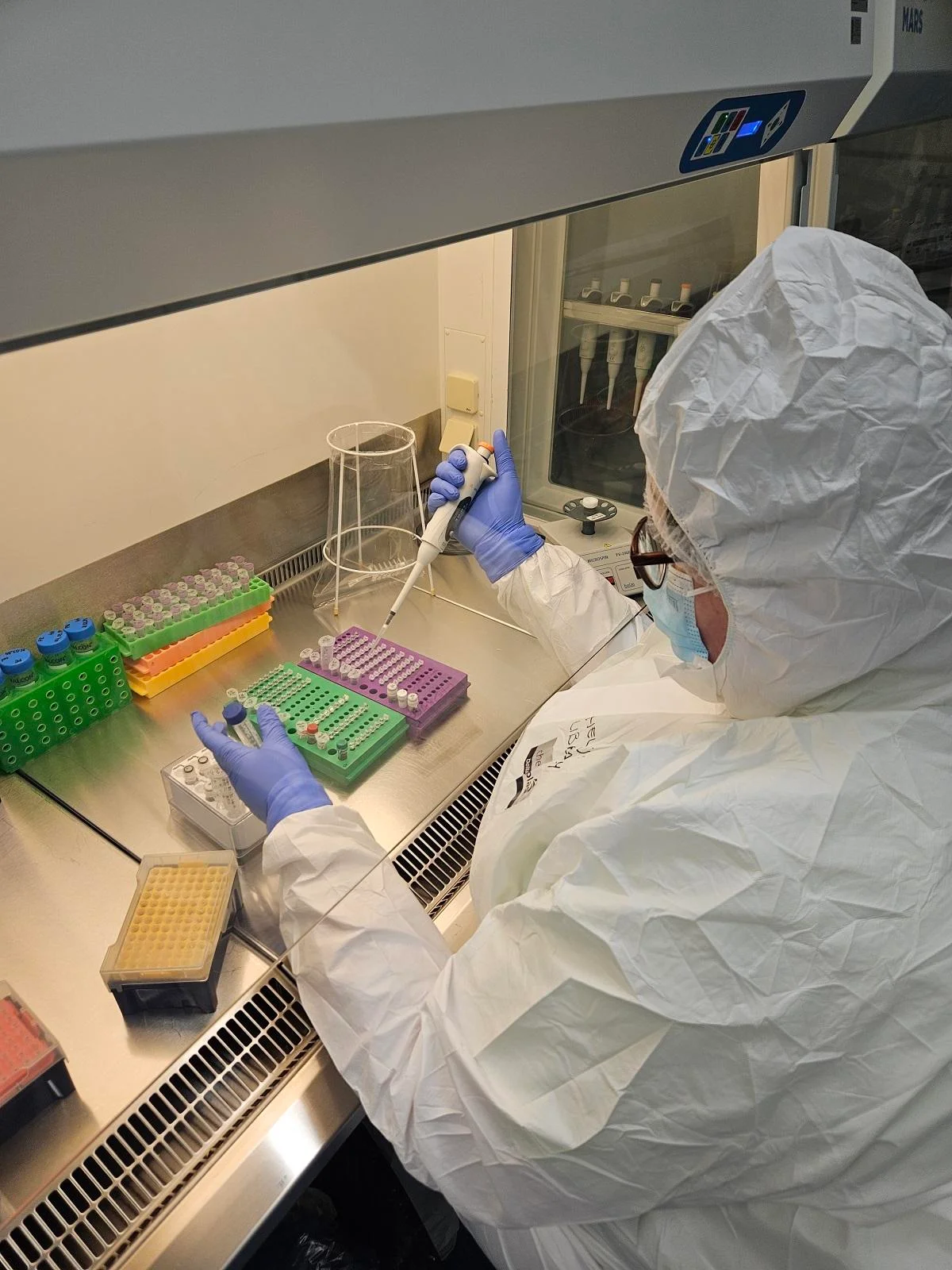 Laboratory technician and one of the authors in the contamination-controlled ancient DNA laboratory at the University of Tartu extracting tiny amounts of DNA from centuries-old skeletons. Credit: University of Tartu Institute of Genomics Ancient DNA Laboratory
The study, led by teams from the University of Vienna and the University of Tartu and published in Science Advances, analyzed almost 4,000 skeletal samples from archaeological sites across Europe. From this large dataset, scientists were able to recover and reconstruct 11 ancient genomes of HHV-6A and HHV-6B. The oldest evidence comes from Iron Age Italy, between the 8th and 6th centuries BCE, while additional samples also span medieval England, Belgium, Estonia, early historic Russia, and later periods in Italy.
HHV-6B today infects the vast majority of humans early in life and is best known as the cause of roseola infantum, or “sixth disease,” which can cause high fevers and febrile seizures in young children. Following initial infection, both HHV-6A and HHV-6B usually remain dormant for life. What distinguishes them from most other herpesviruses is their rare ability to integrate their DNA into human chromosomes. In rare cases, when this does occur in reproductive cells, the virus may be inherited as part of the human genome, a phenomenon observed in roughly 1% of people today.
The ancient genomes are the first direct genetic evidence that such integrations occurred deep in human history. Several medieval individuals from England carried inherited forms of HHV-6B and constitute the earliest documented carriers of chromosomally integrated human herpesviruses. The site in Sint-Truiden, Belgium, was exceptional in showing the circulation of both viral species within European communities, reflecting a long-standing presence within those populations.
Comparisons between ancient and modern viral genomes showed that much of today’s HHV-6 diversity was already established by the late medieval period. The data also suggest that HHV-6A followed a different evolutionary path from that of HHV-6B. All known inherited lineages of HHV-6A were already present in historic populations, and thus, this virus appears to have lost the ability to integrate into the human germline very early, possibly in prehistoric times.
The findings have also provided a rare opportunity to understand long-term coevolution between virus and host. The data revealed that a common childhood infection, under certain circumstances, can become a permanent part of the human genome and be passed down through generations.
Publication: Guellil, M., van Dorp, L., Saag, L., Beneker, O., Bonucci, B., Sasso, S., … Tambets, K. (2026). Tracing 2500 years of human betaherpesvirus 6A and 6B diversity through ancient DNA. Science Advances, 12(1), eadx5460. doi:10.1126/sciadv.adx5460