
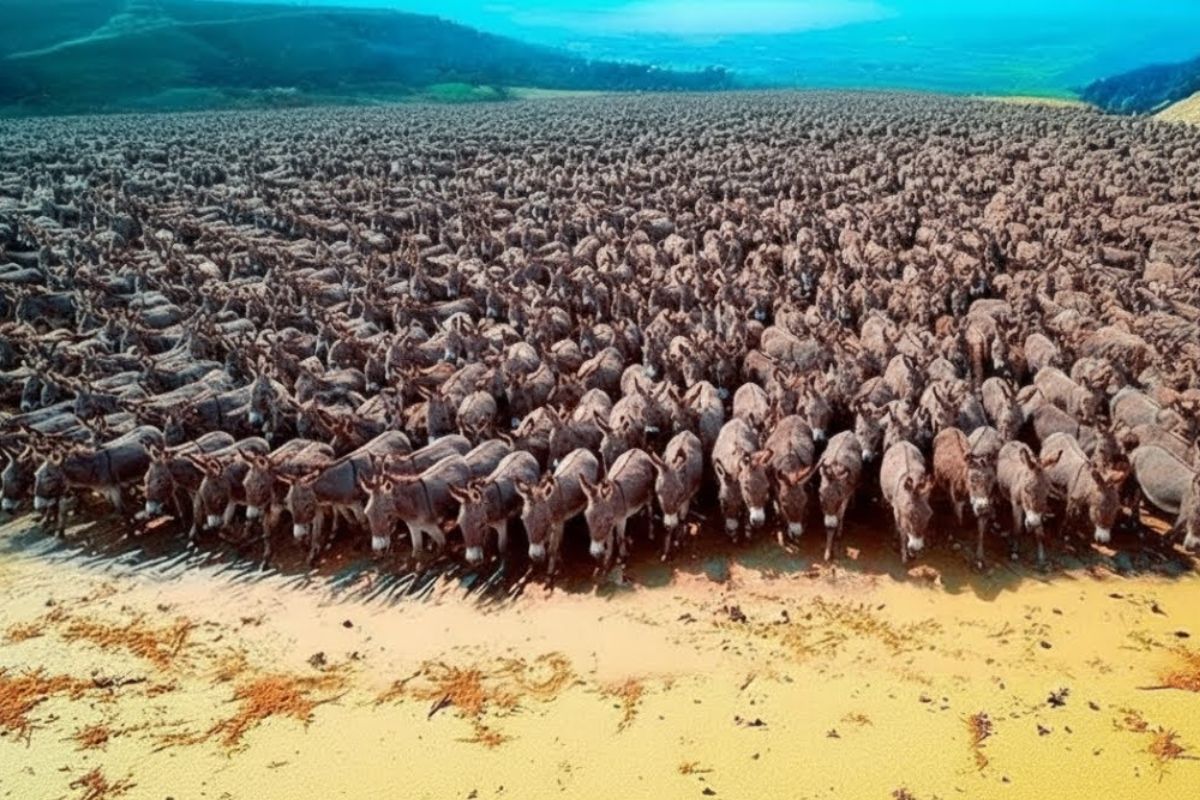
A country that for decades has shot wild donkeys from helicopters to protect fences, water sources, and crops. Now, those same wild donkeys are beginning to be seen as unlikely allies in the fight against the desert, helping to bring water back to the parched soil and defend farms from dust, fire, and famine. What changes is not the animal, but the way Australia chooses to coexist with it.
Instead of simply eliminating them, researchers and environmentalists argue that wild donkeys should be integrated into ecological restoration projects.
Under control, with the right numbers and in the right place, wild donkeys can dig waterholes, mix the soil, spread seeds, and transform dead areas into corridors of life for wildlife and agriculture.
— ARTICLE CONTINUES BELOW —
Are you in favor of US military intervention in Venezuela and the arrest of Nicolas Maduro?
— Click Oil and Gas (@clickpetroleoeg) January 3, 2026
From villains to key features of the Australian landscape.
For many years, wild donkeys were treated almost exclusively as enemies. They break fences, compete with livestock for water, and trample fragile riverbanks.
In several regions of Australia, the response was simple and brutal: mass culling campaigns to “clean up” the outback.
This model created an endless cycle of conflict. The more wild donkeys were seen as a pest, the more investment was made in killing them, without stopping to ask if there was another way to use the strength of these animals to benefit the environment itself.
Gradually, however, field studies began to show another side of the story, revealing that the natural behavior of wild donkeys could be a powerful ecological tool.
How wild donkeys create water in the middle of the desert.
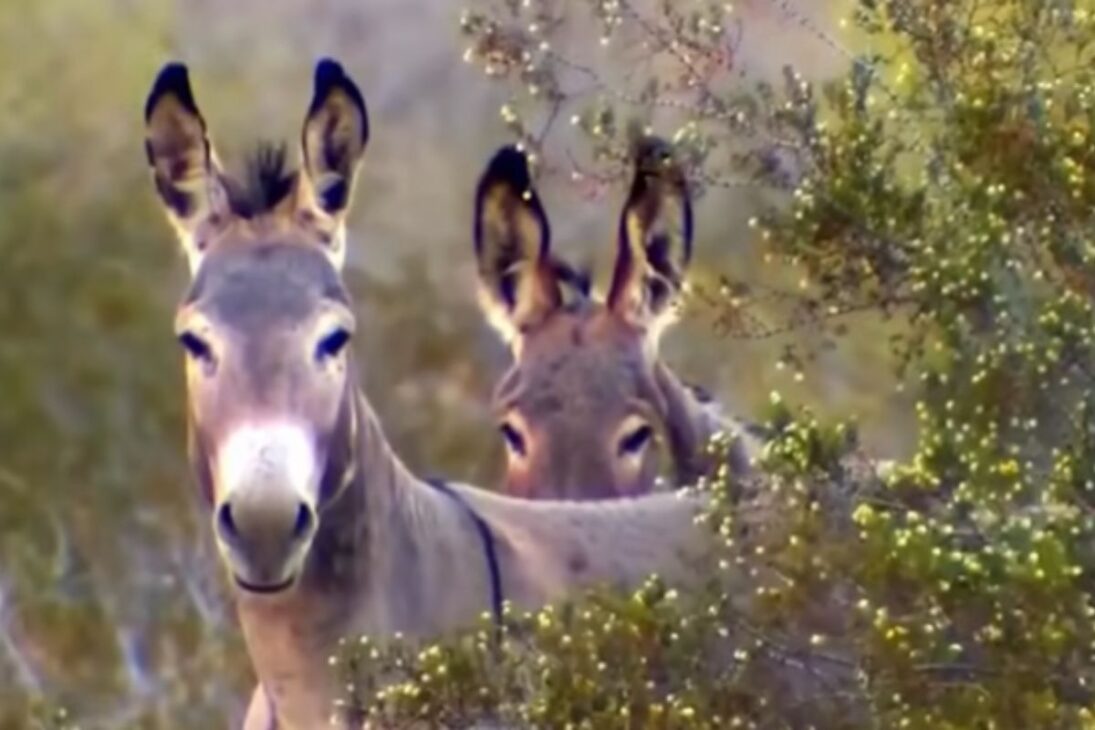
When drought hits, wild donkeys do what they’ve always done in the arid environments from which they originally came: they search for water by digging.
With strong hooves and persistent snouts, they dig holes in dry riverbeds and depressions in the terrain until they find layers of moisture hidden below the surface.
These holes, which on farms were often seen as mere “mess,” actually function as small, natural artesian wells.
When digging for water, wild donkeys end up creating water sources that other species also use, from birds and kangaroos to small animals that wouldn’t be able to reach the water table on their own.
In targeted management projects, technicians have observed that where wild donkeys are kept in planned numbers, these waterholes become islands of moisture in areas that were previously completely dry.
The water that rises to the surface seeps in, nourishes resilient plants, and creates a network of wetlands that help to halt the desert’s advance.
The impact of wild donkey hooves goes beyond the search for water. By walking long distances every day, they break the hard crust that forms on the soil surface after years of strong sun and lack of rain. This crust prevents water from penetrating and seeds from germinating.
When wild donkeys roam in defined areas, they create micro-fissures in this hardened “roof” of the earth. These subtle markings are entry points for rain, dew, and nutrients, helping the soil to function like a sponge again, rather than a hot cement slab.
The droppings of wild donkeys also play an important role. Loaded with seeds of native plants and concentrated nutrients, they act as small fertilizer capsules.
In planned restored areas, patches of denser vegetation emerge precisely where these animals rest, drink, or feed most frequently.
Thus, wild donkeys leave a trail of more vibrant soil wherever they go.
For farmers, the fear is understandable. No one wants to see fences destroyed, watering holes fought over, or pastures overexploited.
The difference lies in replacing chaos with control. Instead of unmanaged herds, the idea is to work with known and monitored groups of wild donkeys in defined areas of each landscape.
On farms participating in pilot projects, wild donkeys are used in strategic strips of land, away from more sensitive areas, to break up hard soil, dig wells, and create water infiltration corridors.
It’s as if the farmer gained a team of biological tractors, powered by grass and instinct, helping to protect the farm from the advancing desert.
Furthermore, wild donkeys tend to follow similar routes throughout the day. This allows technicians to design trails that avoid fragile slopes, delicate springs, and areas of erosion.
With well-planned fences and alternative water points, the damage is reduced and the ecological benefit multiplies.
Environmental planning to transform conflict into partnership
None of this works without planning. Letting wild donkeys roam freely anywhere, without population limits, is a recipe for disaster. What changes is the management plan.
Instead of mass extermination, a combination of science, monitoring, and clear goals for each landscape comes into play.
Field teams determine how many wild donkeys the region can support without collapsing, which areas need more help to restore the soil, and where the presence of these animals is undesirable.
With this type of environmental control, wild donkeys cease to be automatic villains and become restoration tools used with surgical precision.
In some regions, the plan includes fencing off areas of high ecological value, removing wild donkeys from more sensitive stretches and concentrating them where the soil is most degraded and needs to be “reopened” to receive water and life.
The focus shifts from “eliminating the species” to “using the species’ natural behavior to benefit the landscape.”
The future of wild asses in Australia
The debate over wild donkeys in Australia is far from over. On one side, there are those who continue to advocate mass culling as the quickest solution.
On the other hand, there is a growing group that sees in these animals a rare opportunity to use the invasive fauna itself as an ally in the recovery of the desert and in the protection of farms threatened by drought.
If Australia insists on treating wild donkeys merely as a problem, it will continue spending money to put out fires without changing the reality of the soil and water.
Ultimately, the question that remains is simple and direct: do you think Australia should continue culling wild donkeys en masse, or use these animals, under scientific control, to save the wilderness and protect farms?