
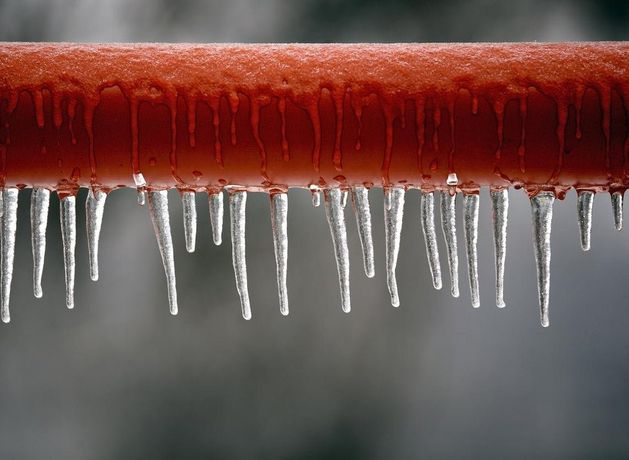
Burst pipes cost from €500 to €2,000 to repair but they can be insulated for much less than that
Low temperatures can cause sections of your home plumbing to burst, leaving you without running water and potentially a massive repair bill.
Here are some top tips on how to prevent your pipes from freezing this winter and how to thaw them if already frozen.
Plumbing expert Sean Richardson of Sean Richardson Services in Cork said burst pipes can cost anywhere in the region from €500 to €2,000 to repair, depending on the damage.
“We all know that when water freezes it expands greatly. This pressure can then cause your pipe to burst, so it’s advisable to take every precaution you can,” he said.
Keep water running
Mr Richardson said the tiniest trickle can sometimes be enough to stop a “devastating” freeze.
“If you’re expecting a freeze, turn your taps on and allow just a trickle to come through the pipes. We’re not saying do this with all of the taps in the house, but just the ones that are supplied by exposed pipes,” he said.
“The constant movement of the water through the pipes will help prevent freezing and also relieves any potential pressure build-up that could burst a pipe.”
Insulate your pipes
Mr Richardson advised people to focus on the most vulnerable sections of their plumbing – the exterior pipes and the pipes located in the unheated areas of your home like the attic.
“A metre length of pipe insulation can be as cheap as €2 so it really is a no-brainer, you could have all of your pipes insulated for less than €100,” he said.
“If there’s cold weather on the way and you haven’t had the time to insulate your pipes properly, you can DIY it too. Around 50 to 60 years ago people used to wrap the pipes in old, bunched up newspapers and just secured it with duct tape. It may sound funny, but it definitely does the job in a pinch.”
Keep the heat on
Mr Richardson acknowledged that with rising energy prices, this may not seem like the most appealing option.
“However, a small bump in your heating costs will still cost far less than the repair of a burst pipe,” he said.
“When the temperatures dip, we tend to blast the heat during the day and turn things down at night – this isn’t helping your internal plumbing.
“Try and keep your heating at a more consistent temperature over the 24-hour period as this will keep the pipes from freezing, ideally, you should always be around 12 degrees Celsius at least.”
Keep your cabinets and doors open
“In most homes your plumbing in the kitchen or bathroom is tucked away behind a cabinet door of some sort. During a cold snap you should open up these doors to allow the warm air from inside the house to get around the pipes, keeping them free from blockages,” he said.
Plug the gaps
“Around this time of year in particular, you should be checking around your doors and windows for any holes and large gaps that are letting all of the warm air in your home escape and letting cold air in,” Mr Richardson said.
“Window sills are a common leakage point. If you have any cabling running externally to internally, examine where it enters the home for gaps. By sealing these gaps you’re helping your overall home insulation, which in turn benefits the plumbing.”
Mr Richardson said if pipes are already frozen but haven’t burst, you should shut off water at the mains.
“This is usually located either under the sink or somewhere near your water meter. If you allow the water to continue to flow, you could be making the situation worse and allowing the pressure to build, which would cause a break,” he said.
“If the water is very slowly coming from a tap or stops completely, you’ve got a freeze. If the problem only exists with one tap, it’s a local issue rather than a system-wide problem.”
“You can use a hair dryer to thaw the pipe slowly, applying heat up and down the affected length of pipe.
“Wrap a warm towel around the frozen pipe. This should free up the blockage and not shock the pipe too much. Put down a bucket or some other towels on the ground to catch the excesses. A hot-water bottle would also work in this situation.”
This article was originally published in December 2022