
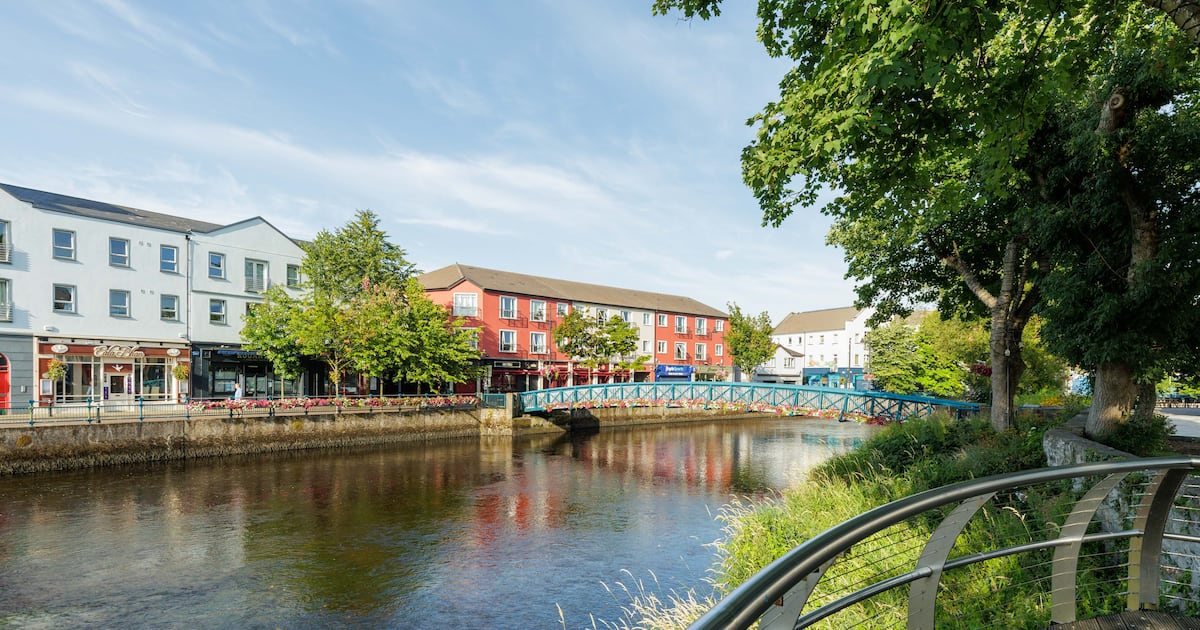
Sligo is the cleanest town in the Ireland and Waterford is the cleanest city, according to a survey.
It is the first time the Connacht town has topped the Irish Business Against Litter (Ibal) survey of 40 towns and cities in the Republic.
Sligo has taken the number one spot from Naas, which topped the poll in 2024 but is in 13th position this time around.
Leixlip, Westport and Monaghan were deemed the next cleanest towns.
An Taisce, which conducts the surveys on behalf of Ibal, praised Sligo for the cleanliness of its streets and train and bus stations.
“Sligo has come such a long way from back in 2007, when the town was bottom of our rankings, and labelled a litter blackspot,” Ibal’s Conor Horgan said. “It is an illustration of the turnabout that is possible, even in a large town, when council and community come together.”
Waterford reclaimed its accolade of Ireland’s cleanest city, ahead of Galway.
While urban areas still dominated the lower end of the rankings, 10 of the 13 areas surveyed showed an improvement in cleanliness last year.
No town or city was judged to be “seriously littered”, with Limerick’s Galvone, Mahon in Cork and Tallaght in Dublin along the urban areas attaining clean status.
Dublin’s north inner city was at the bottom of the rankings, but was much improved on 2024.
“Even areas at the foot of our rankings have significantly lower litter levels than a year ago,” Mr Horgan said. “Cork’s northside, Dublin city centre and north inner city, while still littered, are cases in point.”
Mr Horgan said some of the improvements in Dublin city are due to increased funding for litter initiatives.
“The investment being made by Dublin City Council seems to be already paying fruit, and we are set to see further progress in 2026 if the council comes good on its promise of replacing bags with bins across the city. This could be a landmark year in the fight against litter.”
There was a notable fall-off in the number of sites with large accumulations of litter or dumping. This was the first Ibal survey where no bottle bank was deemed a litter blackspot.
However, inspectors did find that Ballybane Village and Industrial Estate in Galway were “subject to long-term dumping and neglect”, while a waste ground at Fairfield Meadows on Cork’s northside suffered from “phenomenal levels of dumping, items large and small”.
[ More than half of daily waste generated in Ireland burned or sent to landfillOpens in new window ]
Another blackspot was at Balbutcher Lane in Ballymun in Dublin, where “vast quantities of alcohol bottles mingled with household dumping including bed frames, mattresses and garden furniture”.
The survey found the Deposit Return Scheme continues to have a positive impact, with a 10 per cent drop in the prevalence of cans and plastic bottles compared to the previous year. These two types of litter are now 60 per cent less common than when the scheme was introduced in early 2024.
Coffee cups remained one of the most common forms of litter and were found at a fifth of all sites surveyed.
Mr Horgan called on the Government to follow through on plans to introduce a levy on disposable cups, saying this is needed to support reusable cups schemes.
“It is apparent that such schemes will only work with statutory backing. As our data today bears out, without Government intervention coffee cups will remain an unsightly and entirely unnecessary blot on the landscape across our towns.
“The prevarication from Government on the issue is striking – a levy was promised all of four years ago – and sends out a worrying signal. Weaning ourselves off single-use coffee cups should not be such a big deal.”