
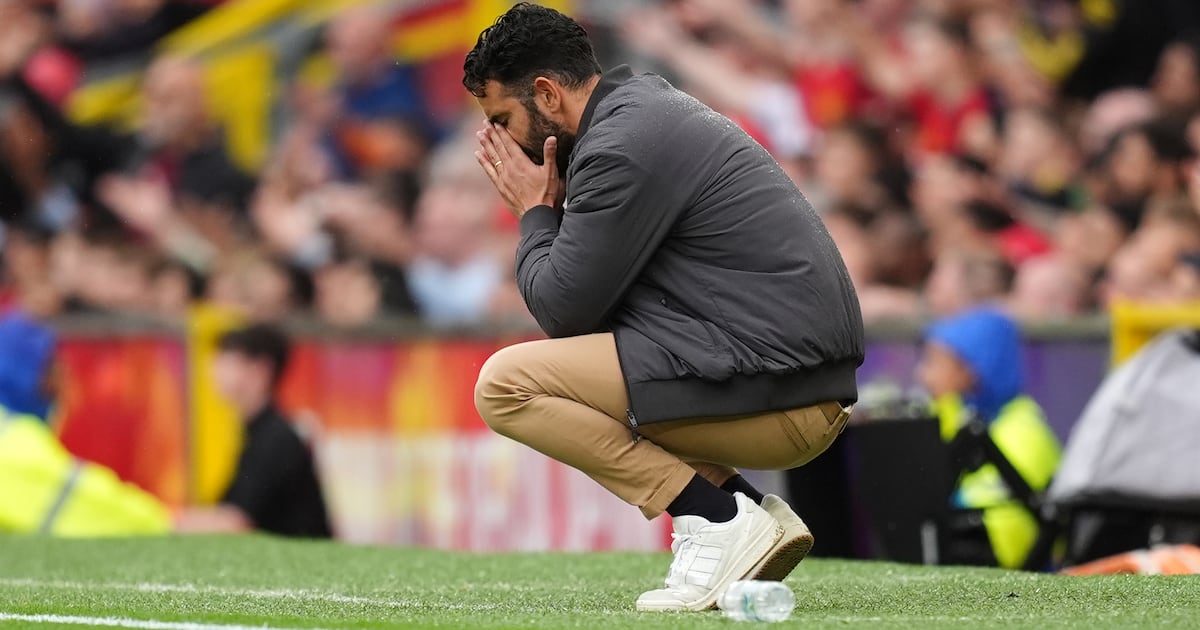
Ruben Amorim leaves Manchester United with one of the worst statistical records of any manager – sorry, head coach – in the history of the club. Even still, it wasn’t the results that did him in so much as all the mad stuff he never could seem to stop saying.
When did it first start to look like hiring Amorim was a mistake?
The first red flags appeared in January last year, just two months after his arrival. United began that month with two of Amorim’s best results, drawing 2-2 at Liverpool and then knocking Arsenal out of the FA Cup at the Emirates. Green shoots!
In the next game, they lost at home to Brighton, 3-1, and Amorim announced: “We are the worst team, probably, in the history of Manchester United.” Obviously, this was a mad way to react to a defeat against a team that had beaten United quite regularly: seven times in the previous seven years.
As United’s many haters and enemies laughed long and loud, you wondered: who is this for? Is this extreme reaction meant to shock the players into a response?
It seemed likely to backfire, and indeed it did. As Christian Eriksen, a United player at the time, told the Sunday Times last week: “Yeah, that didn’t help at all … Some stuff you can say inside and it’s not too clever to say outside, to put extra pressure and put an extra label on the players who were already trying to do their best … I think for us it was a bit … ‘Oh, here we go again. Another headline’.”
A few days after that, Amorim responded to questions about Marcus Rashford’s absence from the squad by saying that he’d left Rashford out because he didn’t like the way he’d been training. He then added: “You can see we miss a bit of pace on the bench, but I’d put Vital [his 63-year-old goalkeeping coach] in before a player who doesn’t give the maximum every day.”
Amorim’s message on this occasion was plainly the kind that would annoy the people at United who were, at that very moment, trying to find another club to take Rashford off their hands. The last thing they needed was the coach telling the world that the guy doesn’t train properly.
[ Ruben Amorim sacked by Manchester UnitedOpens in new window ]
But it was the gratuitously insulting Vital barb that brought you up short. Wait what if this guy is actually … kind of insane?
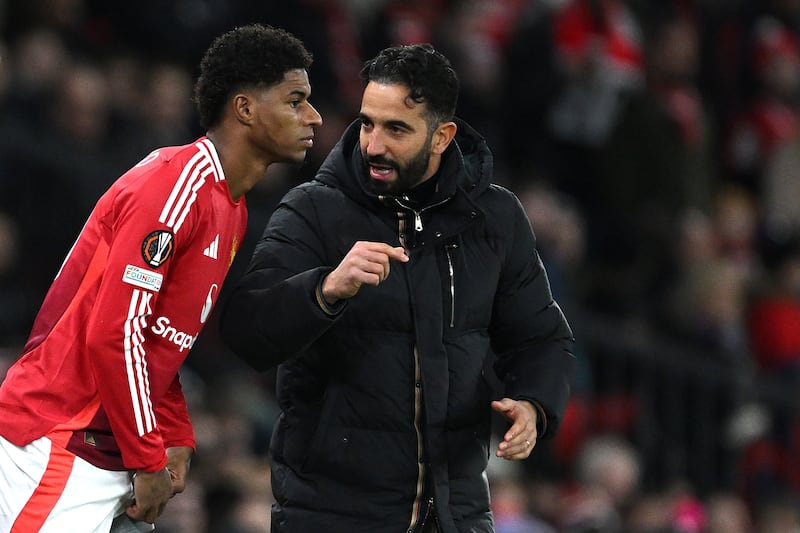 Ruben Amorim speaks to Marcus Rashford during the UEFA Europa League match against FK Bodo/Glimt in 2024. Photograph: Justin Setterfield/Getty Images
When United’s struggling winger Antony joined Real Betis on loan and suddenly started scoring a few goals, Rio Ferdinand asked Amorim what he made of it. The answer: “If you play against any team in England, the physicality is there. If you don’t have physicality you struggle a lot … It’s a lot of factors, but I guarantee it’s the physicality.”
He could easily have said something like, it’s great to see Antony doing so well (unspoken subtext: and we look forward to selling this rejuvenated superstar at the end of his successful loan, maybe even to a Premier League club who can afford to give us back some of the giant transfer fee we wasted on him!)
Instead, he had to point out that Antony didn’t have the physicality to cut it in England – just in case anyone was wondering why Amorim himself had not managed to get such good performances out of Antony. You could call this honesty, but another term for it might be ego defence. It was all about him.
There was more of that sort of thing in May, when United lost the Europa League final to Tottenham, a defeat that cost them more than £100 million (€115 million) in potential Champions League revenue. Mason Mount started that game and played poorly, while Alejandro Garnacho only came on as a sub having played the previous rounds. Asked why he’d started Mount and not Garnacho, Amorim referred to a chance Garnacho had missed in the semi-final against Bilbao. “Don’t criticise me for not picking him, he’s useless too” was the apparent message.
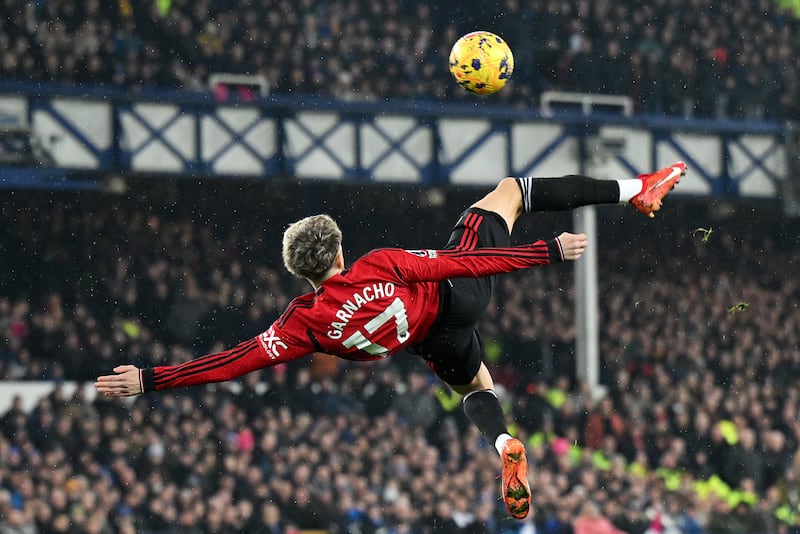 Alejandro Garnacho of Manchester United scores the team’s first goal the Premier League match between Everton FC and Manchester United at Goodison Park in 2023. Photograph: Shaun Botterill/Getty Images
When Garnacho blew up at being left out, Amorim told him “you’d better hope you have a good agent this summer” and told United to get rid of him. A player the club had rated at £60 million was sold to Chelsea for £40 million. Chelsea got around the same fee from Milan for Christopher Nkunku, a lesser player than Garnacho – but then, Chelsea had never announced to the world that they were desperate to sell him.
The best coaches build up their players and their clubs, Amorim was more often knocking his down. Rasmus Hojlund didn’t think quickly enough, Kobbie Mainoo was slow, Patrick Dorgu was too anxious, United’s Academy players were “entitled”. Recently, he criticised the 18-year old full-back Harry Amass, even though the player was on loan at Sheffield Wednesday at the time.
[ Seven games where it went wrong for Ruben Amorim at Manchester UnitedOpens in new window ]
While United’s hierarchy must have been irritated by Amorim’s habit of talking down the value of their players, they might have been happier with his bizarre comment on the rumours that they were about to launch a round of redundancies: “People are losing their jobs so we have to acknowledge that the biggest problem is the football team. We spend the money. We are not winning. We are not in the Champions League so the revenues are not the same.”
An astonishing thing for the supposed leader of that football team to say. It was not the United players’ fault that people were being made redundant. That was Sir Jim Ratcliffe’s decision.
The low point came in August, when United lost in the EFL Cup to Grimsby, the first time they had ever lost to a fourth-tier side. Amorim had been seen during the game fiddling with a little tactics board – was this really a moment that demanded a high-level tactical solution? – and then sitting in the dugout refusing to watch the penalty shoot-out.
But worse than those images of ineffectuality was the hysterical post-match reaction in which he effectively accused the players of trying to get him the sack. “My players spoke really loud today,” he kept saying, also hinting that he might negotiate an exit from the club during the forthcoming international window.
[ Ken Early: Amorim and Maresca departures evidence of football’s growing turf warsOpens in new window ]
United must regret not taking that opportunity. The prospect of sacking Amorim after just nine months probably felt too embarrassing for them, especially for the CEO Omar Berrada, who had taken the initiative in hiring Amorim, even though the sporting director, Dan Ashworth, had advised against it. (Ashworth’s failure to get with the programme resulted in his sacking the following month.)
In the last few days, Amorim finally turned his guns from the players towards the bosses, meaning that it had become more embarrassing to keep him on than to sack him. Playing legend Darren Fletcher has agreed to serve as interim while United seek a permanent successor. The cosmic ballet goes on.