
Motorists have been warned not to get caught out by the “flat battery blues” on Monday as thousands of cars are started for the first time since before Christmas.
Many of those returning to work today after the festive holiday will have trouble starting their car, the RAC has warned.
The motor insurance provider said the first day back to work in the new year is typically the worst of the entire year for breakdowns.
It said this is because thousands of vehicles have been left idle for up to two weeks, with the cold conditions experienced in the past few days potentially making the situation even worse.
The RAC said on the first Monday of 2025 that almost a quarter (24%) of all of its breakdowns were caused by flat batteries.
Nick Mullender, RAC mobile servicing and repairs team leader, said: “A flat battery at the start of the new year is more than enough to drain away the last of the Christmas spirit.
“The combination of a long break where vehicles aren’t used and the recent cold weather is a perfect recipe for the ‘flat battery blues’.”
He said electric vehicles face the same risk as they also depend on 12-volt batteries for starting.
What do car batteries do?
Most motorists start their car without thinking of the mechanics involved in getting their vehicle moving, but the battery is an integral part of that process.
Effectively, the battery provides electrical energy to the car, firstly to start the engine, but also to power lights, air conditioning, the radio and the vehicle’s computer.
The battery turns its own stored chemical energy and transforms it into electrical energy. Turning on the engine starts a chemical reaction between its lead plates and sulphuric acid, producing electrons that provide electricity.
The battery empties itself in one go when used to start the car and is then recharged by the engine as the vehicle is driven.
Why are batteries affected by the cold?
Both the RAC and The AA say the main reason for breakdowns in cold weather is issues with 12-volt car batteries.
The chemical reactions inside the battery slow down when it is cold outside, in turn slowing the battery down and making it more difficult for the battery to hold a charge. As a result, in the winter, the battery must work harder to start a vehicle’s engine.
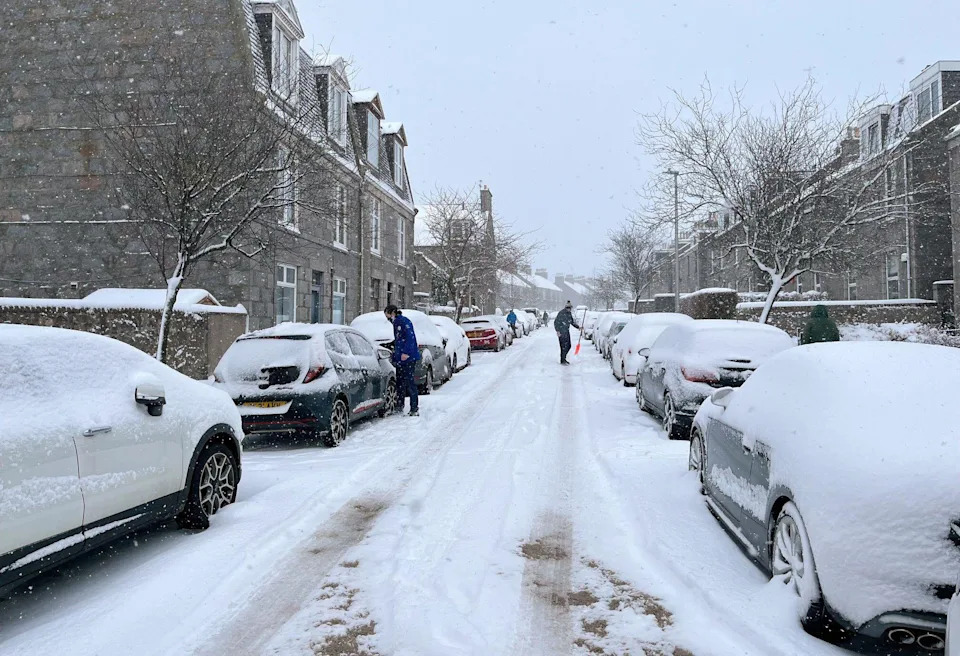
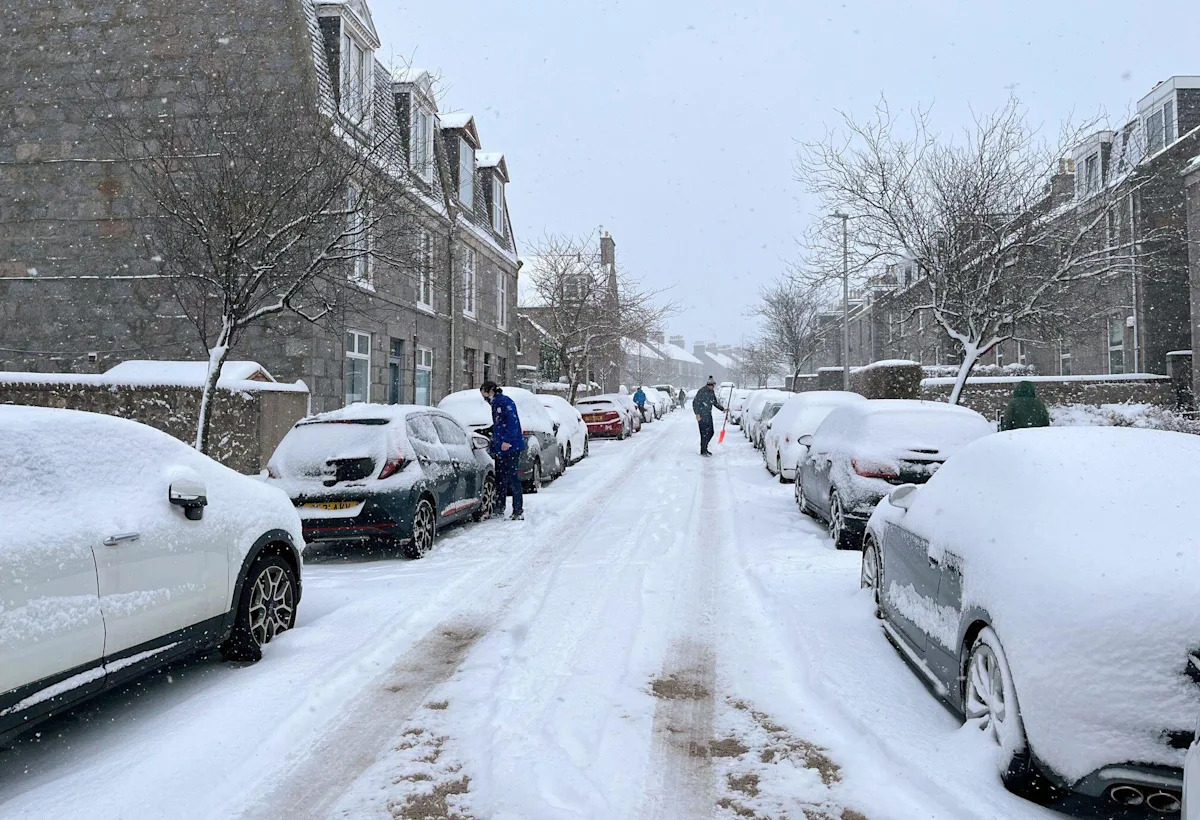
Cold conditions, like these in Aberdeen the past few days, can cause problems for car batteries. (PA)
Batteries hold their charge through a liquid electrolyte solution, which is affected by low temperatures, reducing the solution’s capacity to transfer full power.
What are the signs your car needs a new battery?
Sometimes a car battery will go flat without any warning, but in many cases there might be signs your battery is about to die.
If your battery is on its last legs, you will notice that the engine starts more slowly or takes multiple attempts to start, and could mean you may only get one or two more similar warnings before it conks out for good.
If the battery isn’t producing enough power you may hear a clicking sound when you turn the key in an attempt to start the engine. You may need to jump-start the car and get a new battery immediately.
A sign the battery is dying is that some of the electrical systems inside the car, such as lights, heaters and seats, will stop working.
Your car’s headlights or dashboard lights may also dim intermittently if the battery is dying, particularly when the engine is idling.
The clearest sign your battery needs attention is its warning light flashes on your dashboard.
How do I check my car battery?
The RAC says car batteries have a lifespan of about three to six years and that motorists should check them regularly, although it advises that if unsure they should let a mechanic look at it.
The first thing to check is if there is any leaking from the battery, which could be acid and requires immediate attention from a skilled mechanic.
Other warning signs include any corrosion or white or grey deposits around the battery’s terminal, which should be cleaned off using a special formula, ideally by a mechanic. Any damage to a battery’s outer casing will also mean it likely needs replacing.
Mechanics use a device called a multimeter to measure the electrical values from a battery such as voltage, current and resistance, the RAC says.
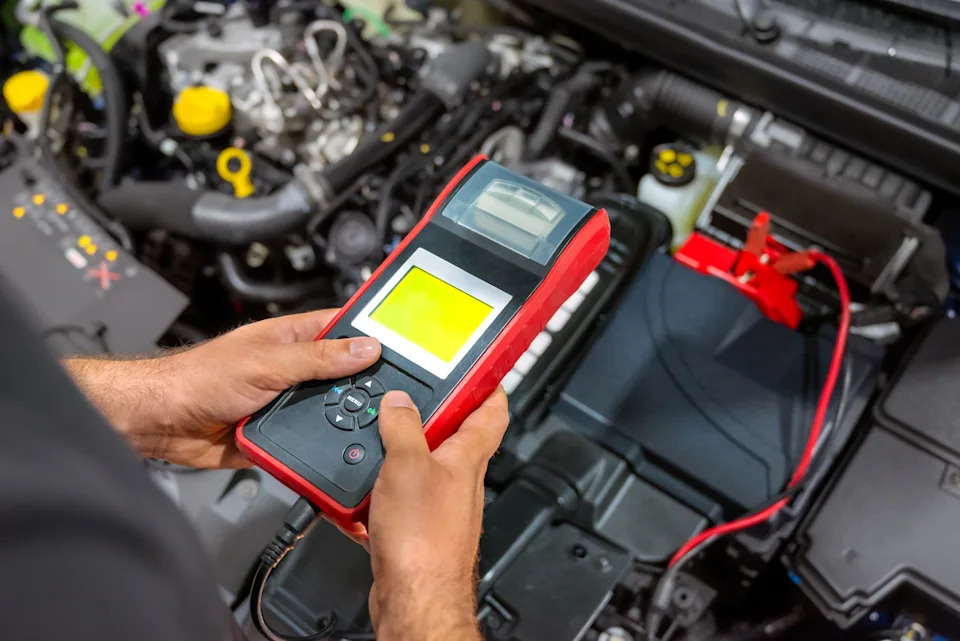
A mechanic measuring car battery voltage with a digital multimeter. (Getty Images)
It can given an indication of the battery charge and tells the mechanic if it is over or undercharged – the battery may need charging or replacing if this reading is too low.
You can also check your battery by checking your headlights – if they appear darker than they should be it is a sign the the battery may be low.
How can I keep a car battery from dying?
The RAC says that if possible you should park your car under cover to protect against cold weather, and always switch off everything at the end of a journey, including lights, heaters and the radio.
Motorists should check their battery isn’t leaking or there isn’t any corrosion.
The car should be driven regularly, as a journey will charge the battery and warm the engine. Starting the car just briefly may only drain the battery further.