
By: Chad Hanson | January 06, 2026 | 5 min. read |
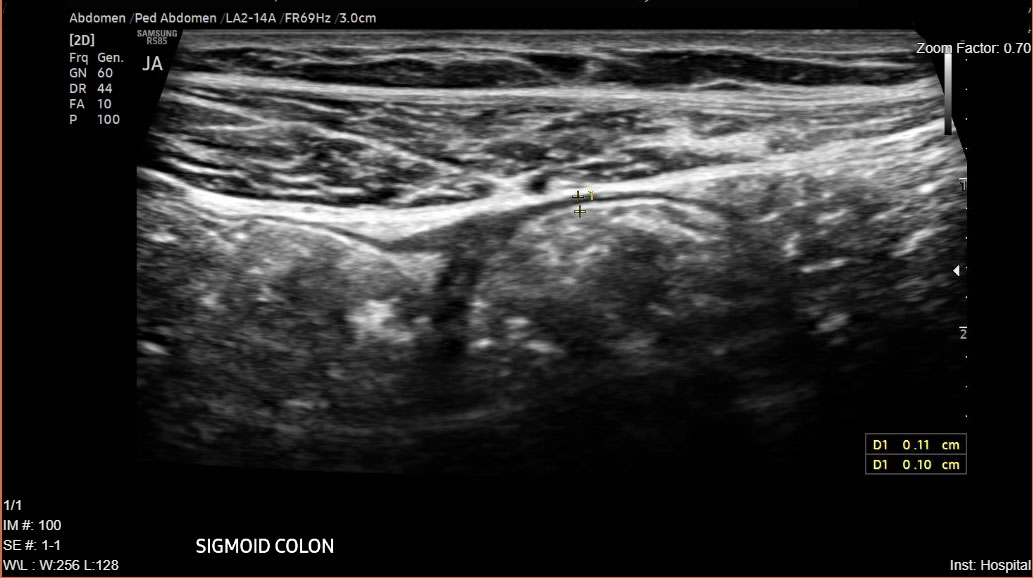
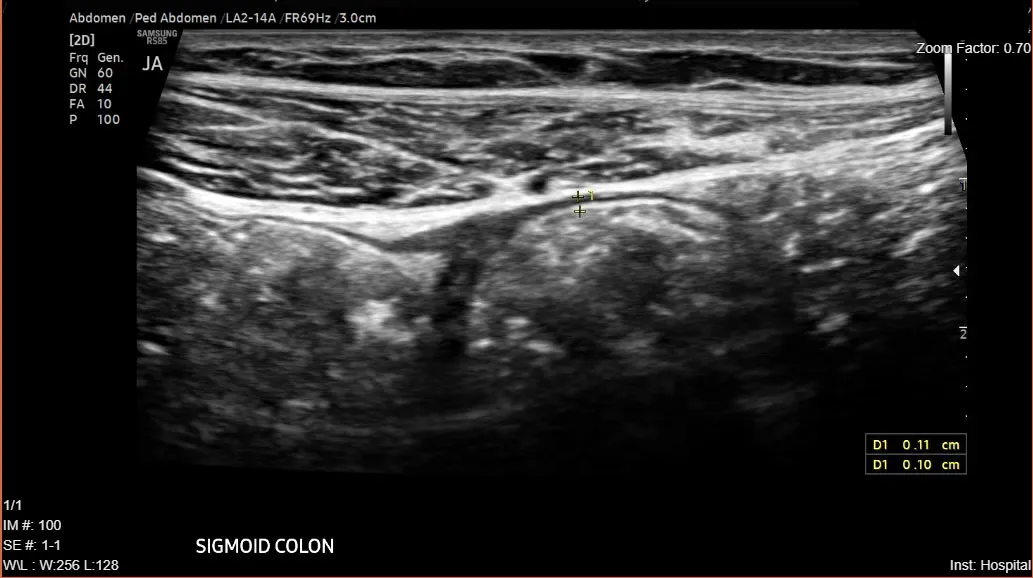 Intestinal ultrasound allows trained physicians to measure bowel wall thickness in patients with inflammatory bowel disease.
Summary
Intestinal ultrasound uses standard ultrasound technology but requires extensively trained clinicians to perform high-resolution imaging of the bowel.
UHealth physicians use intestinal ultrasound to assess patients with inflammatory bowel disease.
The procedure is convenient and quick, and can reduce the need for other procedures and tests.
Between 2.4 and 3.1 million people in the U.S. have inflammatory bowel disease (IBD), a group of lifelong diseases affecting the intestines. IBD prevalence is growing, according to the U.S. Centers for Disease Control and Prevention (CDC). Patients with IBD often face a litany of procedures, including MRI and endoscopy, to properly evaluate their conditions.
Gastroenterologists at UHealth—University of Miami Health System, however, are using the advantages of ultrasound technology to save time and accurately assess the inflammation that characterizes IBD. Physicians trained in intestinal ultrasound, like UHealth’s Oriana Damas, M.D., associate professor of medicine in the Division of Digestive Health and Liver Diseases at the University of Miami Miller School of Medicine, and Stephanie Ioannou, M.D., assistant professor of digestive health and liver diseases at the Miller School, can often use their skills to improve the IBD patient experience.
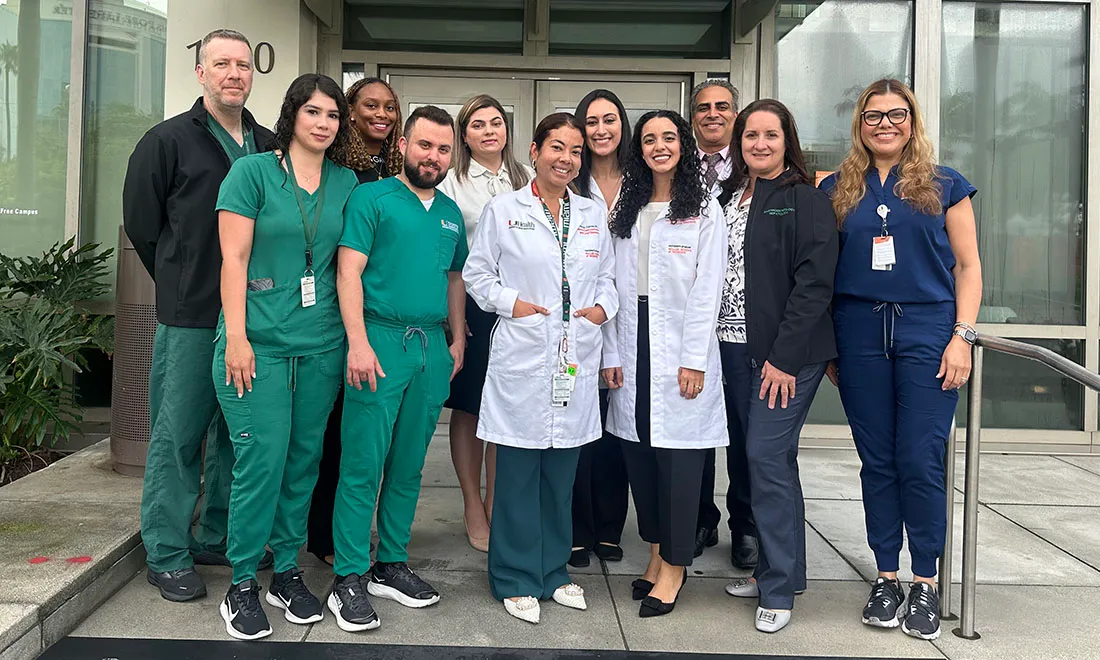 Dr. Oriana Damas (front center) and Dr. Stephanie Ioannou (front row, third from right) with their IBD clinic team.
Both physicians have completed rigorous International Bowel Ultrasound (IBUS) Group training to perform intestinal ultrasound.
“While intestinal ultrasound doesn’t completely eliminate the need for follow-up colonoscopies and other invasive tests, ultrasound imaging can greatly reduce the need,” said Dr. Damas. “This is a game changer in how we care for and manage IBD patients, as well as others with bowel abnormalities.”
“To our knowledge, we are only center in South Florida offering intestinal ultrasound for adult IBD,” said Dr. Ioannou.
Intestinal ultrasound uses standard ultrasound technology but requires the extensive training completed by Drs. Damas and Ioannou to perform high-resolution imaging of the bowel and adjacent structures. Gastroenterologists in Europe have been using them to image the bowel for about a decade. In recent years, clinicians in the U.S. are following suit.
“Dr. Damas and I have been able to seek the specialized training and International Bowel Ultrasound Group certification needed to evaluate the bowel and interpret what we see,” said Dr. Ioannou.
 Dr. Oriana Damas
 Dr. Stephanie Ioannou
Dr. Ioannou’s practice and research focus on inflammatory bowel diseases, including Crohn’s disease and ulcerative colitis. She said that intestinal ultrasound is an efficient, effective option that can be done during a clinic appointment.
“Unlike other diagnostic options, intestinal ultrasound does not require bowel preparation, sedation, patient fasting or the use of contrast, like with CT or MRI,” Dr. Ioannou said. “It’s relatively quick, usually taking 15 to 20 minutes. And it’s done in the office setting.”
That kind of convenience is important for patients dealing with a condition that can cause diarrhea, cramping, fatigue and weight loss, and is consistent with the UHealth mission to deliver high-quality, compassionate health care to the people of South Florida, and beyond.
Tags: clinical trials, Division of Digestive Health and Liver Diseases, Dr. Oriana Damas, gastroenterology, IBD, inflammatory bowel disease, Newsroom, ulcerative colitis