
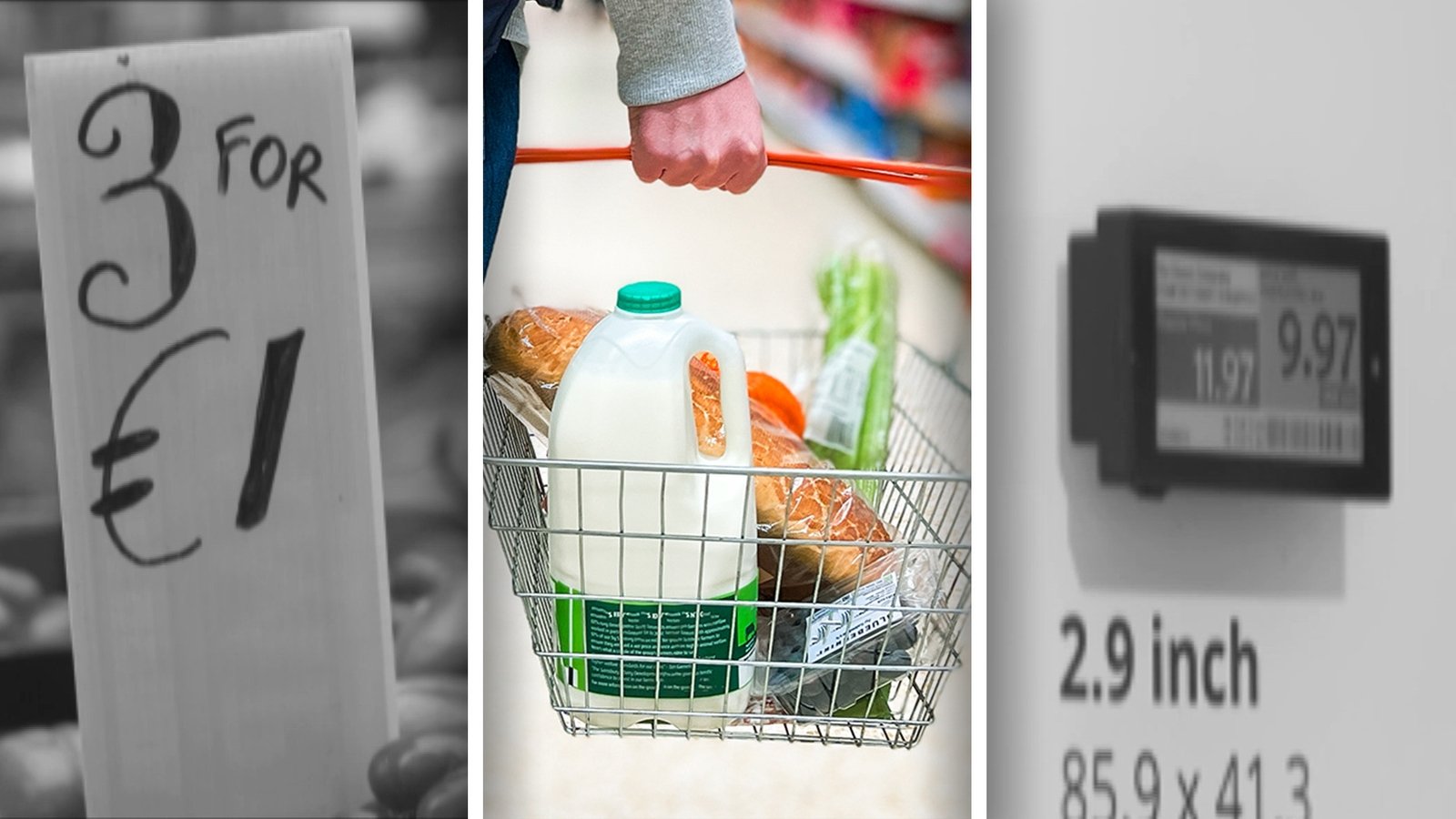
Dynamic pricing, where prices rise and fall in real time, has already reshaped how we book airline tickets and hotel rooms.
Now, as digital price tags appear on supermarket shelves, some experts are asking whether grocery prices could ever follow a similar model.
Next time you’re at your local supermarket, take a closer look at the price tags – you might notice something new. Both Lidl and SuperValu have swapped their traditional printed labels for electronic shelf displays.
The digital tags use e-ink, making them difficult to distinguish from paper, but the technology is completely different.
So, if the era of printing individual price labels for every item in the store is a thing of the past, what does it mean for the consumer?
The price tag was a revolutionary concept when it first appeared in the 1800s. Before its introduction, sellers could charge each customer a different price, making it difficult to shop around. With the arrival of price labels, everything changed.
“In the new department stores everything had a price tag so everybody got charged the same amount. It was a friend of the consumer,” Damian O’Reilly, Senior Lecturer in Retail Management at Technical University Dublin told Prime Time.
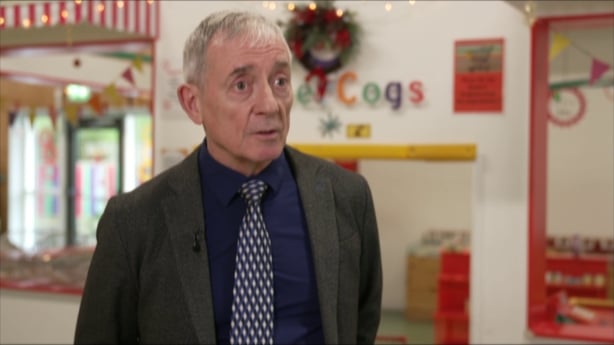
Damian O’Reilly, Senior Lecturer in Retail Management at TUD
But technology is beginning to change how prices are managed in shops.
Electronic shelf labels
Retail solutions company, Mercury Retail Services provides electronic shelf labels (ESLs) to a variety of different stores across the country.
Managing Director Garry Doyle is predicting the technology will be in practically every shop over the next three to five years.
Retailers, Mr Doyle says, benefit not only from savings on paper and labour but also from improved efficiency in stock management. Price changes can be made instantaneously using an online portal.
The discreet, low-fi look of the digital displays means customers may not have spotted them, Mr Doyle said.
“It’s a sign of a good piece of technology that embeds itself and isn’t noticeable to customers.”
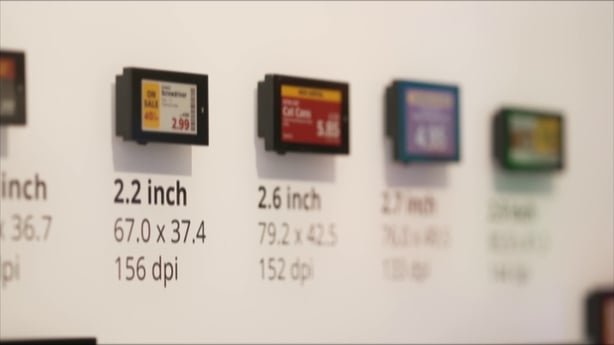
Mercury Retail Services provides ESLs to a variety of different stores across the country
But the rollout of digital price tags has raised broader questions about how such technology could be used in the future.
When Kroger, one of the largest supermarket operators in the United States, began using electronic pricing in 2024, Senator Elizabeth Warren raised concerns that the move could lead to price gouging.
Kroger denied the claims, saying it had no plans to implement a dynamic pricing model in its stores.
In Ireland both SuperValu and Lidl told Prime Time they do not use their electronic price tags for dynamic pricing. Lidl said its prices were the lowest in the market, Supervalu’s operator Musgrave said its digital tags were for efficiency and sustainability.
What is dynamic pricing?
Dynamic or real-time pricing helps companies maximise revenue by adjusting prices to reflect how much customers are willing to pay. Prices can rise when demand is high and customers are prepared to pay more, and fall when demand is lower to encourage sales.
Distinct from variable pricing such as a matinee at the theatre or happy hour at a bar or restaurant, dynamic pricing is where prices change frequently and rapidly, driven by computer processing.
It’s common in airline tickets, hotels and in some jurisdictions on ride share or taxi apps like Uber.
It isn’t defined under Irish or European law and, in most cases, not banned.
But how likely is it that the same model will ever be introduced in supermarkets using ESLs?
Recent academic research from the US found no evidence that digital price tags had led to real-time pricing spikes in supermarkets, even during periods of high inflation.
The joint UC San Diego and University of Texas study, which was based on data provided by an unnamed major retailer, found that the pattern of prices looked almost exactly the same before and after the use of digital price labels.
TU Dublin’s Damian O’Reilly points to the potential reputational damage if supermarkets were perceived to be price gouging.
“Supermarkets work off very low margins and that they’ve got to be very conscious of what they’re offering to the consumer to build up loyalty,” Mr O’Reilly said.
He maintains that retailers will focus on in-store strategies that encourage shoppers to buy additional, related products – turning one purchase into two.
“What the supermarkets are looking for you to do is to buy more of their product and spend more in their supermarkets,” Mr O’Reilly added.
There’s an added complication that some larger supermarkets sell up to 20,000 products which makes implementing dynamic pricing very complex.
“In other retailers I could see it happening but it’s very difficult in supermarkets with the amount of products and the price transparency that they have.”
Online retailers
Supermarkets may be constrained by transparency, but online retailers operate under very different conditions.
The world’s largest retailer, Amazon reportedly changes prices 2.5 million times a day.
Prime Time recently tracked a basket of 20 goods on Amazon.ie and found 79 price changes in just a month.
Some items didn’t change at all, but others – like a box of baby wipes – shifted almost daily. Often the changes were only a few cents, but frequent enough that the cumulative effect was a shift of one or two euros over the course of a few days.
In a statement to Prime Time, Amazon said: “We monitor and match publicly available prices of a wide selection of products from all product categories on Amazon.ie with those of other relevant retailers known to offer good value to customers.
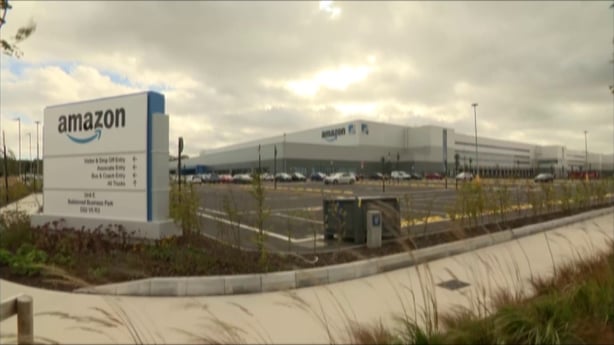
Prime Time tracked a basket of 20 goods on Amazon.ie
“In this way, we ensure that customers find equally low or even lower prices for a wide range of products sold and shipped through Amazon.ie.”
The statement also noted that many of the products on its site are sold by independent third-party sellers who set their own prices.
Concert tickets
Dynamic pricing made headlines in August 2024 when tickets for the Dublin leg of the Oasis reunion tour were sold using the model. Fans were reportedly charged different prices for seats in the same section of the stadium.
A Competition and Consumer Protection Commission (CCPC) investigation into the ticket sale is ongoing. It’s likely that the investigation will focus on the transparency and fairness given existing consumer law requires customers to be given enough detail to make an informed purchase.
“I think consumers have been annoyed by it but it really is a supply and demand situation. The demand was so high for tickets,” barrister Ronan Lupton, an experienced Senior Counsel practising in the areas of Commercial and Media Law, told Prime Time.
“We don’t have any evidence to suggest there was misbehaviour. It was simply that the only tickets that were available for selection at that stage were tickets that were of a particular price,” Mr Lupton SC said.
A Fianna Fáil bill to ban dynamic pricing by primary ticket sellers is on hold pending the Oasis case however Mr Lupton SC suggested that a complete ban may not be required.
“We have laws to protect consumers and maybe we should look to upgrade and amend those laws rather than simply blanket prohibiting wholesale sellers from dynamic pricing,” he added.
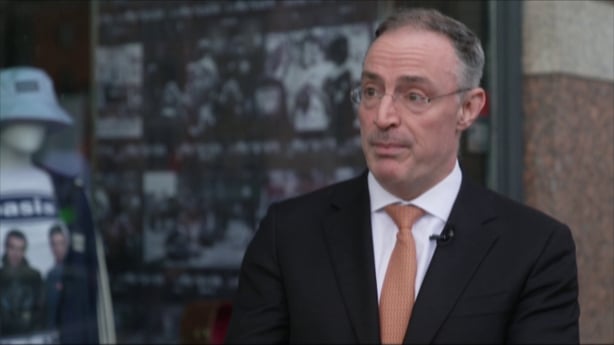
Ronan Lupton, SC who practices in the areas of Commercial and Media Law
The CCPC told Prime Time it couldn’t comment on the Oasis investigation as it is ongoing.
Regarding supermarkets it noted that if grocery stores or other retailers introduce dynamic pricing existing consumer protection laws still apply.
“Clear and transparent pricing is a cornerstone of consumer protection law and any pricing mechanism, whether static or dynamic, must comply with the law.”
Prices displayed have to be inclusive of all taxes and charges, and the price on the shelf must match the price the consumer is charged at the till, it said.
A spokesperson for the Department of Enterprise, Tourism and Employment told the programme that while dynamic pricing is currently permitted under consumer law it is “closely monitoring developments”.
“The outcome of the CCPC’s ongoing (ticket) investigation will be an important factor in determining whether further policy or legislative measures are necessary.”
There may also be changes ahead at a European level connected with the proposed Digital Fairness Act, which involved consultation on dynamic pricing.
Proposals for new laws are expected during Ireland’s EU Presidency later this year.
A report on this subject from Louise Byrne and producer/director Genevieve Brennan airs on the 6 January edition of Prime Time at 9.35pm on RTÉ One and RTÉ Player.