
NEED TO KNOW
A wildlife photographer has captured what is believed to be the first images of the rare, elusive Ross seal underwater
“This animal lives so deep within the Antarctic pack ice that its life history is not very well understood, and it is not seen very often,” photographer Justin Hofman wrote on Instagram
Hofman spent 15 seasons in the Antarctic and has only seen two Ross seals, including the one in his recent, groundbreaking photos
For what is likely the first time, a Ross seal has been photographed below the ocean’s surface.
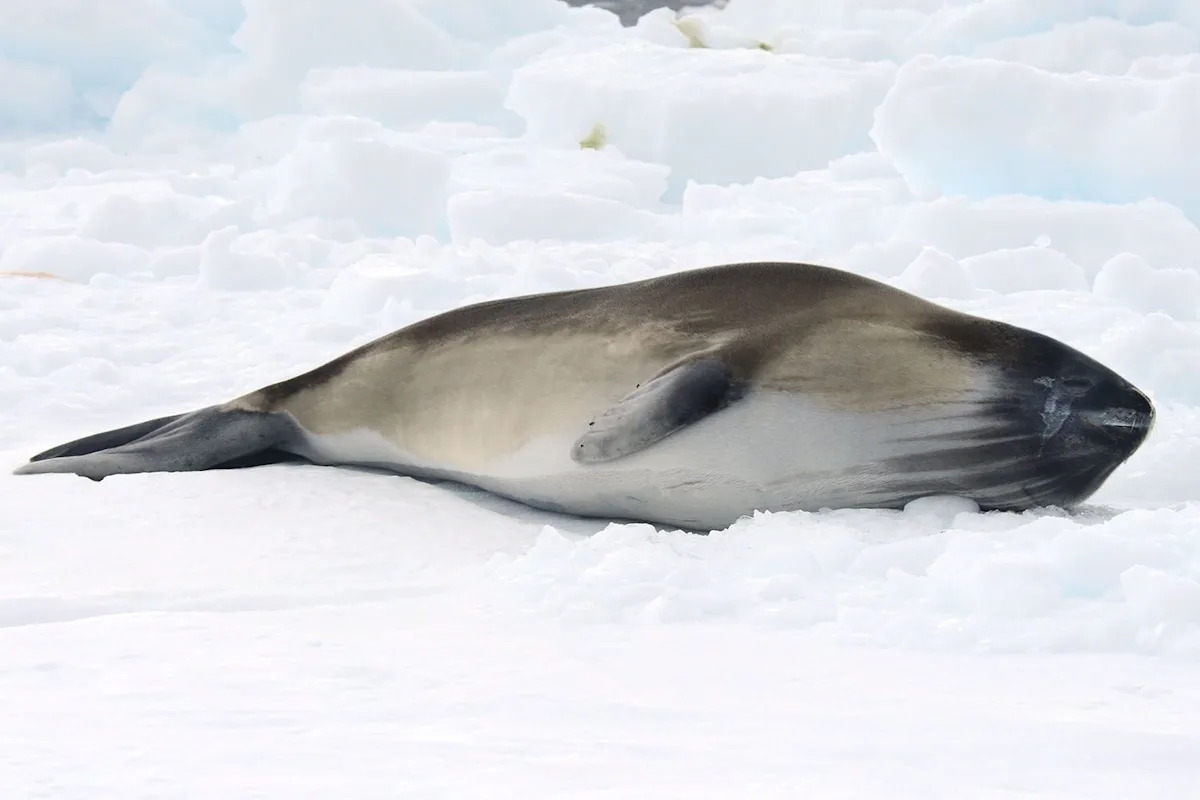
Ross seals, the smallest and rarest members of the Antarctic true seal family, are incredibly elusive. Because they so successfully evade human interaction, research on the species is limited, per IFL Science and Diver Net. They’ve only been photographed a handful of times, all above water on sea ice.
Underwater photographer Justin Hofman, who works as an underwater specialist with Lindblad Expeditions, has spent 15 seasons working in Antarctica. In all that time, he has only seen two Ross seals, he wrote in an Instagram post on Dec. 26: one on the ice and one recently underwater, where Hofman captured the first known photos of the animal in the ocean.
“These are quite likely the first-ever underwater photographs of a Ross seal. This animal lives so deep within the Antarctic pack ice that its life history is not very well understood, and it is not seen very often,” Hofman wrote in the caption of his post, which includes four underwater shots of a Ross seal.
The first photo shows the seal, up close, staring directly into the camera as it floats in deep blue, icy water. The other equally stunning images show the Ross seal gliding through the water and staring into the ocean.
“Several years ago, I learned that there were possibly no underwater images of this animal, so I started thinking about what it would take to make that happen,” Hofman continued in the caption.
Hofman’s mission, he said, was primarily curiosity-driven. He didn’t even expect to see a Ross seal underwater because his Antarctic trips with Lindblad didn’t travel south enough to where Ross seals are generally found. And even in their known region, the animals are hard to come by.
“I didn’t think about it in the way that someone thinks about a goal or a target subject. I thought, ‘Wow, wouldn’t that be cool to have the first underwater photos of this animal?’ I never thought that it was an actual possibility because these animals are so rarely seen and are generally so far south,” Hofman shared on Instagram.
Still, Hofman managed to make it happen, thanks in part to a voyage with Lindblad aboard the National Geographic Resolution that went further south in Antarctica than Hofman had traveled ever before. And there, Hofman made history in his craft. “Well, Christmas came a little early this year,” he wrote in his post about the first-of-their-kind photos.
Hofman’s photos of the Ross seal — often distinguished by its broad, dark stripes on its body and neck, as well as its large eyes — show the seal facing the camera directly, with its flippers and tail trailing behind it. Another catches the seal’s profile, which depicts its slender, dark body and thick neck.
Never miss a story — sign up for PEOPLE’s free daily newsletter to stay up-to-date on the best of what PEOPLE has to offer, from celebrity news to compelling human interest stories.
Ross seals are born and bred in “areas of medium to dense pack ice south of 60°S latitude,” according to ASOC, an international coalition focused on the conservation of Antarctic wildlife. The animals venture into the open water to hunt lanternfish, Antarctic silverfish, and squid. They can dive to nearly 1000 feet and remain underwater for more than 20 minutes. These factors make it challenging to record the seals in their native habitat.
Read the original article on People