
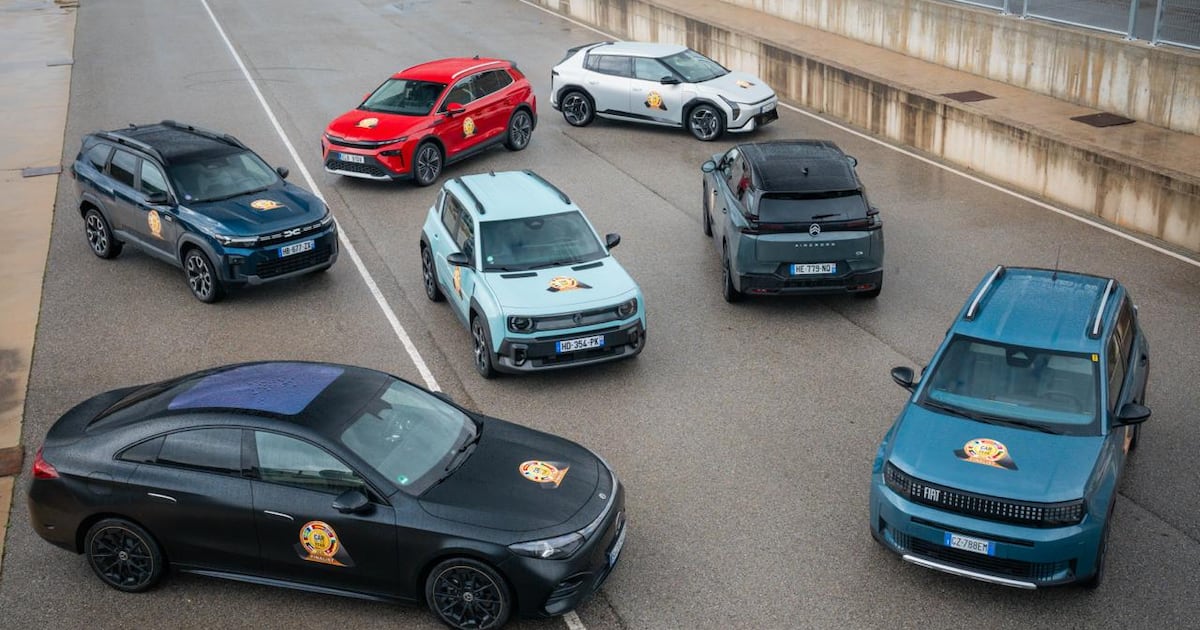
It’s that time of year again, when we score the seven finalists for Europe’s Car of the Year title. As one of 59 voting jury members from 23 countries, 25 points must be assigned over the cars, with a maximum of 10 for any one car and at least five finalists receiving some score.
The criteria is a wide mix of innovation, price, driving pleasure and the usual array of practicality, energy economy, plus a big dose of gut instinct. We’ve tested them across motorways, gravel tracks, city streets, potholed back roads, race circuits and runways. We’ve put them through high-speed lane changes – the famous elk test – and we’ve spent hours interviewing the engineers who devoted years of their lives to develop these cars.
Most recently, in December, we pitted the final seven to a mix of track testing and fantastically challenging local roads at ParcMotor Castelloli, 60km northwest of Barcelona.
After all that time behind the wheel, here are my thoughts and scores for each of the seven finalists.
Skoda Elroq – one point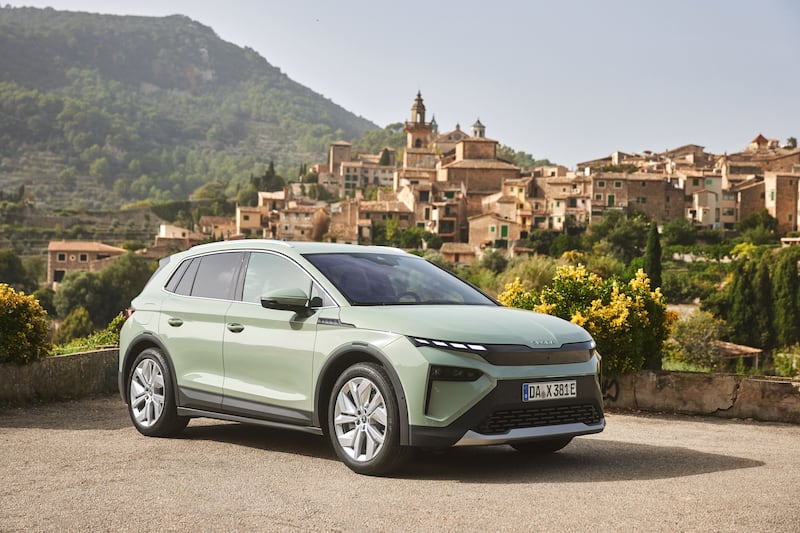 Skoda Elroq, the Clarke’s Shoes of new cars
Skoda’s head of tech development and board member Johannes Neft pitches the Elroq as a Czech-badged all-electric answer to the VW Golf. And it comes in a variety of power flavours, up to a sprightly RS. But it never quite captures the energy or enthusiasm of the famous German hatch. It’s smart inside, but it’s hard to get enthused by its driving dynamics, and a brake pedal that starts soft and spongy before applying hard bite doesn’t help. For all the bold exterior colours, it’s a relatively sober affair, the Clarke’s Shoes of new cars.
Renault 4 – one point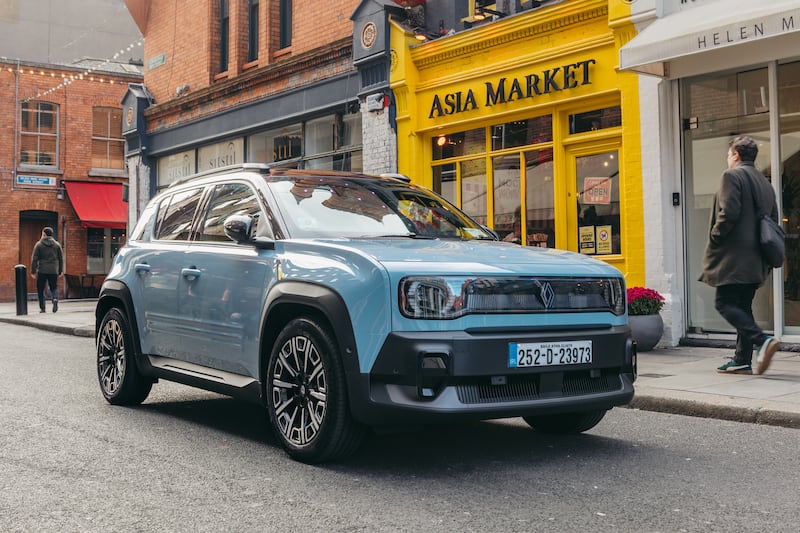 The Renault 4 is a nice car to drive but could have delivered much more
For all its strengths, this car has flaws. It promised Renault 5 driving character but with more practicality. True, the boot is big, but the footwell is still a problem, and a sliding rear bench would have made great sense. Instead, Renault opted to put the sliding bench in the upcoming Twingo city car. The R4’s cabin doesn’t capture the quirkiness of the original either, which is a real shame. As it stands, this is a nice car to drive, but does it move the dial significantly from the Renault 5? No. It could have delivered so much more with just a few tweaks.
Citroën C5 Aircross – two points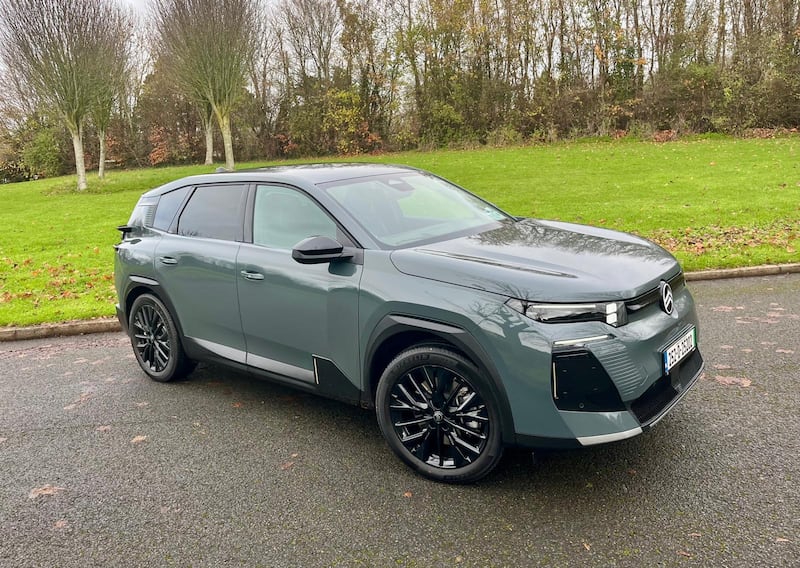 Citroën C5 Aircross, impressive for family needs
Can you deliver Citroën’s ‘sofa on wheels’ comfort while ironing out the wallowing ride quality? For decades, it has been the inevitable compromise required when you deliver a car that’s able to tackle a series of speed bumps with a glass of water delicately balanced on the dash. This time, Citroën may just have pulled it off. The C5 Aircross is smart, stylish, spacious, but most importantly, it delivers the supple ride quality without sacrificing so much body control. That said, pitch it against a proper rutted back road and you still bounce along. While it can’t match Dacia’s low-price promise, there are enough quality touches to justify the French brand’s claim of delivering value for money. Offered as a hybrid or full electric, the latter claims 680km, which is impressive for family needs, even if in reality you are looking at 500km. For those who seek out affordable comfort, this car deserves to be on our shortlist.
Dacia Bigster – three points New Dacia Bigster, impressive, if not inspiring
The ambitions of Dacia deserve credit. Delivering a full-sized family SUV for €30,000 is incredible in the current climate. And hitting that price point without leaving the buyer feeling short-changed is what the firm refers to as the “Dacia way”. This means it gets the features buyers in this class expect – like a driver’s electric seat and a power tailgate – but delivered in ways that cut costs. The hybrid version is let down by a gruff engine set-up that intrudes into the cabin under acceleration. It lacks much in the way of driving fun, but its ultra-functional format can compensate for that, and that’s before you consider it’s competing in a market where rivals are often €10,000 more expensive. Ultimately impressive, if not inspiring.
Mercedes-Benz CLA – four points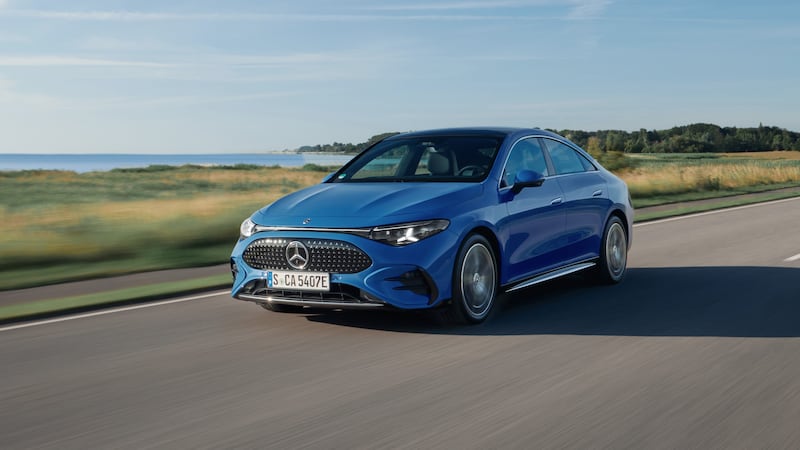 The new Mercedes CLA EV has an exceptional range
The chief engineer for compact cars says people opt for CLA over C-Class because of styling, which is odd, for the saloon’s look is certainly not its strongest suit. A new ‘shooting brake’ estate version is far better looking – and more practical – but in both instances, what makes this Mercedes’s star shine is when it gets on the road.
The range is exceptional, claiming up to 792km in WLTP figures. From our latest test, we found it still had 109km left when the battery pack was down to 15 per cent, and we were running at an energy consumption of 22.3kWh/100km.
This leggy range sits alongside taut handling and wonderfully punchy acceleration, to make it a properly fun car to drive.
Inside, it’s all a bit too bling, but the tech stands up to scrutiny, and it offers AI-supported voice activation. Using both ChatGPT and Google’s Gemini, the voice assistant can help while away the journey by guiding you through World Cup winners over the last 20 years, or whatever conversational cul-de-sac you wish to go down with your car.
The new CLA comes as this all-electric version or a mild-hybrid petrol version. There are no plans for a plug-in hybrid.
Fast, agile and full of range, the biggest hurdle to overcome is price, which is hefty for a car of this size. Then again, when Honda is charging €50,000 for the Civic, maybe this is just another example of the mad world we now live in.
Fiat Grande Panda – six points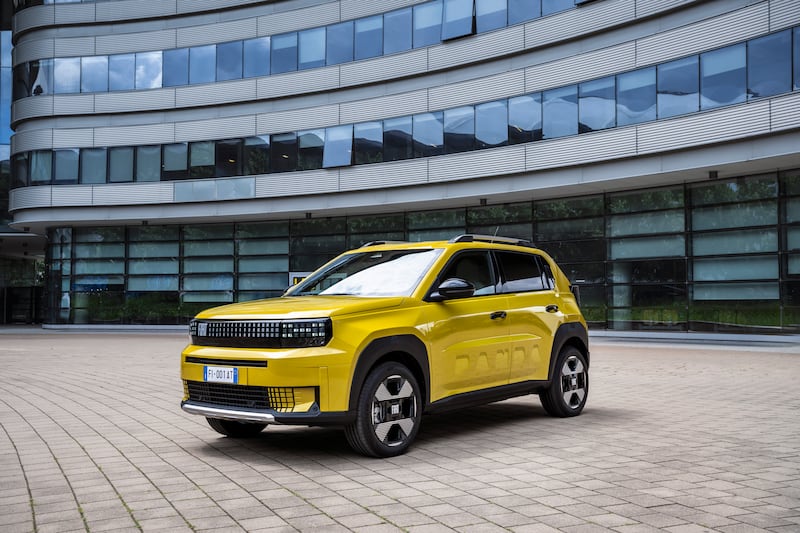 Fiat Grande Panda, a fun car to drive
Bread and roses. James Oppenheim’s poem, which became a slogan for labour movements, is evoked by Fiat when pitching its new Grande Panda. It argues that every worker deserves not only fair wages but dignity, leisure, beauty, and a full human life. In motoring parlance, even if you are on a tight budget, you deserve more than dour basics.
There’s a simple charm to the Grande Panda, and Fiat handles the retro appeal with aplomb. Those bouncy, body-rolling traits might seem unsophisticated these days – but, packaged with the retro triggers that make you hark back to the 1980s original, any handling foibles are forgiven, attributed to character.
That’s because the engineers have managed to capture the character of the old car, right down to its light and sometimes bouncy driving style, but also throw in just enough tech to make it modern. This is a fun car to drive, with a surprising amount of practical space. Quirky variants are in the pipeline, including a 4×4.
This fun little Fiat delivers us our daily bread but gives us roses as well.
Kia EV4 – eight points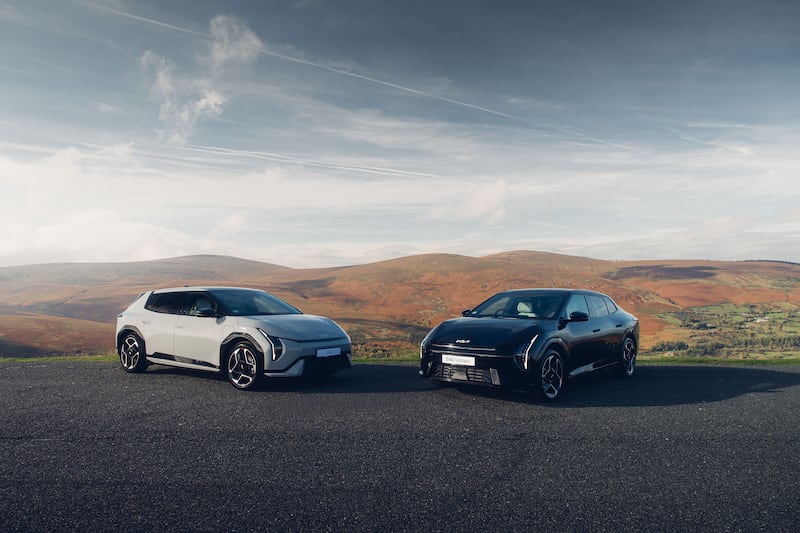 Kia EV4, our choice for 2026 Car of the Year for Europe
Solid and impressive, it has traits of the bigger EV6, the first Kia – and first Korean – to win Europe’s Car of the Year crown back in 2022.
This time, they’ve come up with a spacious family hatchback that may carry a Korean badge but claims a European passport. Designed, developed, and now built in Europe, the EV4 is meant for our roads, and for the 45 per cent of motorists here who don’t desire an SUV.
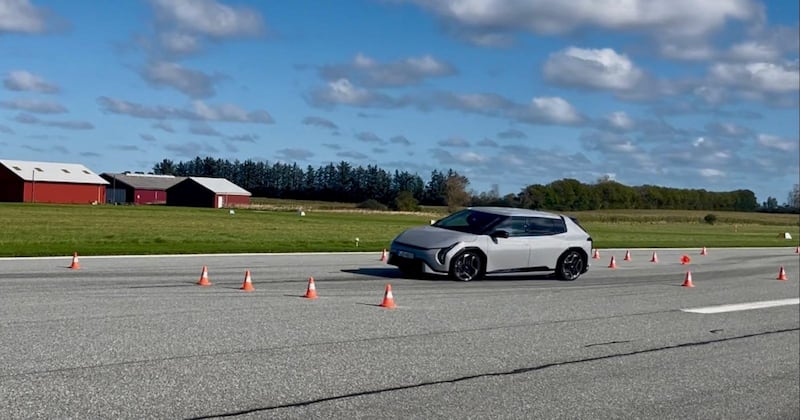 Kia EV4 during a Car of the Year ‘Elk test’ at an airfield in northern Denmark
Kia has tested the car over 100,000km on public roads, along with 500 laps of the Nürburgring at 95 per cent of its top speed to ensure some hardcore degradation testing. The end result is an impressive all-electric hatch.
Its engineers claim that with the EV4, you are “sitting in the car, not on the car”. It’s a bold claim, highlighting a regular flaw with many current electric cars, built on big “skateboard” chassis formats where underfloor battery packs leave drivers feeling disengaged. The EV4 might not completely overcome this sensation, but it comes very close, with a low seating position for the driver and a relatively low centre of gravity.
What is delivered is a hatchback – and saloon-like ‘fastback’ – that’s neat and tidy through the bends, composed in tricky turns and always engaging to drive. At the same time, it offers levels of comfort and refinement that make big motorway miles easy to tackle. For those in the back, Kia claims best-in-class rear legroom, although the high-knee/low hip point that is created in the hatch will not suit everyone.
The 81.4kWh battery pack also claims to be faster in real-life charging. Some, like the VW ID.3, can hit higher peaks of charging, but those rates quickly taper off, while Kia says its battery takes a steady, fast charge in a much flatter curve. The result? The EV4 owner is the first to unplug and drive away from the charging station, which they argue is what really matters.
Put the practicality together with the driving dynamics, top it off with a smartly styled cabin and competitive pricing, and you can see why this all adds up to our choice for 2026 Car of the Year for Europe.