
Economic growth in 2026 expected to be the weakest in 30 years
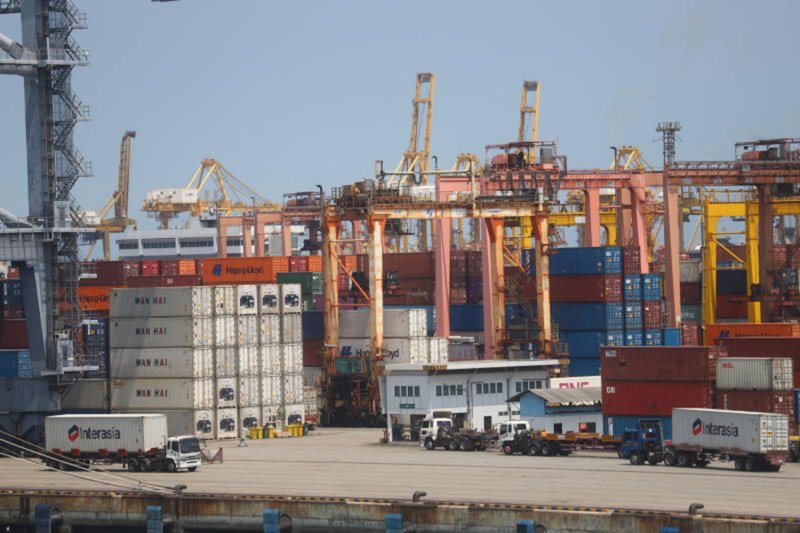
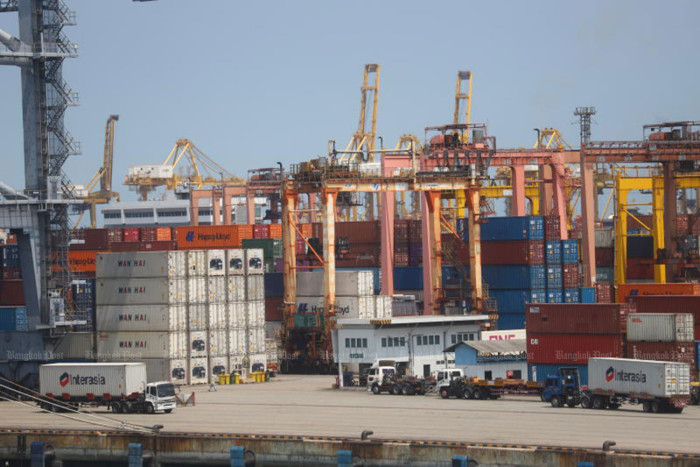
Trailer trucks transport cargo at Laem Chabang deep-sea port in Chon Buri province. Thailand’s exports are projected to contract this year. (Photo: Nutthawat Wichieanbut)
Thailand’s economy is bracing for its weakest expansion in 30 years, with GDP growth projected at less than 2% in 2026, attributed to sluggish exports, high household debt and declining competitiveness in global markets, warns the Joint Standing Committee on Commerce, Industry and Banking (JSCCIB).
The growth projection does not include years when Thailand faced crises, including the pandemic that caused GDP to contract by 6.1% in 2020.
The warning comes at a time of heightened global uncertainty following a shock military strike by the US on Venezuela, raising concerns about the stability of the world order.
Domestically, Thailand continues to grapple with prolonged political and economic challenges, leaving policymakers and businesses facing mounting pressure.
According to the JSCCIB, GDP growth is expected to range between 1.6% and 2%, while exports are forecast to contract by 0.5% to 1.5%. Inflation is projected to remain subdued, hovering between -0.2% and 0.7%.
“We are concerned about an economic recession,” said Kriengkrai Thiennukul, chairman of the Federation of Thai Industries and a member of the JSCCIB.
“The new government must make serious efforts to transform old industries into new ones.”
Mr Kriengkrai noted technological transformation is essential to revitalising the economy.
He warned that exports are likely to remain under pressure due to US tariffs and baht appreciation.
The currency strengthened more than 8% against the US dollar last year, causing Thailand to lose competitiveness in international trade, said Mr Kriengkrai.
Poj Aramwattananont, chairman of the Thai Chamber of Commerce and another JSCCIB member, urged the government to monitor gold trading, which can influence foreign exchange rates.
“The baht’s appreciation will deal a blow to the export sector, which drives the Thai economy alongside tourism,” he said.
“A closer look at changes in baht value is an urgent task for the government.”
Household debt
Domestically, household debt remains a heavy burden. In the second quarter of 2025, Thailand’s household debt-to-GDP ratio tallied 86.8%, limiting borrowers’ ability to access new credit and prompting banks to tighten lending criteria.
Global tensions are also adding to uncertainty. The panel noted the US invasion could disrupt supply chains and affect Thailand’s manufacturing sector, though the impact is expected to be limited given the relatively small trade volume between Thailand and Venezuela — around $500 million annually.
Still, business leaders warn the geopolitical fallout could have broader consequences.
Payong Srivanich, chairman of the Thai Bankers’ Association and a JSCCIB member, said the military strikes in Latin America have raised concerns about global investment flows.
“Thailand badly needs to adapt to changes in global politics and the economy,” he said.