
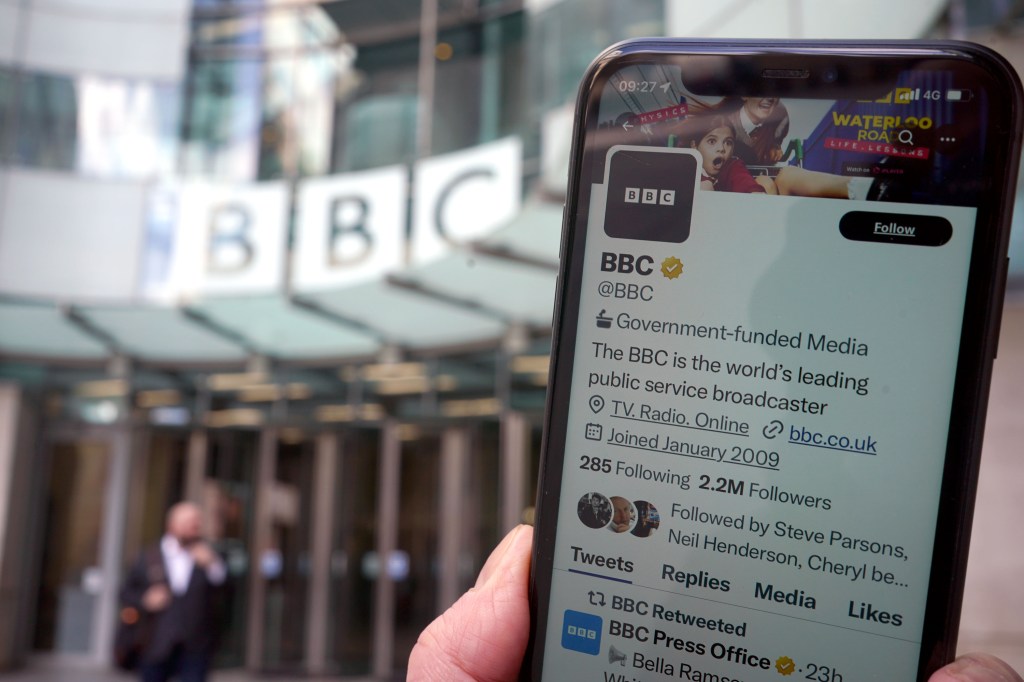
The BBC is facing “quite a lot of pressure” to come off Elon Musk’s X, Director General Tim Davie has said, but he stressed it will remain on the platform.
Speaking to a UK parliamentary committee about the BBC World Service, Davie made the admission as he set out to prove that the BBC remains active where young people are getting their news.
His reference to Musk’s social media platform came as X faces criticism around the world over its AI tool Grok and deepfake nudes.
“I have quite a lot of pressure to remove the BBC from X by the way,” Davie told the Public Accounts Committee this morning. “That is not what I will be doing. Because we need to be on these platforms, we need to give quality information onto the social media platforms and bring people onto them. That is critical because otherwise the Chinese and Iranians are ‘flooding the zone’ and they are investing very hard.”
Davie was responding to a question around how less and less young people now say they get their news from the BBC, preferring social media platforms like X and TikTok. He did not elaborate on who is pressuring him to remove the BBC from the platform.
BBC talent’s use of X has been a constant source of stress for the corporation, with big stars like ex-Match of the Day host Gary Lineker falling foul of the BBC’s impartiality rules over tweets. Elsewhere, in April 2023, X changed a label on the main BBC account, saying it is “publicly funded” instead of “government funded media” after the broadcaster objected to the latter term.
More pro-Israel complaints than pro-Palestine

Jonathan Munro. Image: Leon Neal/Getty
Davie is set to exit the BBC soon following his shock resignation due to the Donald Trump Panorama scandal. He was sat next to the BBC’s interim news boss Jonathan Munro, with Munro having temporarily replaced Deborah Turness – another casualty of the Trump fiasco.
Speaking to accusations of pro-Palestinian bias in BBC Arabic’s coverage of the Israel-Hamas war, Munro revealed that the BBC gets more complaints about its coverage leaning pro-Israel than in the other direction. The BBC has previously said it is “taking action” on the BBC Arabic “systemic bias” complaints, which were contained in the excoriating leaked Michael Prescott memo that led to Davie and Turness’ departure. Coverage of the Israel-Hamas war and its aftermath has proved difficult for the national broadcaster, causing ructions within New Broadcasting House HQ and beyond.
“We have more complaints overall in the BBC that we are pro-Israeli than the opposite,” said Munro. “Both complaints piles are relatively chunky as you would expect from a polarizing story but it is not the case that everyone thinks we are leaning in a pro-Arabic or pro-Palestinian way. The opposite is actually true.”
“For the avoidance of doubt,” Munro added that the BBC doesn’t “take any perspective [on Israel-Gaza], but in terms of perceptions of audience, it is important to put that into the discussion.”