
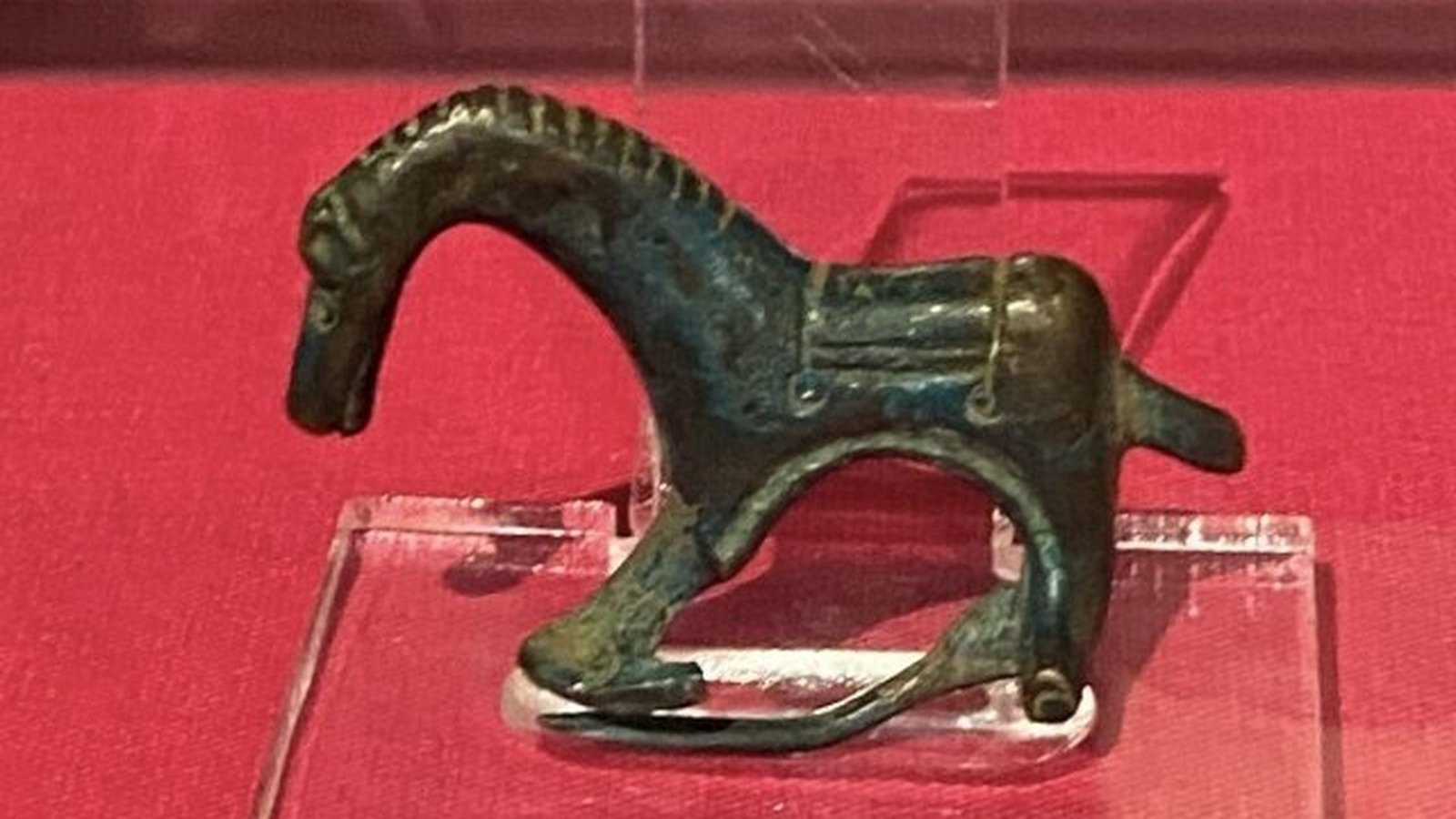
A fraudster metal detectorist who claimed to have discovered a valuable Roman brooch has avoided a prison sentence after admitting he bought it from eBay.
Jason Price, 54, was paid £5,000 to display the fake artefact at a local museum, even though he had secretly ordered it through the online marketplace, Lincolnshire Police said.
The force said over several years Price submitted a number of artefacts to Lincolnshire County Council under the Portable Antiquities Scheme, including Roman coins which were found to not be genuine.
Artefacts previously submitted by Price were also tested for their authenticity and concerns were raised to the police.
The force said Price pretended to find the Leasingham horse brooch in the Lincolnshire village of Leasingham in 2019, which led to a change in the historic understanding of Roman brooches in Britain and was classed a significant find.
The brass brooch, which was described as a “once in a lifetime find”, had generated national interest when Price claimed to have found it.
In October 2020, Price also claimed to have found a Roman knee brooch in Long Bennington, Lincolnshire, which was recorded as a treasure, police said.
He also claimed to have found two Roman hoards including a Bronze Age axe and figurines, but many of the items had been purchased online.
Police said Price buried the items he claimed were a Roman hoard in the hopes there would be a full archaeological dig at the Long Bennington site.
Price, of Purcell Close, Grantham, Lincolnshire, was sentenced to 12 months’ imprisonment, suspended for two years, at Lincoln Crown Court after he admitted four counts of fraud by false representation.
Price must pay Lincolnshire County Council Lincolnshire Police £3,250 in compensation, police said, and was handed a rehabilitation activity requirement up to a maximum of ten days and must complete 150 hours of unpaid work.
Will Mason, head of culture at Lincolnshire County Council, said: “It’s incredibly sad and disappointing that anyone would choose to exploit Lincolnshire’s rich heritage in this way.
“Thankfully, incidents like this remain rare due to the rigorous examinations carried out on objects before they are added to a museum’s collection.”