
An expert in transfusion medicine explains the reasons why some patients require blood transfusions and how the process works.
Published January 9, 2026
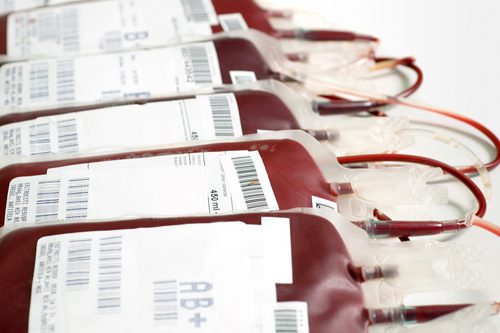
Every two seconds, someone in the U.S. needs a blood transfusion, a process in which donated blood or blood products is given to a recipient in need due to blood loss from a medical condition, injury, or surgery.
“Some people, like cancer patients receiving chemotherapy, may need regular transfusions over many months, while a patient suffering from a severe traumatic injury, such as a car accident or gunshot wound, may need dozens of units of blood urgently,” says Dr. Elizabeth Stone, assistant attending physician in transfusion medicine and cellular therapy at NewYork-Presbyterian/Columbia University Irving Medical Center. “There’s no substitute for blood, and if we don’t have a constant supply from healthy donors, patients may not get the lifesaving treatments they need.”
Before a transfusion, rigorous testing is done on blood to ensure patient safety. “Blood transfusion is very safe, especially in this country, where it is highly regulated,” says Dr. Stone. “Not only are blood donors screened by a questionnaire, but every single donation gets tested for many different infectious diseases.”
 Dr. Elizabeth Stone
Health Matters spoke with Dr. Stone about why blood transfusions are needed, what to expect during the process, and how doctors reduce risks for patients.
What are some reasons why a patient may need a blood transfusion?
The most common case is when a patient is very anemic, which means they don’t have enough red blood cells to carry oxygen around their body. But there are many different medical conditions that lead to patients needing blood transfusions.
A patient being treated for cancer with chemotherapy or immunosuppression treatments may need transfusions of platelets to prevent spontaneous or excessive bleeding.
A patient with a clotting disorder, or one who is taking anticoagulants, may need transfusions of plasma to restore their body’s ability to form blood clots before surgery.
A patient who is losing blood rapidly due to a traumatic accident or critical illness may need immediate blood replacement to save their life.
How long does a blood transfusion take and what should patients expect?
During a scheduled transfusion, it can take up to four hours to transfuse a unit of blood, which is roughly the equivalent to 12 ounces. We don’t want to give blood transfusions quickly, especially if a patient has cardiac disease or kidney disease, because they might not be able to handle that additional volume and develop a complication called circulatory overload. During the first 15 minutes, we transfuse very slowly and monitor the patient for a transfusion reaction. A patient’s vitals are taken pre-transfusion, at the 15-minute mark, and then periodically during the transfusion. Most patients have no problem tolerating a transfusion and feel well during and after the procedure.
In severe trauma with acute blood loss, an entire unit of blood can be transfused in a minute or two, but in this case the need for live-saving intervention outweighs the risk of a reaction, and the patient will be carefully monitored until the patient is stabilized.
Is getting a blood transfusion painful?
The process should not be painful at all. A needle is used to insert a tiny tube into the patient’s vein, which may feel uncomfortable at first. Patients may also feel a little bit cold during the procedure, because units of red blood cells are stored in a refrigerator. But it should not be painful whatsoever. If a patient is having pain or feels anything unusual during a transfusion, they should notify their care team immediately.
What are the common side effects when having a blood transfusion?
The most common transfusion side effects are mild allergic reactions, such as hives and itching, which can be treated with allergy medications. Patients can also develop a fever due to some residual white blood cells in units of blood, or experience chills and some shaking during the procedure. If a patient gets a fever, the transfusion is stopped and we do an additional workup to make sure the patient is not having a more serious reaction.
Blood transfusion is very safe, especially in this country, where it is highly regulated.
Dr. Elizabeth Stone
What are the more serious risks involved in transfusing blood?
Serious reactions are very rare but can occur if a patient receives blood that is incompatible with their blood type.
Each patient has a blood type of A, B, AB, or O, and is either Rh positive or Rh negative, and it is very important for patients to receive blood that is compatible with their blood type. In addition, if a patient has been transfused in the past or if they’ve been pregnant, they can also form antibodies against different antigens on red blood cells. In these cases, we obtain blood that is negative for those antigens and do extra testing to make sure the blood is safe for that patient. Type O negative blood is considered the universal donor and will be given in an emergency, but in general, there is a lot of checking and double checking to make sure that every patient who gets a unit of blood is receiving the right unit for that patient. Because of those safety checks, it is extremely rare for a patient to receive the wrong blood. If that does happen, an acute hemolytic transfusion reaction can occur. If not treated promptly, this can be fatal.
In rare cases, a delayed hemolytic transfusion reaction can occur in the weeks after a transfusion. Symptoms to look out for include:
Dark-colored urine
Yellowing eyes
Fevers
Back pain
What are the chances of transmitting an infectious disease through a blood transfusion?
The risk is quite low. There is a two-part screening process for blood donations. First, we screen donors with questionnaires that ask about their personal behavioral risk factors. For instance, if a patient has been in a place where malaria is circulating, they will be deferred from donating for a period of time.
Then, every single blood donation gets tested for infectious diseases like HIV, Hepatitis B virus, and Hepatitis C virus. In New York, we also test seasonally for some illnesses carried by mosquitoes and ticks, like West Nile virus and babesiosis.
Why are blood donations so important to maintain the blood supply?
Blood is something that we have not been able to manufacture in the lab and there’s no substitute. We’ve gone through periods of severe blood shortages, and it has been a challenge to care for our patients during those times. And so, all of us in the transfusion medicine field, and doctors and patients in general, are very grateful for people who are willing to donate blood.
At A Glance
Featured Expert
Read More:
Diseases & Conditions