
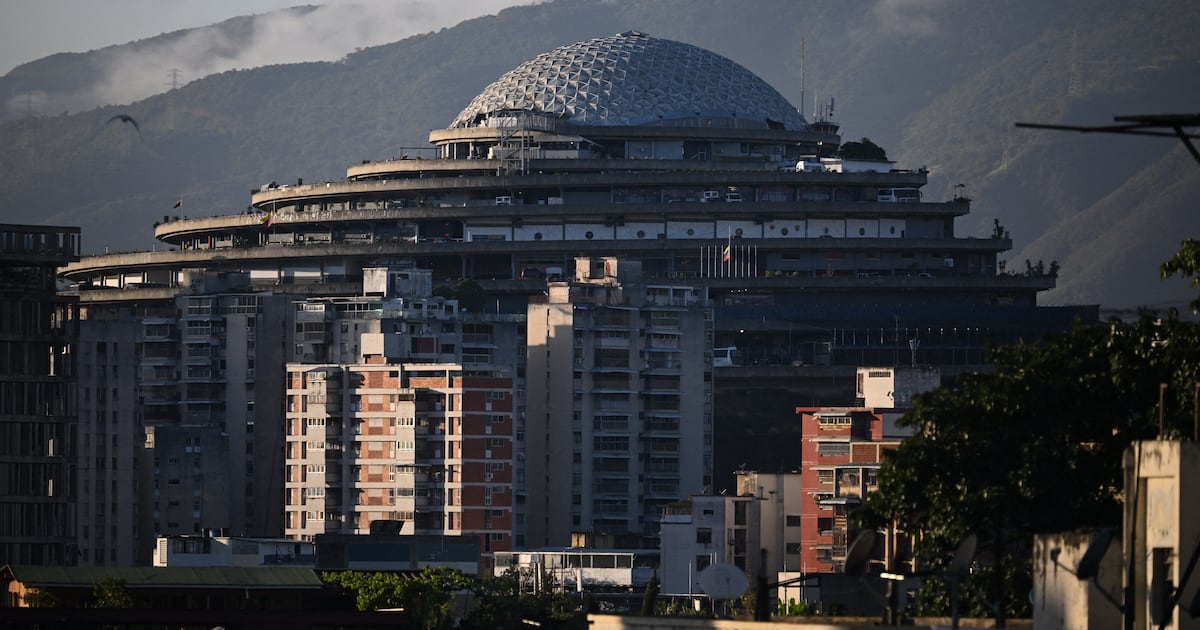
El Helicoide, a modernist concrete building in downtown Caracas, was originally constructed as a state-of-the-art shopping centre in the 1950s.
It was never finished, but the sprawling building found new life under Venezuelan authorities who turned it into the country’s most notorious detention facilities.
Many of the estimated 800-plus political prisoners detained in Venezuela have been held here, according to estimates by campaigners.
On Tuesday, US president Donald Trump hinted that El Helicoide was entering its last days. “They have a torture chamber in the middle of Caracas that they are closing up,” the US president claimed, as Nicolás Maduro adjusted to life behind bars after being seized in a daring raid last weekend.
On Thursday, Venezuelan authorities announced they were releasing an “important number” of detainees in what the congressional president characterised as a gesture to “consolidate peace”.
The head of Venezuela’s national assembly, Jorge Rodríguez, the brother of the acting president, Delcy Rodríguez, said the move was a “unilateral gesture to reaffirm our unbreakable decision to consolidate peace in the republic and peaceful coexistence among all”.
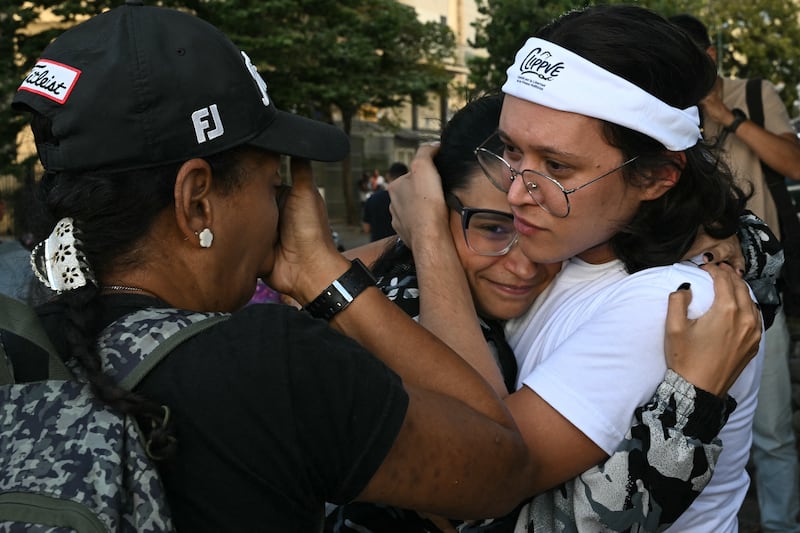 Members of the Committee for the Freedom of Political Prisoners gesture near the entrance to El Helicoide. Photograph: Ronaldo Schemidt/AFP via Getty Images
Several prominent figures have since emerged from El Helicoide, including Rocío San Miguel, a lawyer and human rights activist.
She had been detained since February 2024 for statements after being accused of involvement in a plot to kill Maduro. At the time she was the head of Citizen Control, a non-profit organisation that investigated deadly force used by Venezuelan state security forces.
Another of those released was Enrique Márquez, a former presidential candidate in the elections held in July 2024. His offence was that his party refused to accept the supreme court’s ruling, which ratified Maduro’s victory and dismissed the allegations of fraud.
Juan Pablo Guanipa, a lawyer and politician, and Perkins Rocha, another lawyer, were also expected to be released. Both had been implicated in a case along with opposition leader and Nobel peace prize laureate María Corina Machado.
Another due for release is Javier Tarazona, an educator and human rights advocate accused of terrorism.
While there are reports that up to 100 political prisoners would be released, as of Friday, there was no official list, according to campaigners.
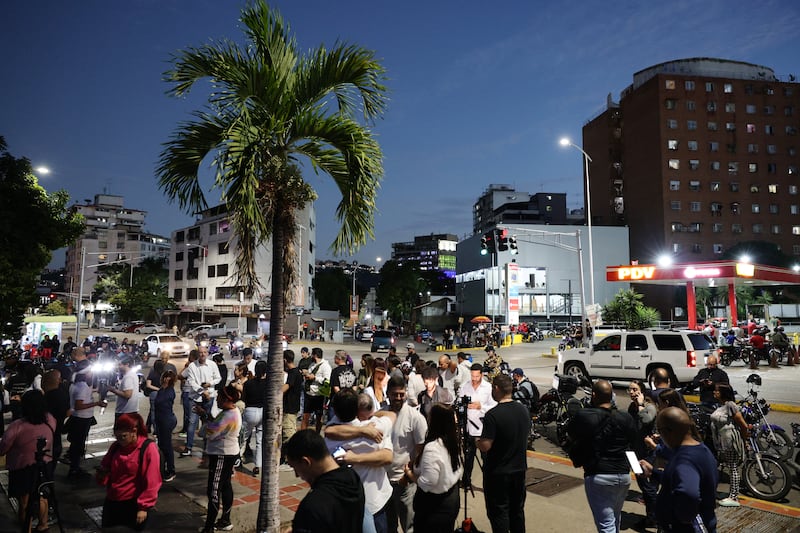 Relatives of prisoners arrive for the release of political prisoners at El Helicoide in Caracas. Photograph: Jesús Vargas/Getty Images
Although Maduro’s political power structure remains in place – operating in a so-called “Madurismo without Maduro” mode – the developments show the extent of Trump’s influence on government led by former deputy president Delcy Rodríguez.
While the extent of prisoner releases is still unclear, there is a powerful symbolism for Venezuelans in seeing detainees walk free from El Helicoide.
The story of the facility is, in many ways, a metaphor for Venezuela’s recent history.
It was built in the 1950s as a monument to a nation’s confidence under the rule of a right-wing dictatorship led by general Marcos Pérez Jiménez.
He cracked down on democrats, but oversaw the construction of important infrastructure projects for the country.
This building was designed in 1955 by architects Jorge Romero Gutiérrez, Pedro Neuberger and Dirk Bornhorst. Its aim was to integrate the roadway into an innovative structure, which attracted the interest of artists such as Salvador Dalí.
It was designed to fit into a strategic hill in Caracas. The curving design was intended to provide access by car, while creating a natural exchange between the building and the surrounding hillside. The design included space for 300 boutiques and parking spaces for each. There were also plans for a hotel and galleries.
The idea was to eliminate the distinction between the street and the building, with footpaths that functioned as continuous ramps on a gentle incline.
However, with the fall of Marcos Pérez Jiménez in 1958, construction slowed considerably until it halted a few years later, when only 10 per cent remained to be completed. It became a vacant lot, a site of looting and, in the 1980s, was used as a shelter for disaster victims.
During the early 1990s it first began to be used to house police intelligence units. Finally, in 2010, by order of president Hugo Chávez, it became the main headquarters of the intelligence services.
Then, El Helicoide became a notorious as detention centre for opposition dissidents.
The release of detainees, meanwhile, coincides with other signs of change, such as the imminent reopening of the US embassy in Caracas and the reactivation of trade relations, especially regarding oil.
While the sight of dissidents walking free has provided some encouragement to Venezuelans yearning for real change, by Friday lunchtime, only a tiny fraction of those incarcerated had been freed. Benevolence, for now, remains to be seen.