
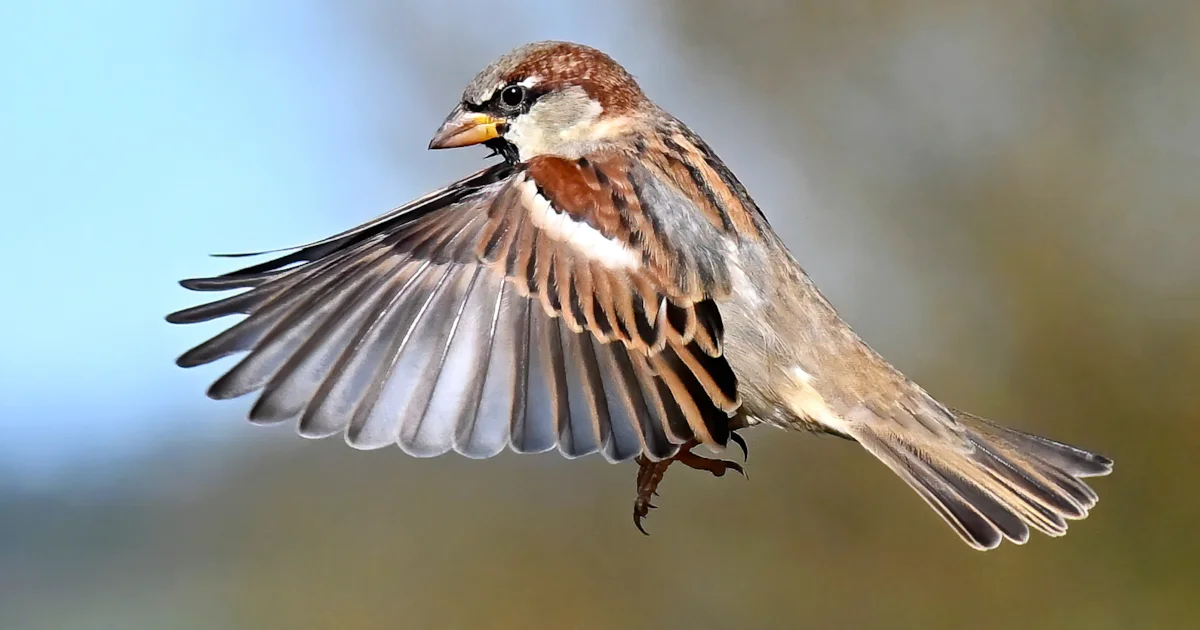
Beak shapes in some common urban birds appear to have changed rapidly during the COVID‑19 pandemic, according to a new study.
This suggests that sudden shifts in food availability and human disturbance may have driven short‑term evolutionary responses.
Researchers examined museum specimens and live birds from several city populations in the United States, comparing beak morphology before, during and after the pandemic lockdowns that dramatically altered urban environments.
The work, published in Proceedings of the National Academy of Sciences, found measurable changes in beak length and shape in multiple species within only a few years – a strikingly rapid shift for a trait normally thought to evolve over much longer timescales.
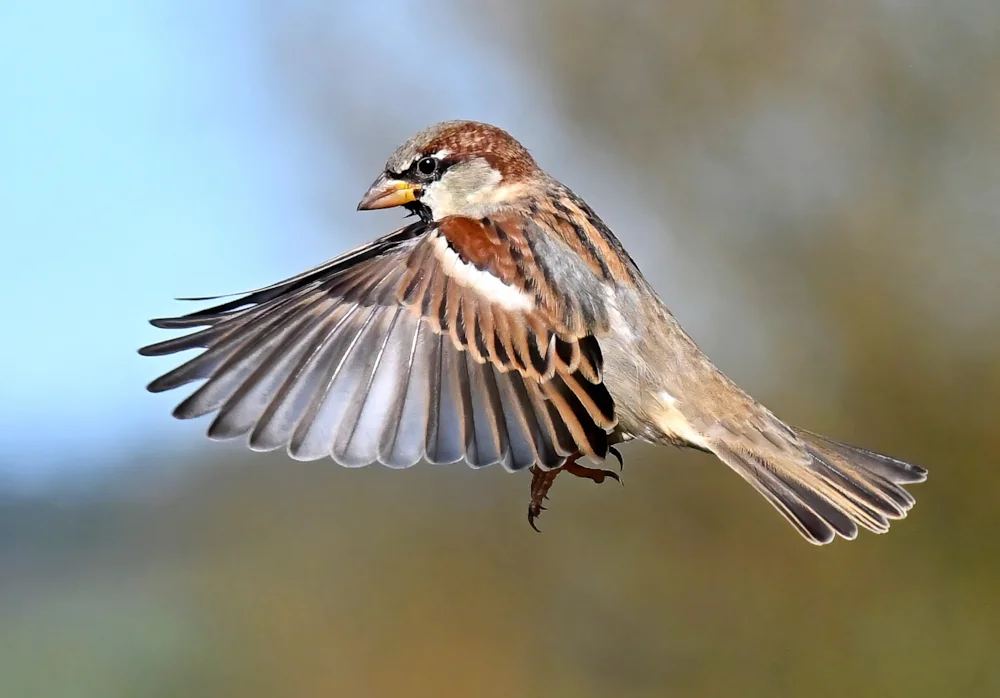
A new study suggests that beak morphology in several urban bird species, including House Sparrow, shifted rapidly during the COVID‑19 pandemic (Carl Bovis).
Novel ecological conditions
The authors propose that the widespread reduction in human activity during lockdowns – with fewer people on the streets, quieter traffic and changes in the availability of anthropogenic food sources – created novel ecological conditions. Birds in towns and cities may have responded by exploiting different food resources, favouring individuals with beak shapes better suited to the altered environment.
Among the species studied were House Sparrows and other common urban dwellers, which showed consistent directional changes in beak form. While the precise mechanisms remain under investigation, researchers speculate that altered diets and feeding behaviours during lockdown periods could have exerted selective pressure on beak traits.
The researchers commented that the findings “highlight how quickly animals can respond to major changes in their environment”, adding that urban landscapes are dynamic ecosystems where human behaviour can influence wildlife on surprisingly short timeframes.
The study emphasises the need for further monitoring of urban bird populations to determine whether these morphological shifts persist as human activity returns to pre‑pandemic patterns. Understanding how birds adapt to rapidly changing urban ecosystems will be key to conserving biodiversity in an increasingly urbanised world.
Reference
Diamant, E S, and Yeh, P J. 2025.Rapid morphological change in an urban bird due to COVID-19 restrictions. Proceedings of the National Academy of Sciences. DOI: 10.1073/pnas.2520996122