
This is the time of year when I’m allowed to let off a little steam – the annual sweep of things I’d like to see less of, and the few I wouldn’t mind seeing a lot more often.
Five things I’d like to see more oftenLobster shacks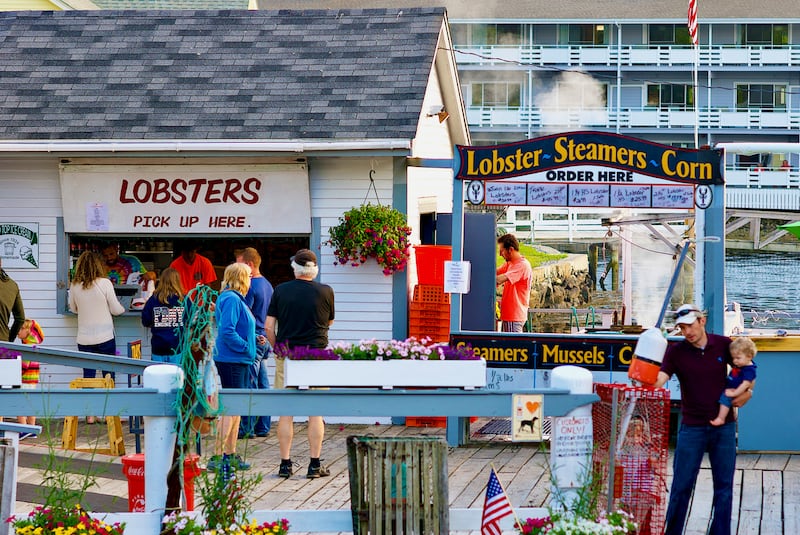 A lobster shack in Maine – why can’t we have more of this sort of thing? Photograph: iStock
Sit for an hour in Kilmore Quay in Wexford, Baltimore in west Cork, New Quay in Connemara or Killybegs in Donegal and you’ll see the heartbreak in real time – glistening Irish lobster lifted from the boats and loaded straight on to trucks bound for Spain and France. Our best seafood leaves before we ever taste it.
The fix isn’t complicated. Build the Irish version of the Maine lobster shack – covered timber sheds or co-op kiosks on the pier, nothing fancy. Lobsters kept live in the tank, clams purged in seawater, big steel pots rolling at the boil. You queue, place your order, and collect a cardboard tray when your number is called: steamed lobster, melted butter, a net of clams, a corn cob.
The co-operative model is the key. In Maine, the lobstermen own the shack together, set stable prices, split profits, and use the income to fund gear and fuel. It keeps value in the community.
Ireland exports the luxury and keeps none of the pleasure. A lobster shack would finally correct that.
Truly local fish
We talk endlessly about “catch of the day”, yet half the time the fish in question has logged more air miles than the diners. Sea bass, for instance, is almost never local: it’s imported, farmed and about as “of the day” as a supermarket avocado.
Ireland has world-class seafood and barely uses it. Hand-dived scallops? Because Irish scallop regulations favour dredging, not diving, there is no way for a diver to scale up to supply restaurants in any significant quantity, so we end up buying our hand-dived scallops from Scotland. Dublin Bay prawns? Often swapped for anonymous imported prawns because they’re cheaper and easier.
And then there are razor clams – inexpensive, plentiful, sweet, and exceptional when cooked properly. Look at the Chinese playbook: chargrilled clams with chilli, scallions, garlic, smoke. If we’re serious about local seafood, these should be on every menu.
Irish dishes 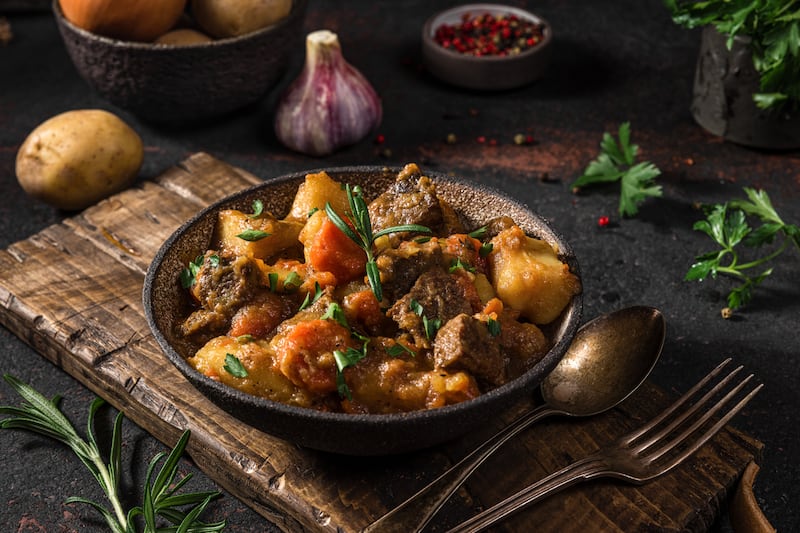 Irish stew should be our pot-au-feu. Photograph: iStock
A lot of Irish cooking has been flattened by convenience. Too many restaurants rely on boil-in-the-bag stews and proteins trucked in from central kitchens. It keeps costs predictable but it drains the life out of the food.
Oysters escaped that fate – they’re now offered in sizes, styles and garnishes to coax in newcomers – and there’s no reason Irish dishes shouldn’t get the same treatment.
[ Destination dining: 14 Irish restaurants well worth a journeyOpens in new window ]
Take Irish stew. When it’s done properly it should be our pot-au-feu: clear, savoury broth; tender meat; potatoes that hold their shape rather than dissolve into wallpaper paste. A little barley, not enough to turn it into a parody of risotto. Bacon and cabbage deserves a return too – good bacon properly cooked cabbage, and a line-up of artisan mustards.
There are other lost pleasures – colcannon, a proper apple crumble from a large shared dish; a celebration of new season floury potatoes; soda bread with real jam; Irish apples and fruit when they’re at their best.
More vegetarian dishes and better non-alcoholic choices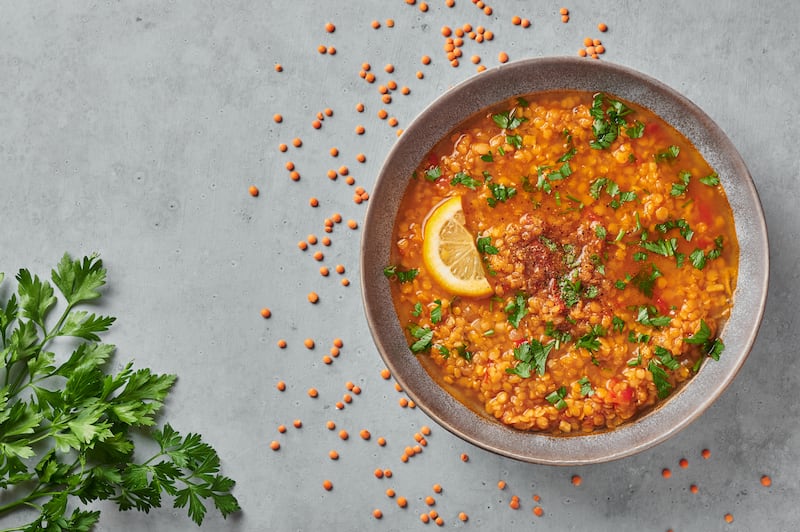 Decent vegetarian dishes should be more than an afterthought in Irish restaurants. Photograph: iStock
Ireland’s menus still treat vegetarian dishes as an afterthought – a polite gesture rather than a real alternative meal. Too often it’s the same rotation: a token risotto, a pasta that looks like a side dish promoted by accident. Yet when vegetables are cooked with intent – fire, smoke, acidity, proper seasoning – they can carry a menu as confidently as any meat dish.
We need more of that: beans cooked slowly enough to earn their place, mushrooms roasted until they taste like themselves, aubergines cooked with depth, showing their real potential. Vegetable cookery done well isn’t a compromise – it’s a draw.
And while we’re at it, restaurants need a better offer for people who aren’t drinking. Kombucha, shrubs, 0.0 beers, creative house sodas.
A good non-alcoholic list reads like hospitality acknowledging real life: work tomorrow, early starts, childcare or simply not wanting wine.
Support for small farmers
Ireland’s food future would be stronger – and far more credible – if State policy backed small organic and regenerative farmers instead of high-volume export models. These are the people farming indigenous breeds – Kerry, Dexter and Droimeann – rotating crops, managing grassland, and using mixed systems and biological digesters to keep nutrients in a closed loop. They protect soil, biodiversity and landscape, yet they operate on the thinnest margins.
The Central Statistics Office’s latest data shows how skewed the system is. Only 3.6 per cent of Irish farmland is organic – the third lowest in the EU. Agriculture remains a big source of emissions, with 6.4 million cattle and 38 per cent of national greenhouse gases linked to agriculture. Those pressures fall hardest on small producers – the very people doing the work society claims to value.
If Ireland wants to move beyond rhetoric, subsidies and supports must follow practice, not scale. Supporting small organic farms isn’t sentimental, it’s strategic – the most direct way to improve land, water, emissions and the food we actually eat.
Five things I’d like to see lessLarge restaurant chains clogging up the main streets
Ireland could use less of the slow creep of big chains colonising high-street units. It always starts the same way: a glossy opening for a London import, the promise of “destination dining”, and within a year the street feels interchangeable with any mid-market strip in Britain.
The identikit contenders arrive with the same fancy fit-outs, PR noise and menus written by committee – squeezing oxygen from the local ecosystem.
[ Twelve of the buzziest restaurants in Ireland right nowOpens in new window ]
Independent restaurants can’t match head office rents, national advertising or centralised prep kitchens that keep chain costs low. Once enough chains cluster, landlords raise expectations and independents are priced out. The street looks prosperous but feels thin: plenty of covers, little character.
A city’s food culture rests on its independents – the people who take risks, buy locally and cook with a point of view. The more space swallowed by chains, the less room there is for restaurants that make a place worth living in.
Less intensively raised chicken and pork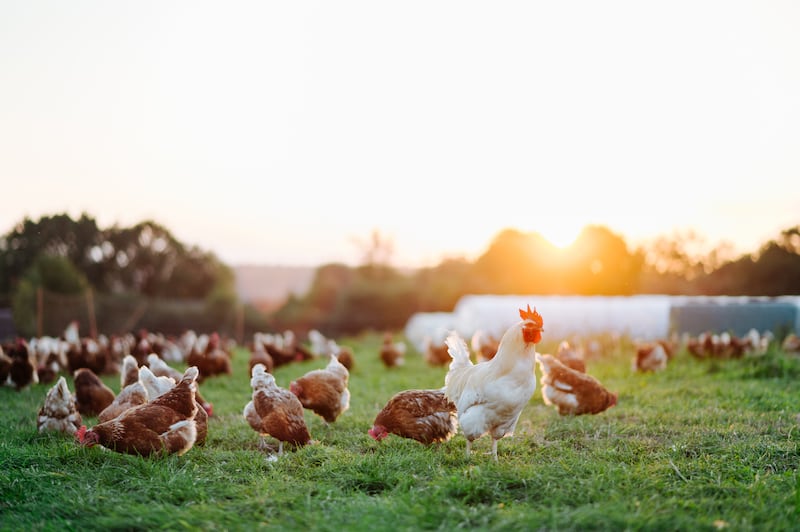 Free range chicken should become more mainstream. Photograph: Getty Images
We need far less intensively raised chicken and pork – the quiet backbone of our national diet, yet produced to some of the lowest welfare standards.
Free-range should be the baseline, not the luxury tier. Instead, higher-welfare meat sits in the “treat” category while conventionally raised chicken and pork dominate every deli counter, carvery and midweek dinner.
Better standards cost more, but this is where the State should step in. If higher welfare pushes prices beyond reach for lower-income households, targeted subsidies – at production level, not retail gimmicks – are the logical fix. We already subsidise sectors with far less public health impact: see dairy expansion grants and grassland payments. Compared with these, supporting higher-welfare protein isn’t radical. It’s overdue.
Restaurants have a role too. The baseline shouldn’t be the cheapest, fastest-grown bird on the market. It should be chicken with space and daylight, or pork from farms where animals actually move. Higher-welfare meat – properly raised and properly priced – should be normal. Intensively raised should be the exception.
Young chefs in a hurry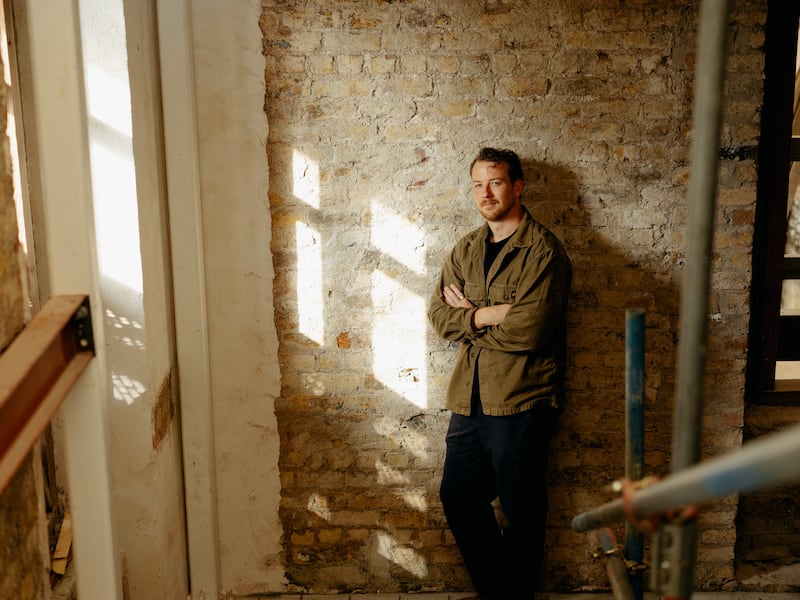 Cúán Greene in Millbrook House at Ómós, his new venture in Abbeyleix, which is due to open this year
We need fewer young chefs sprinting towards “head chef” before they’ve spent real time learning beyond their own postcode.
If you want to run a restaurant, the best investment isn’t a pop-up or a viral dish, it’s years in other kitchens. You learn by watching how teams move, how service works, how a menu breathes through a week.
Too many CVs now hinge on a single unpaid stage in a famous kitchen, presented as a headline rather than a footnote. At Noma, for instance, stagiaires are often kept far from the stove – sorting foraged leaves, trimming herbs, doing meticulous mise en place. Chopping improves, tweezer work sharpens, but you never get near a pot. It’s not training, it’s proximity.
What shapes a great cook isn’t the name on the CV – it’s the years spent on real prep, real services, real graft. Chefs like Cúán Greene, Kevin O’Donnell and Sam Kindillon have shown the right way to do it.
Faux-academia around food for chefs
We could use far less of the creeping academicisation of food. I’ve sat through presentations so abstract they barely acknowledged cooking at all.
It mirrors a wider shift: culinary education drifting away from the stove and into projects that never touch real ingredients.
[ Twelve of the buzziest restaurants in Ireland right nowOpens in new window ]
What’s been lost is the training that mattered. Apprenticeships and proper internships once taught cooks how to break down a carcass, fillet fish, joint poultry, manage a pass, hold a line through a busy service and understand heat, timing and waste. These were the foundations of the profession. Now they’re disappearing.
The industry keeps talking about shortages, yet the skills pipeline is thinning at its source. Less pseudo-scholarship, more hands-on craft. If restaurants want cooks who can actually cook, apprenticeships need to return to the centre.
Truffle oil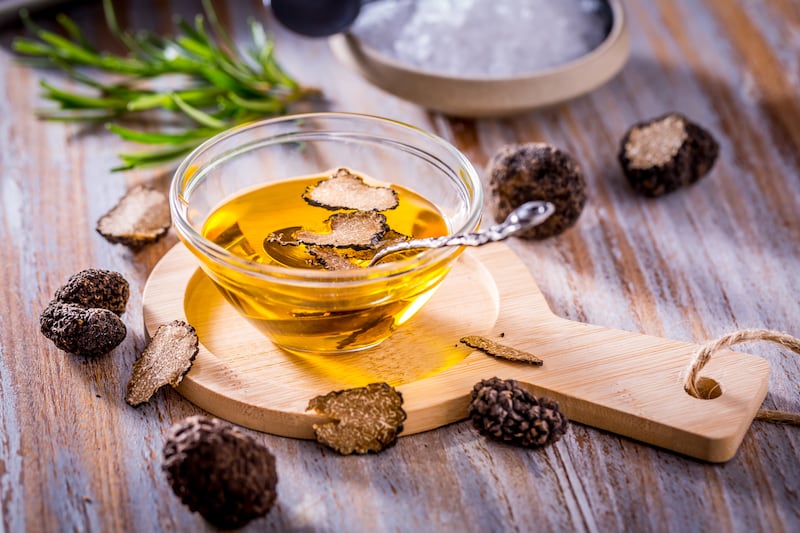 Truffle oil – just say no. Photograph: iStock
Yes, I’ve mentioned truffle oil before – the culinary foghorn that flattens everything in its path – and we’re still not rid of it. Real truffle has an aroma that’s elusive and layered: black Périgord in winter, white Alba at peak season, even the summer truffles from Umbria or Australia – each with its own nutty flavour and texture. That complexity comes from volatile sulphur compounds that break down quickly, which is why true truffle is both rare and expensive.
Truffle oil is none of that. It’s synthetic – most often 2,4-dithiapentane, a compound not found in real truffle, sometimes dimercaptan derivatives – dissolved in neutral oil with a few decorative shavings for show.
The result is artificial, heavy, one-note: the gastronomic equivalent of cheap cologne. When I see it on a menu, I worry about the chef’s palate; a dependence on truffle oil suggests they’re no longer tasting the real thing, if indeed they ever have.