
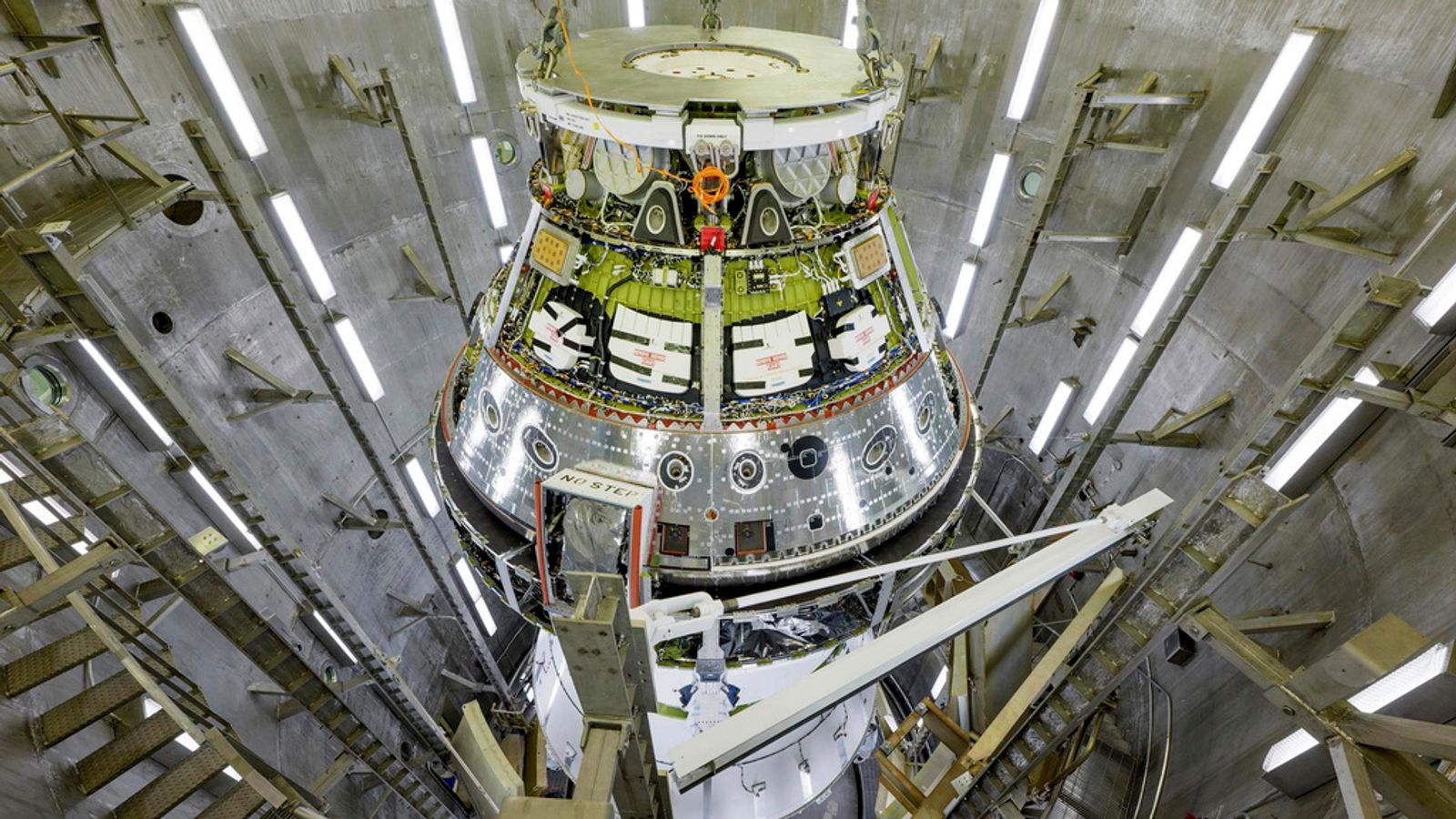
The NASA rocket that will fly astronauts around the moon for the first time since 1972 could be rolled out to its launchpad at Kennedy Space Centre in Florida within days.
The US space agency said the 98m mega-rocket will be slowly moved from its assembly hangar to launch pad 39B on 17 January – weather and technical issues permitting.
It will take up to 12 hours for the “crawler transporter” vehicle carrying the Space Launch System rocket and Orion crew capsule to make the four-mile journey.
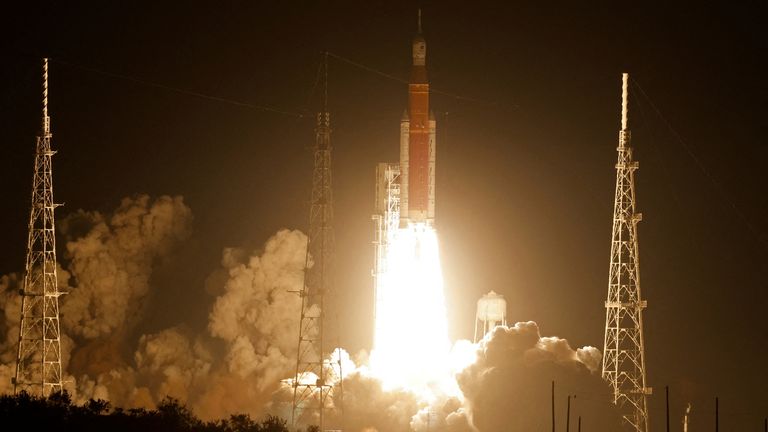
Image:
The upcoming mission follows the unmanned Artemis 1 launch in 2022. Pic: Reuters
NASA will then run through final testing and launch rehearsals before giving the green light for lift-off, for what will be the second test flight in the Artemis moon return programme and the first to carry a crew.
Lori Glaze, acting associate administrator for NASA’s Exploration Systems Development Mission Directorat, said: “We are moving closer to Artemis 2, with rollout just around the corner.
“We have important steps remaining on our path to launch and crew safety will remain our top priority at every turn, as we near humanity’s return to the moon.”
The mission will take four astronauts – NASA’s Reid Wiseman, Victor Glover and Christina Koch and Jeremy Hansen of the Canadian Space Agency – on a 10-day flight around the moon.
The mission is a huge step forward in America’s space race with China to land near the south pole of the moon.
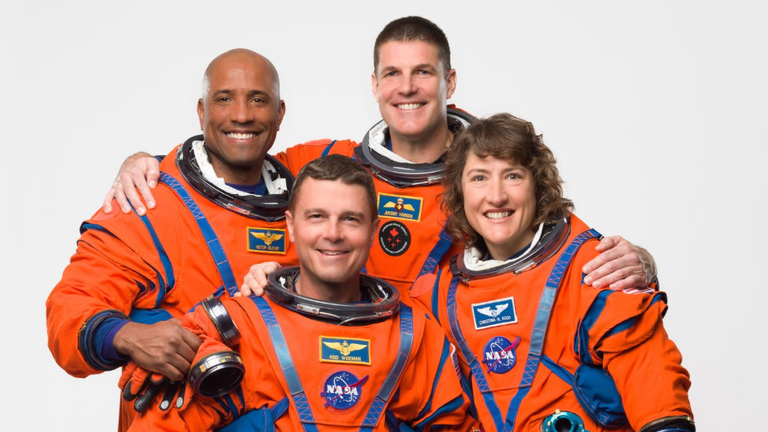
Image:
The Artemis crew will embark on a 10-day flight around the moon. Pic: NASA
In December, Donald Trump signed an executive order titled “ENSURING AMERICAN SPACE SUPERIORITY”, which set a target of planting the US flag on the surface before the end of his second term – most likely 2028.
The Artemis 2 launch is already more than a year behind schedule.
A test flight in 2022, without humans on board, identified significant problems with the Orion crew capsule’s life support system and heat shield, which required design modifications to fix.
Even now, engineers are troubleshooting last-minute glitches. A critical cable in the rocket’s emergency abort system was found to be bent out of position and is being replaced.
Once the rocket reaches the launch pad, engineers need to connect up ground support systems and run through a long list of checks.
At the end of January, NASA will conduct a “wet” dress rehearsal, the prelaunch test to fuel the rocket with 3.2m litres of propellant and run through the countdown sequence.
Read more:
‘I fought a humanoid robot and won’
NASA will bring astronauts home early from ISS
Only when it is satisfied that the rocket and spacecraft are ready for launch will NASA confirm a target date for lift-off.
Currently, the launch is scheduled sometime between 6 February and April.
But there are only five days a month the rocket can launch because of the moon’s position in relation to Earth: 6-11 February, 6-11 March and 1-6 April.
Launch could be “scrubbed” or cancelled on the day because of unfavourable weather, technical issues, or boats or aircraft straying into the no-go zone downrange of the space centre.