
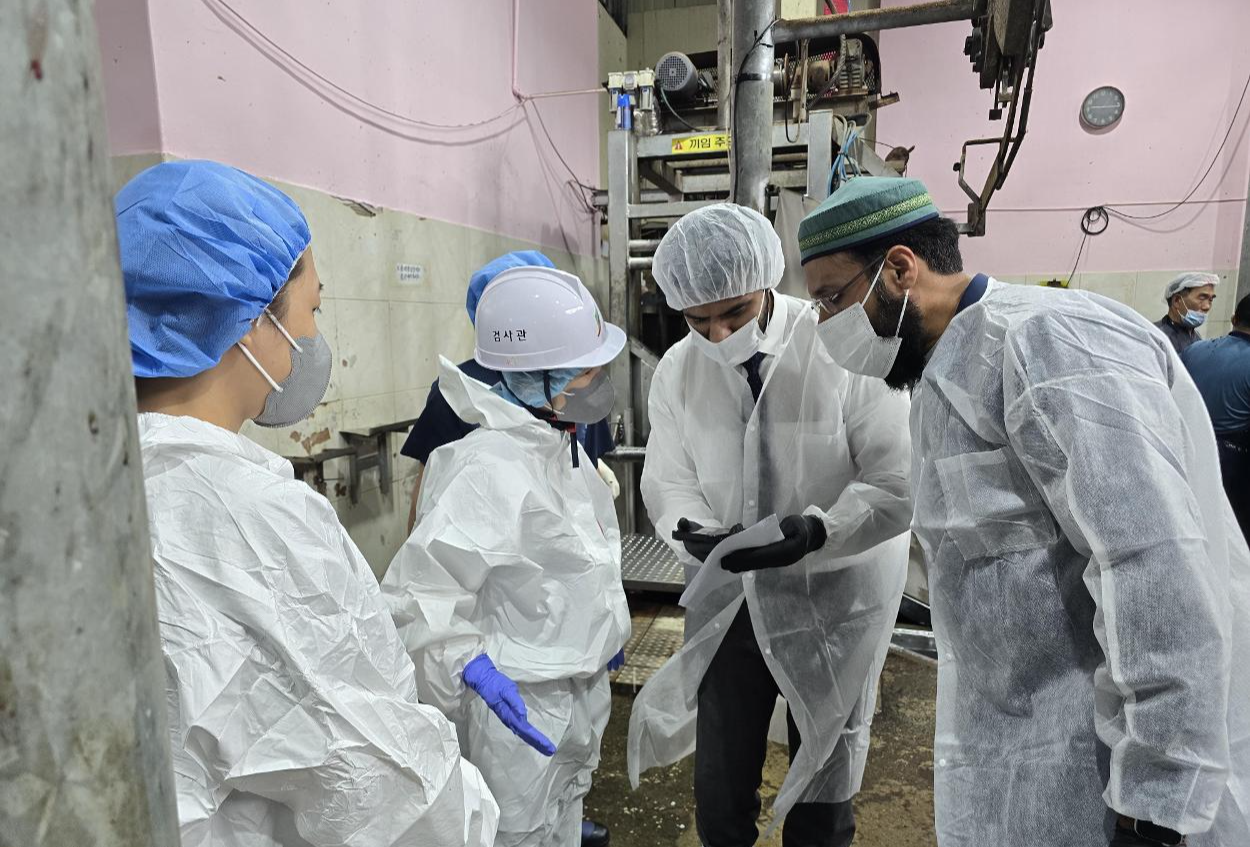
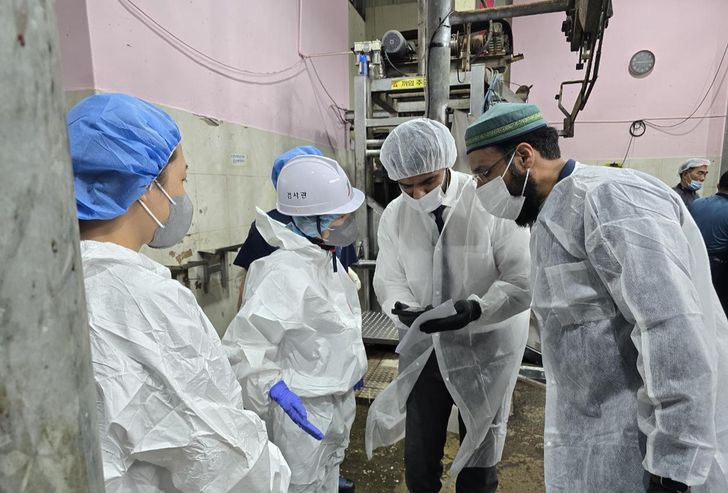
Officials of Korea Halal Authority (KHA) conduct a preliminary inspection of a slaughterhouse in Gimje, North Jeolla Province, for halal certification, June 2, 2025. Courtesy of KHA
CHEONGJU, North Chungcheong Province — Korean halal products are so few in number worldwide that the halal certifying agency chief here often feels frustrated.
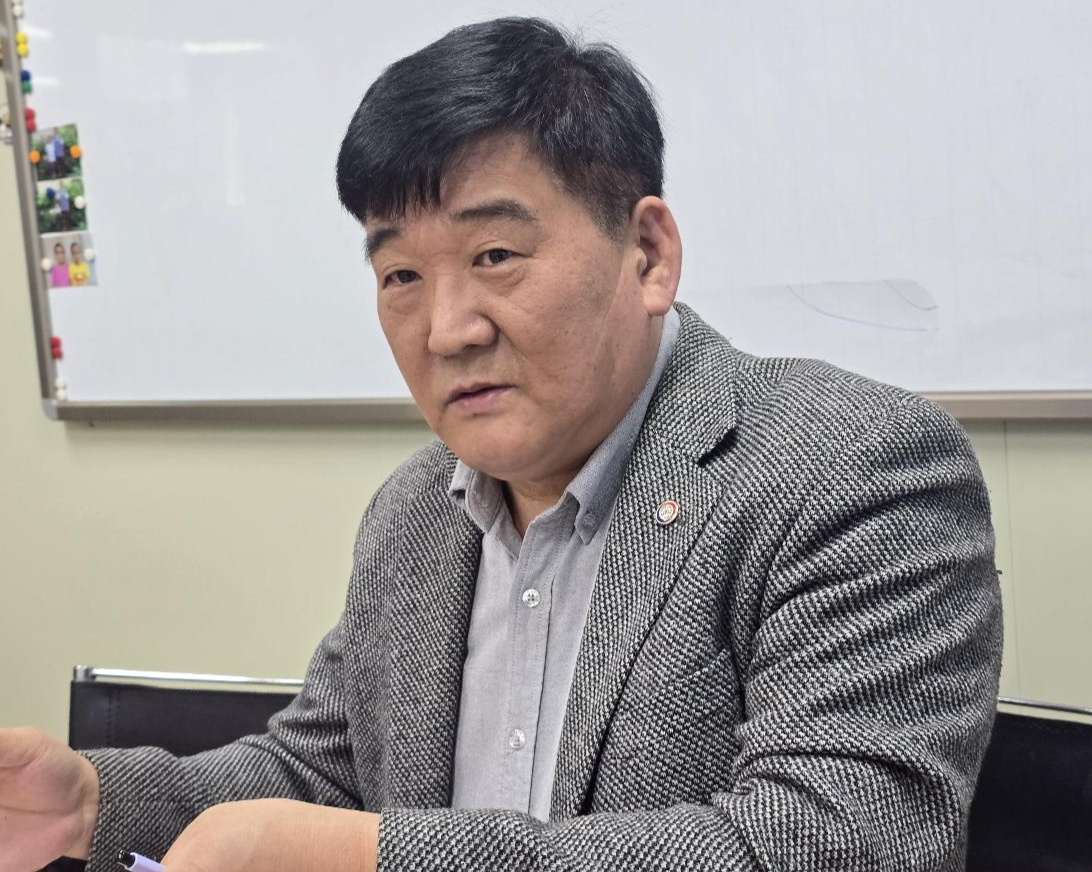
Korean Halal Authority (KHA) Managing Director Mustafa Jin Jae-nam speaks during an interview with The Korea Times at the agency’s office in Cheongju, North Chungcheong Province, Wednesday. Courtesy of KHA
For Muslim visitors to Korea, the variety and availability of halal-labeled Korean foods can be surprisingly limited. Some 3,000 halal food stores here, including Asia Mart and Halal World Mart, are mostly importing to fill their shelves. If the situation is this limited even in Korea, it is even more challenging in overseas markets. To Korea Halal Authority (KHA) Managing Director Mustafa Jin Jae-nam, these stores should be supplied with Korean halal products instead.
“Major distributors in Islam nations like Mah Sing Group in Malaysia sell tens of thousands of halal items for local Muslim consumers,” Jin said during an interview with The Korea Times at KHA’s office in Cheongju, North Chungcheong Province.
“Among them, Korean products account for only a few hundred, mostly food and beauty products.”
KHA, having a mutual recognition agreement (MRA) or memorandum of understanding with 30 halal-certifying authorities representing countries in Southeast Asia, Central Asia, Europe and the Middle East, inspects products for halal certification. The Halal Product Assurance Organizing Body in Indonesia, a certifier for the world’s largest halal market with a Muslim population of 245 million, is among the list.
The KHA office is filled with shelved binders containing inspection records for some 250 currently operating companies selling products the agency has certified. The agency’s 18 employees work in three divisions: a team of halal experts dedicated to product research and development, on-site inspection and document verification; a Shariah committee with imams checking religious fitness; and a fair trade committee searching for any sign of local market disruption.
Established in 2015, KHA is one of six halal certifiers in Korea, but the only authority that inspects and certifies products across all categories.
Six different halal labels issued by KHA categorize certified products as food, beauty, pharmaceutical, industrial, agricultural, and tourism and restaurants. KHA’s label remains valid for a year at first, and can be renewed every two years after that.
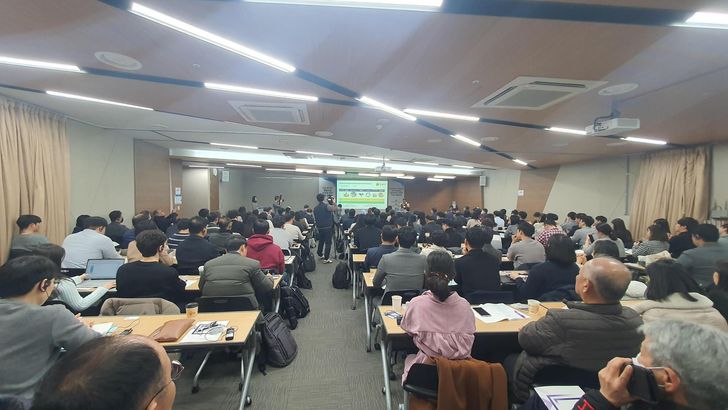
A Korean Halal Authority (KHA) official delivers a seminar on latest changes to the Indonesian government’s halal certification requirements at the Ministry of Agriculture, Food and Rural Affairs in Sejong City, Dec. 7, 2023. Courtesy of KHA
Jin said Korean companies are not actively going for halal labels because not many of them know they can achieve the labels through KHA and other Korea-based certifiers. He said some private consultants here mislead the firms by encouraging them to seek foreign halal certifiers, so they can profit from brokerage fees worth millions of won per case.
“Now, with K-food’s global popularity, many companies seem to go for halal but many of them still think the process is redundant and difficult,” Jin said. “Contrary to Korean foods’ popularity across the Islam nations, their market shares in those countries are pitifully small.”
Jin wants to invite major distributors in Muslim markets to Korea through a halal-themed expo and introduce them to Korean halal products for export. He believes that is the most effective way of expanding Korean exports to Muslim markets, better than typical international food shows planned by the Korean government, where companies meet potential buyers through one-on-one meetings.
“If there are enough halal-labeled Korean products here to show them, we can hit supply deals with those firms,” Jin said.
“To local Muslim consumers, the label is almost essential. They don’t care about famous brands or price. They care about the label. Many Korean companies say they export to different countries, but in many cases the importers are retailers dedicated to Korean products overseas. The companies need the label to truly expand their global markets, particularly in Southeast Asia and Central Asia where demands are much higher than the Middle East due to closer proximity and more vibrant cultural exchanges.”
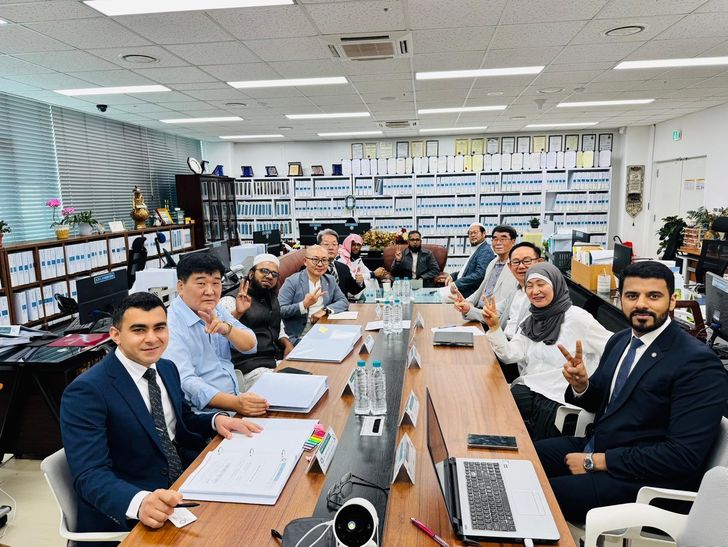
Koreal Halal Authority (KHA) Managing Director Mustafa Jin Jae-nam, second from left, poses with the agency’s halal inspectors inside the KHA office in Cheongju, North Chungcheong Province in this undated photo. Second from right is the agency’s CEO, Safiah Kim Weon-suk. Courtesy of KHA
KHA recently saw a flood of calls from officials of the ministries of industry, agriculture, and food and drug safety inquiring about the halal certification process.
President Lee Jae Myung last month nudged the Ministry of Food and Drug Safety to prepare an unprecedented state-run halal certification system after returning from his state visit to Dubai in November. After acknowledging that private agencies are in charge of certification in Korea, he proposed that the government take a leading role in making the system more reliable and trustworthy.
Jin, however, downplayed the government’s move as an impulsive blunder, saying the job needs years of understanding behind global Muslim markets, their deep-rooted faith and adherence to halal, and the consequences of betraying that faith which could lead to a ban in the market. To him, the government’s headstrong attempt to start handling certification from scratch seems far-fetched.
“I traveled the world studying halal and have designed regulations for KHA. I have even committed myself to the Islam faith in Singapore, and all KHA employees are Muslims,” he said.
“That was the first mandatory step for starting this certifying business. The government? I don’t think they have prepared any regulations regarding certification or have studied countries to maintain MRA ties with Korean halal labels.” Jin said.