
in this commentary
Tainted ice cubes and counterfeit bottle seals are sending thousands of travelers to the hospital, often when they least expect it.
Forget paranoia—experts identify four specific, vetted resources that tell you exactly where it is safe to drink the water (and where it isn’t).
Even seasoned pros slip up: A simple mistake in Bali leaves the author waiting for a medical emergency, proving vigilance is a 24/7 job.
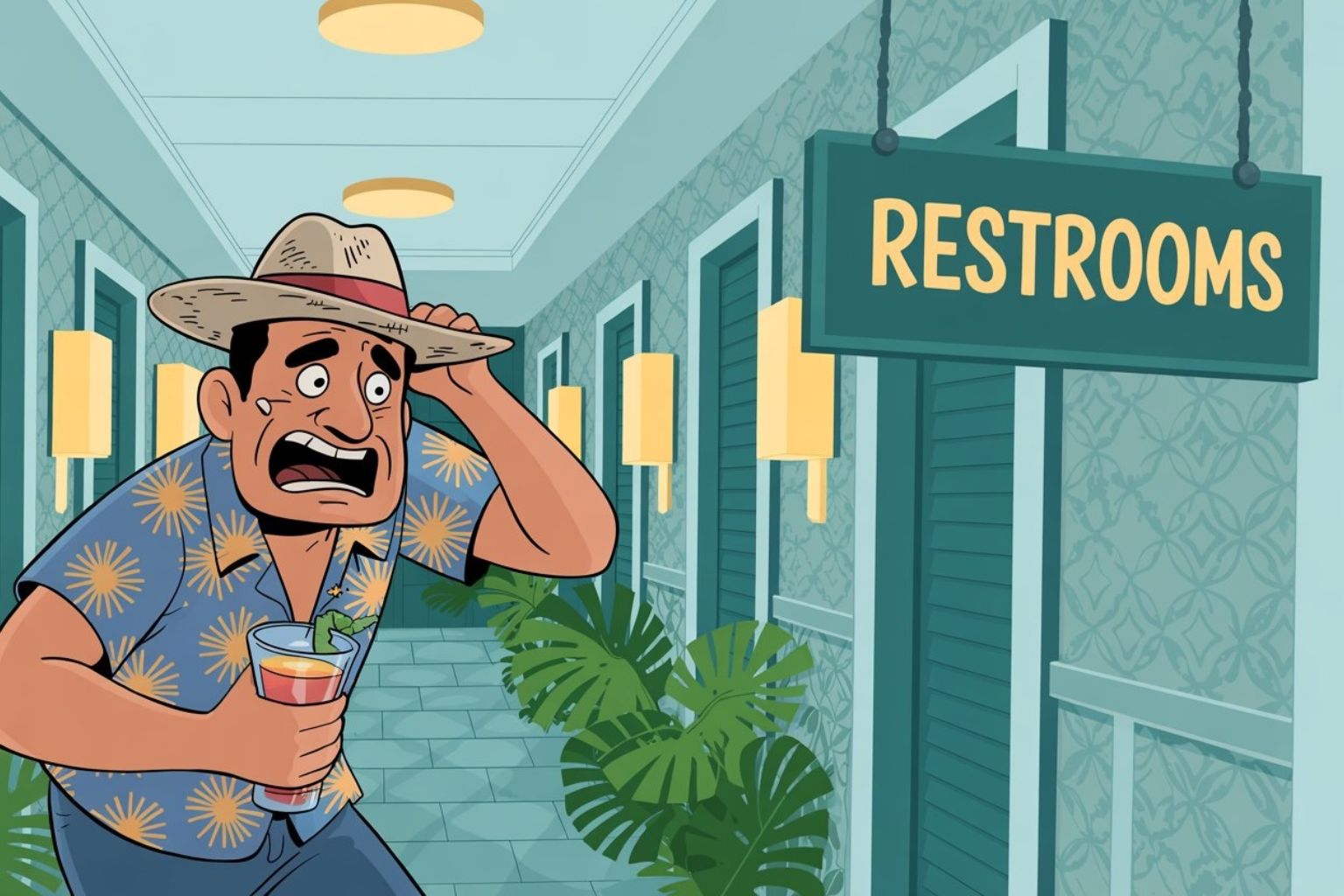
You’re sipping a margarita at the beach in Mexico when you realize the ice may have been made with tap water. You brush your teeth in Bali, accidentally swallowing a drop. Hours later, you’re chained to a bathroom, your dream trip collapsing like a house of cards.
For millions of travelers, water safety isn’t just a footnote — it’s the silent saboteur of vacations.
Up to 70 percent of international travelers come down with diarrhea, according to estimates by the Centers for Disease Control and Prevention. The leading cause is contaminated water. Yet fear often outpaces facts, leaving tourists paralyzed by anxiety.
“Water safety boils down to the local area where travelers are staying,” warns Jeff Weinstein, a paramedic and medical operations manager for Global Rescue.
By the way, the tainted margarita is not a one-off.
“I can’t tell you how many of our members have called us with gastrointestinal issues, severe enough to land them in the hospital, that could be traced back to the frozen margaritas, iced cocktails or fountain drinks they had,” says John Gobbels, chief operating officer of Medjet, an air medical transport membership program.
I’ve spent decades investigating travel risks, and water quality remains one of the most misunderstood threats. I also drank the tap water in Bali — accidentally — and I’ll tell you how that ended in a minute. But first, let’s cut through the hysteria.
Why are you afraid of contaminated water?
Many travelers are afraid of drinking tainted water. When Jane Angelich checks into luxury resorts, she interrogates staff about filtration systems. She brushes her teeth with bottled water, skips ice, and avoids salads.
“All this despite staying at high-end properties,” says Angelich, an executive coach from Palm Beach, Fla.
Her caution isn’t paranoia as much as it is pattern recognition. For example, Mexico City loses 40 percent of its piped water to leaks, inviting bacteria, viruses, heavy metals, and chemicals into the supply.
“Even locals don’t drink tap water,” notes Paul Conolly, managing director of Water-to-Go North America, a supplier of water purifier bottles for travel.
Yet perception overshoots reality: Americans search for “Montezuma’s Revenge” 22,000 times monthly — far more than “traveler’s diarrhea” (14,000 searches).
Should you buy bottled water?
Buying bottled water is one of the leading fixes, but experts warn that you shouldn’t be too trusting. In destinations from Bali to the Dominican Republic, counterfeit seals– made with glue or wax — on bottled water are rampant.
Shanina Knighton, who teaches at Case Western Reserve University’s nursing school, regularly travels across islands in the Caribbean and countries along the Gulf of Mexico, where water standards vary.
“I inspect each cap carefully,” she says. “If the seal looks suspicious, I do not drink it.”
Using bottled water may be safer, but it creates ecological nightmares. The Pacific Institute estimates that producing one liter of bottled water requires three liters of water — and emits 600 times more carbon dioxide than tap water.
Still, the choices are to either stick to factory-sealed carbonated drinks (harder to refill) or cans, or to carry a portable water filter.
How does a water filter help?
Travelers like Cynthia O’Leary swear by a filter during travels, even packing pitchers in her checked luggage. And it’s true, a filter can help remove some impurities (hers has a five-stage filtration system that removes almost 100 percent of chemicals from all water.)
But it’s not foolproof.
“Filters sometimes only remove chemical contaminants,” notes O’Leary, a software developer from Tampa. That critical gap leaves travelers vulnerable to viruses, which require boiling or UV sterilization.
How to know if your destination’s water is safe: expert-approved resources
Travelers facing murky water intel abroad now have clearer options. These four vetted resources deliver life-saving clarity:
1. CDC Travel Health Notices
The government’s health notices are the gold standard for U.S. travelers. Updated weekly, they detail pathogen risks (bacteria, viruses, parasites), chemical hazards (lead, arsenic), and region-specific precautions. Search by country for bulletins like “Avoid tap water, ice, and uncooked foods” in Mexico or “Boil all water” in rural Bali.
Use it for: Quick, government-vetted “do/don’t” drinking rules.
2. UN SDG Water Data Portal
The United Nations’ online water safety portal offers real-time national water safety grades. It tracks national progress on clean water access, treatment infrastructure, and contamination risks. For example, France’s “100% safe” rating contrasts sharply with Mexico’s “64% safely managed services” alert. You can sort the data by region, urbanization, and water source (piped vs. well).
Use it for: Gauging a country’s overall water security credibility.
3. Yale Environmental Performance Index
The university scores 180 countries on ecosystem health. Ranks nations on drinking water quality, sanitation, and heavy metal pollution. Combines UN, WHO, and World Bank data into one navigable dashboard.
Use it for: Comparing destinations’ environmental stewardship — including water.
4. Local utility reports
Hyperlocal, granular water testing data. Often overlooked, municipal providers (like Paris’ Eau de Paris) publish quarterly contaminant reports. Pro tip: Learn the local word for “water.” For example, search “[City] + agua quality report” (e.g., “Barcelona agua quality report”) to surface Spanish language results.
Use it for: Checking neighborhood-level lead levels or treatment disruptions.
Know before you go
The best water quality advice involves timing. Experts say you should think about water quality well in advance of your trip. If you’re at risk, make arrangements so that you have access to plenty of clean water at your destination.
“Knowing your risk gives you an advantage before heading to the airport,” says David Dyjack, CEO of the National Environmental Health Association, a non-profit organization dedicated to advancing environmental health professionals.
All of which brings us back to Bali. I checked into a vacation rental in Canggu, a resort town favored by Australian expats and Russians and known for its surfing. It was clear that drinking the water was a no-no, and our host had graciously provided several large bottles of drinking water.
But old habits die hard, and so one evening I found myself brushing my teeth with tap water. And I swallowed some of it.
That night, as I drifted to sleep under a slow-moving ceiling fan called a kipas langit-langit, I worried I would end up as an anecdote in one of my own stories. I waited for the stomach cramps and the urgent call of nature.
It never came.
I didn’t end up with Bali Belly — but I could have. It was an important lesson learned. Water safety requires round-the-clock vigilance. Let your guard down even once, and you could end up in the hospital.
Your voice matters
From counterfeit bottle caps to treacherous ice cubes, water safety anxiety is a constant companion for international travelers. But is the fear justified, or are we overreacting?
Do you trust bottled water abroad, or have you encountered “resealed” bottles that made you suspicious?
What is your go-to strategy for water safety: filters, UV lights, or simply sticking to beer and wine?
Have you ever let your guard down (like brushing your teeth with tap water) and paid the price?
The hidden risks
The ice cube trap. Freezing does not kill bacteria. That frozen margarita or iced soda can transmit the same pathogens as a glass of tap water.
Counterfeit bottles. In some regions, vendors refill bottles with tap water and reseal them with glue or wax. A sealed bottle isn’t always a safe bottle.
The toothbrush reflex. Muscle memory is dangerous. Rinsing your mouth with tap water out of habit puts you at risk of ingesting pathogens.
Vetted resources: Know before you go
CDC Travel Health Notices. The gold standard. Search by country to find specific pathogen risks and government-backed “do not drink” warnings.
UN SDG Water Data Portal. Provides national water safety grades and tracks infrastructure progress, helping you gauge a country’s overall water security.
Local Utility Reports. Search specifically for “[City] water quality report” to find granular data on neighborhood-level contaminants often overlooked by national averages.
Safe habits: Best practices
Inspect the seal. Physically check the cap of any bottled water. If it looks glued, tampered with, or loose, do not drink it.
Carbonation is safer. When in doubt, buy sparkling water or factory-sealed sodas. It is much harder for scammers to fake carbonation than still water.