

Hello and welcome to our weekly digest of business, financial and economic news from around Ireland.
A group of Scottish businessmen are trying to build a bloc of voting shares in Celtic FC to challenge its biggest shareholder, Dermot Desmond, writes Barry J Whyte.
A new organisation, called Celtic Supporters Limited (CSL), has been set up by David Low, a Glasgow investor, and Duncan Smillie, a former chairman of Partick Thistle.
Their goal is to buy shares, reactivate dormant shares and build a bloc of voting rights that could vote down propositions by the club’s management at its annual meetings.
It is the latest development in the rift between Desmond and portions of the club’s fanbase, many of whom are shareholders, which erupted at a fractious annual meeting in November.
Smillie told the Celtic Exchange podcast that CSL had already approached “some medium-sized shareholders” and asked them whether they would “consider coming in with us should you have to, and they’ve said yes”.
He said the organisation had assembled roughly 1 per cent of the shares and claimed it was possible to build up to a 25 per cent or 30 per cent bloc to call extraordinary meetings, as well as block any potential sale of the club.
Sweepr sold to Californian wifi firm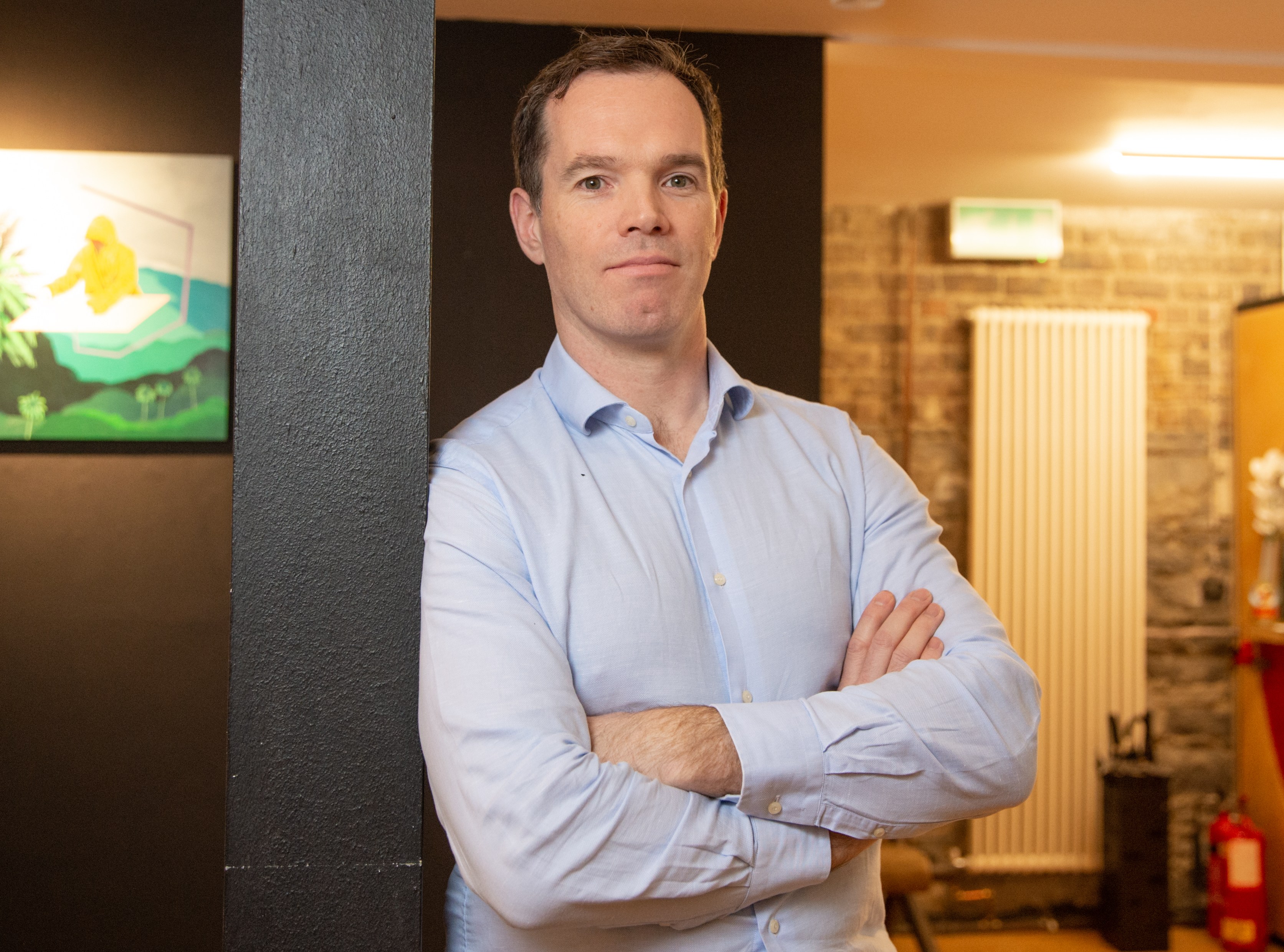
Alan Coleman set up Sweepr in 2017 with fellow founder Jim Hannon
BARRY CRONIN
Plume Design, a Californian-based wifi intelligence firm, has acquired Alan Coleman’s Sweepr Technologies in a cash and stock deal, writes Linda Daly. The value of the acquisition is undisclosed but it is thought to be a high eight-figure sum.
Sweepr had raised $13 million (€11 million) from investors including the Amazon Alexa Fund; Dublin-based Frontline Ventures; Telus, a Canadian telecoms company; and Enterprise Ireland. Confirming the sale, Coleman said it was a “great deal” for him, fellow founder Jim Hannon and the company’s investors.
Sweepr stockholders will become Plume investors as part of the consideration will be in shares.
Coleman previously sold Brite:Bill for up to €80 million to Amdocs in 2016. He has also been involved in a number of sales as a non-executive director. As part of the latest deal, he will become chief product officer at Plume, while Hannon will become chief architect.
Coleman and Hannon set up Sweepr in 2017. It uses AI to help telecoms operators deliver more personalised customer care support. The company will complement Plume’s product suite, which provides real-time, device-level network intelligence. Its technology helps direct wifi to where it is needed most.
“Sweepr’s offering is certainly very synergistic with what Plume does,” Coleman said.
Set up in 2014, Plume is a private company with an annual recurring revenue of over $100 million. Its investors include SoftBank’s Vision Fund, Insight Partners, Comcast and John Malone’s LIberty Global.
Dan Herscovici, president and chief executive of Plume, said: “With Sweepr, we’re connecting AI to the moments that matter.”
Law firm makes case for new Dublin office
Mason Hayes & Curran’s current offices at South Bank House comprise just under 6,000 sq m
TOM CAMPBELL
Mason Hayes & Curran, one of the country’s biggest law firms, has started the search for new offices in Dublin, writes Linda Daly.
The Sunday Times understands that the firm has hired the estate agent Savills to look for up to 10,000 sq m. It has a staff exceeding 700, including partners.
A move would see the firm leave its Barrow Street base, in the heart of the capital’s Silicon Docks, which it has occupied since 2006.
A spokeswoman for the firm said the company was reviewing its office space requirements “to support the continued growth of the firm”.
The company’s current offices, at South Bank House on Barrow Street, comprise just under 6,000 sq m. Google Ireland bought the building and another on the street in 2018 from Kennedy Wilson. The tech giant owns most of the street, where it employs thousands of people at a sprawling campus.
Mason Hayes & Curran said it was assessing all options for new accommodation “as part of a structured search process across the Dublin market to identify space that meets our people, client and operational needs”.
A number of professional services firms have committed to new office space in Dubin over the past few years. The law firm A&L Goodbody moved into offices of over 14,000 sq m on North Wall Quay last year. Deloitte is amalgamating its four Dublin offices into 1 Adelaide Road, which is owned by Irish Life. KPMG is due to move into Hibernia’s Harcourt Square development later this year.
Bain shelves sale of Valeo’s Irish brands
Valeo Foods Ireland includes well-known consumer brands such as Jacob’s
ALAMY
The sales process for Valeo Foods Ireland has been put on the back burner while its owner, Bain Capital, assesses strategic options for the wider Valeo Foods Group as it switches its focus to sweet treats, writes Jon Ihle.
Bain began exploring a sale of the Irish business, which includes the well-known consumer brands Jacob’s, Batchelors and Odlums, last November and appointed the US investment bank Houlihan Lokey to advise on a disposal. But after testing the appetite of potential buyers, the firm appears to have pulled back from a transaction for now.
A food industry source said the main Irish brands, also including Kelkin, Erin and Shamrock, were seen as long-established and secure, but fragmented, low-growth and with limited appeal in a modern marketplace.
Valeo, which Bain bought in 2021 for €1.7 billion from Seamus Fitzpatrick’s CapVest, is in the process of repositioning as a leader in sweets and confectionery under the leadership of Ronald Kers. The company has made numerous acquisitions in that category in continental Europe, its fastest-growing market.
Last week Valeo reported a 25 per cent increase in operating profit to €85.6 million for the year to the end of March 2025. Revenues were €1.6 billion. Irish sales, typically about 20 per cent of the total, fell by €37.8 million.
The company booked a pre-tax loss of €109.8 million, partly due to acquisition costs. Its debt is rated B-, or junk status.
Applegreen hits US speed bump as fuel prices fall
Joe Barrett is the chief executive of Applegreen
Applegreen’s drive into the US market is showing signs of losing momentum, writes Barry J Whyte.
The petrol retailer will post a 4 per cent decline in revenues for 2025, and stay flat in 2026, according to financial analysts.
The credit agency Fitch has said the Irish company, which is expanding rapidly in the US, will be affected by “lower fuel prices and volumes, and lower revenue growth in US” in the coming years.
The company will have only “low single-digit revenue growth” in 2027 and 2028, again with low fuel volumes and prices offset by a growing number of service stations and increases in food and store revenues.
Fitch said Applegreen’s performance in 2025 was largely affected by “weak US trading”, but added this would be “partially offset by Marks & Spencer store conversions in Ireland and robust food sales growth by more numerous transactions and higher price”.
The company’s earnings will gradually increase in 2026 as it builds out its network of service stations in the US.
Fitch expects the weak trading environment to persist through 2026, with a “gradual improvement thereafter”.
Applegreen had revenues of €3.85 billion in 2024, slightly down on its revenue of €3.89 billion in 2023, and it had a pre-tax loss for the year of €92.3 million.
The UK generated €2 billion in revenue, Ireland contributed €1.1 billion and the US was responsible for about €700 million, the directors noted in the accounts.
The company is also opening new sites in Ireland and the UK, while growing its electric vehicle charging facilities in all its markets. It estimates that the investment will run to €1 billion over the next five years.
Last year the company sold its UK petrol filling station business for €187 million. It retained its Welcome Break business, which in the UK and Northern Ireland employs more than 6,000 people across 59 sites, including 34 motorway service areas and 31 hotels.