
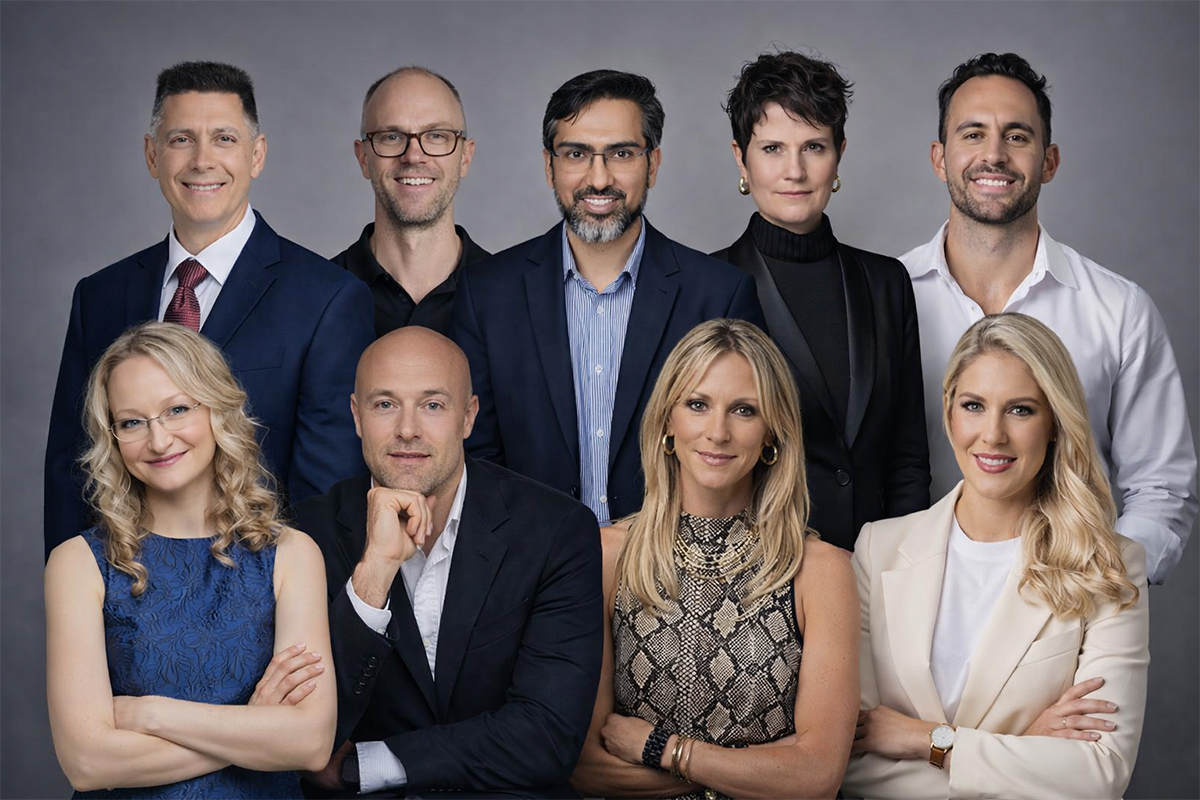
Looking toward London 2026, new speakers broaden the agenda across longevity finance, metabolic health and clinics.
The Longevity Show has revealed a second wave of speakers for its inaugural London event next June, continuing to build a program designed to bridge geroscience, clinical practice and the increasingly longevity-literate public. If the first announcement signaled ambition, this latest slate deepens the conversation – adding experts who sit at the intersection of prevention, performance and the economic realities of longer lives.
What stands out is the breadth of entry points into healthy longevity. Alongside leaders shaping population health and the emerging longevity economy, the Show is also welcoming practitioners and platform-builders focused on behavior change, metabolic resilience, gut health and the infrastructure required to deliver longevity medicine at scale.
Longevity.Technology: Healthy longevity is often discussed as a scientific revolution, but revolutions rarely succeed on science alone; they require systems, incentives and a public narrative that makes prevention feel less like a chore and more like a rational default. This second wave of speakers reflects that shift – a move from longevity as niche fascination to longevity as lived reality, where clinics, financiers, epidemiologists and educators all have skin in the game.
If the field’s first adolescence was dominated by big ideas and bold biomarkers, its next phase will be about translation – not simply what works in theory, but what can be delivered in practice, what can be afforded, and what people can actually stick to when life gets in the way. Expect plenty of optimism, some necessary friction and, with any luck, a few hard truths told kindly.
Population health at scale
Professor Raghib Ali brings a rare combination of clinical experience and big-system epidemiology to the Longevity Show stage. As CEO, Chief Investigator and Chief Medical Officer of Our Future Health, the world’s largest health research program of its kind, he is leading an effort involving more than 2.5 million participants to discover new ways to prevent, detect and treat disease – with a particular emphasis on under-represented populations in the UK and globally.

Ali’s presence signals a crucial truth for longevity medicine: precision matters, but so does scale. The future of prevention is not only about what an individual can optimize, it is about what a health system can learn, implement and offer equitably.
Longevity finance and the ‘wellthspan’ question
Nadine Esposito, Founder of Wellthspan Advisory, sits at the intersection of longevity, finance and health – a space the sector increasingly recognizes as foundational. With a background in risk management and investment control, Esposito brings a systems lens to how extended lifespans reshape labor markets, wealth distribution and the economics of aging.

Her work advocates for longevity literacy and the idea that “health is wealth” – not as a slogan, but as a framework for aligning healthspan, wealthspan and purpose across longer lives. In a world of 100-year lifespans, financial resilience becomes a public health issue; Esposito is one of the clearest voices making that case.
Regenerative medicine meets longevity practice
Dr Elizabeth Yurth has been practicing what she calls “tomorrow’s medicine” for nearly two decades. Co-founder and Chief Medical Officer of the Boulder Longevity Institute, Yurth has worked at the intersection of orthopedics, sports and spine medicine and cellular therapeutics since 2006, bringing regenerative and anti-aging approaches into real-world clinical practice long before longevity clinics became fashionable.

Trained at USC Keck School of Medicine, with residency at UC Irvine and a Stanford-affiliated fellowship in Sports and Spine Medicine, Yurth combines three decades of hands-on orthopedic experience with deep specialization in anti-aging, regenerative and cellular medicine – backed by more than 500 hours of CME focused on longevity, epigenetics, nutrition, bioidentical hormones, peptides and regenerative orthopedic procedures. A frequent speaker at longevity events worldwide, she is known for translating fast-moving research into protocols that work in bodies, not just in papers.
Gut health goes mainstream
Dr Megan Rossi, widely known as “The Gut Health Doctor”, is among the most influential gut health specialists internationally – and a rare figure who can translate microbiome science into advice that people will actually follow. A registered dietitian and nutritionist, Rossi is also a leading research fellow at King’s College London and holds a PhD in probiotics; her work has earned recognition for outstanding research and public impact.

Rossi founded The Gut Health Clinic in 2019 and has built a wider platform through books and product innovation, including her gut health food brand Bio&Me and targeted supplement ranges. Her contribution to the Longevity Show will sit squarely in the “actionable science” lane – where prevention becomes practical rather than punitive.
Metabolic health and the architecture of behavior change
Longevity, in practice, is often metabolic health in disguise – and Dr Tom Rifai is one of the clinicians pushing that point with unusual clarity. Triple board-certified in internal medicine, nutrition and lifestyle medicine, Rifai is the founding CEO of Reality Meets Science and the architect of The Flex5 Lifestyle, a behavior and health transformation methodology designed to extend healthspan and reduce chronic disease risk.

His career spans leadership roles at the Pritikin Longevity Center, metabolic health work with the Cleveland Clinic, Fortune 500 wellbeing programs and, most recently, Director of Health and Longevity for the NEOM giga-project in Saudi Arabia. Rifai’s perspective is built around a deceptively difficult question: not what people should do, but what they will actually do – and how to design systems that make it easier.
Movement, performance and clinic-grade optimization
With 27 years of experience across musculoskeletal rehabilitation, health optimization and human performance, Simon Gilchrist brings a practitioner-entrepreneur lens to the Show. An Australian consultant physiotherapist and Founder of Mayfair Health, Gilchrist is known for navigating complex pathologies, persistent pain and multifactorial musculoskeletal presentations – with a toolkit that spans diagnostic ultrasound, advanced clinical reasoning and progressive rehabilitation.

He is also co-founder of WellQ, an AI-driven health intelligence platform designed to help clinics unify musculoskeletal data and improve patient management and engagement. Gilchrist’s work sits where longevity becomes tangible – not in theory, but in bodies, habits and outcomes.
Women’s longevity – finally designed for women
Judith Mueller, founder of Biohacking Eve, has made it her mission to correct one of longevity’s most persistent blind spots: the default assumption that male physiology is the standard. Through her platform and podcast, she tackles the practical reality that many biohacking and longevity protocols were built without female biology in mind – leaving women to retrofit advice that often does not fit.

Mueller is also a venture capital investor specializing in longevity, is building longevity clinics in the Middle East and co-founded the Longevity Clinic Builder Network, as well as Longevity Week Berlin. Her presence will bring both advocacy and capital-allocation realism to the conversation – with a focus on how women’s health optimization becomes both a clinical category and a commercial imperative.
Investing in longer lives – and healthier pets, too
Garri Zmudze, General Partner at Ani.VC and LongeVC, brings one of the most global investment perspectives in the longevity ecosystem. A co-founder of LongeVC, he has helped build a portfolio spanning early and mid-stage biotech and longevity startups; in 2024 he also helped stand up Ani.VC, a venture firm focused on animal longevity and pet health – a fast-emerging frontier that may deliver translational insights back into human aging biology.

Zmudze’s framing is refreshingly direct: the ability to live longer, healthier lives should be available to everyone – and, ideally, to their pets. It is a line that lands with a smile, but the investment thesis is serious; longevity is becoming an asset class, and the infrastructure around it is maturing quickly.
The moderator’s craft – and the art of human flourishing
A longevity event is only as strong as the quality of its conversation – and Julian Issa, host of The Beyond Tomorrow Podcast, is known for asking the sort of questions that move beyond surface enthusiasm. An exited tech founder and investor, Issa is also a former Newsweek journalist who conducted more than 1,500 interviews with global figures across six continents.

He brings an unusual blend of media rigor and entrepreneurial perspective to the stage – along with a background as a semi-professional opera singer, which suggests he understands pacing, performance and the importance of a well-timed pause. For Issa, everything is downstream from human flourishing; that emphasis should make for a particularly coherent throughline across diverse speaker topics.
Framing the ambition
With this second wave, the Longevity Show continues to position itself as a meeting point for science, practice and public engagement – a place where longevity stops being a futurist abstraction and becomes a set of real-world choices and systems. It is also a reminder that the longevity conversation is maturing; the question is no longer whether we can shift aging biology, but who gets access, who pays and how quickly the clinic frontier becomes a public-health one.
The Longevity Show opens its doors on 26–27 June 2026 at Tobacco Dock, London. Early bird tickets for all tiers are available at longevityshow.com until 28 February 2026.