
Irish
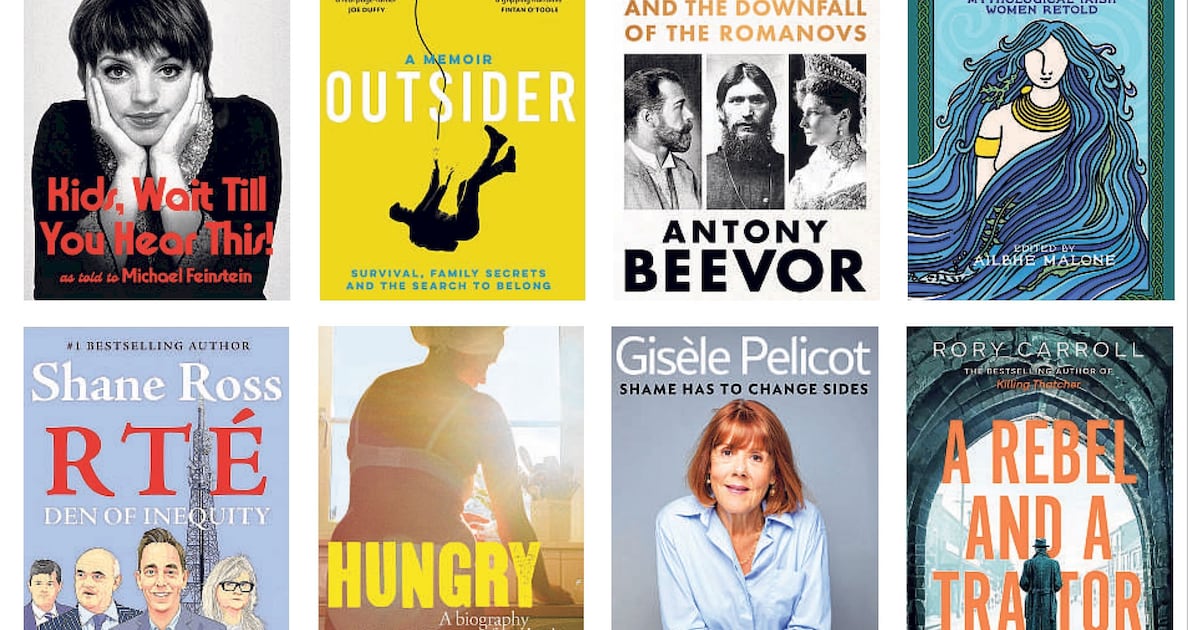
Hungry: A Biography of My Body (Wildfire, April) by Katriona O’Sullivan is the author’s second memoir, her follow-up to the phenomenally successful Poor. She interrogates how trauma, class and gender shape the way women see themselves – and how society teaches them to measure their value.
Off the Scales (Fourth Estate, January) by Aimee Donnellan, a Reuters reporter based in Galway, is, as its subtitle states, The Inside Story of Ozempic and the Race to Cure Obesity.
This is Also a Love Story (Fourth Estate, May) is Sally Hayden’s follow-up to her multi-award-winning My Fourth Time We Drowned. She re-examines catastrophe through the love stories she has come across, from Ukraine to Nigeria, Syria, Uganda and Iraq, and through them invites us to reconsider what it means to be human today.
Killing Thatcher author Rory Carroll’s new book is A Rebel and a Traitor: A Fugitive, the Manhunt and the Birth of the IRA (Mudlark, March), a biography of Roger Casement.
In Outsider (Hachette, February), former Irish Times journalist Paul Cullen is driven to discover his roots as an adoptee after a near-fatal fall from Germany’s highest peak in 2017 left him broken – physically and emotionally.
Opening Night (Granta, July) by Sara Baume explores the writer’s friendship with artist Mollie Douthit, broadening into an exploration of art and nature.
Interweaving politics, literature, music, and nature, Sensation (PVA, June) by Colin Graham, professor of English at Maynooth University, explores in personal essays his Belfast childhood, how the self is formed and how what we read and see makes us who we are.
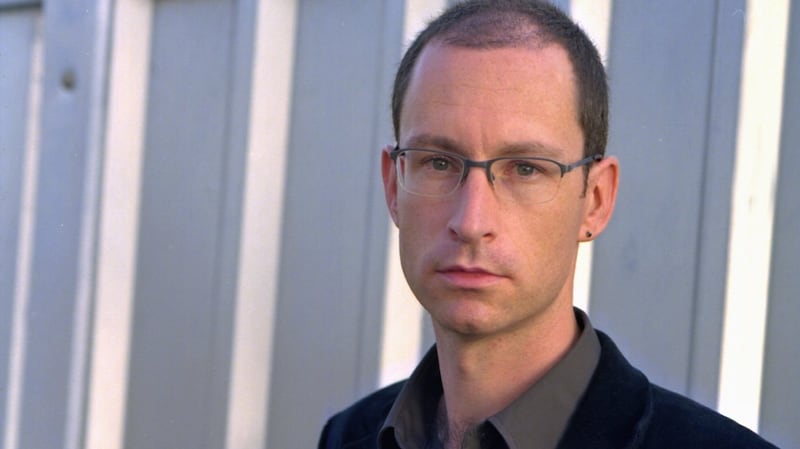 Brian Dillon
Ambivalence (Fitzcarraldo, May) by Brian Dillon is a memoir of Dublin in the 1980s and 1990s, and an intimate defence of radical thinking about literature and life.
In An Asylum for My Affections (New Island, February), edited by Molly Hennigan, writers reflect on Maeve Brennan.
A Hosting: Irish Writers and Writing: 1991-2025 (Lilliput, April) is a collection of more than 50 of my interviews with Irish authors.
The Place that Has Never Been Wounded (One, February) is a mindful roadmap to finding your way back to the peace at your core by sensational musician, athlete and campaigner Niall Breslin.
The Most Normal Woman (Tramp, August) by Roisin Kiberd (The Disconnect) is about the face we present to the world, and the dark side of our efforts to be beautiful, with essays on blondes, Botox, exercise addiction and the most expensive handbags on earth.
CTRL: Essays on Video Games (Lilliput, April), edited by Dean Fee, features some of Ireland’s leading writers on the art form.
The Celtic World: A History (Four Courts, January) by John Waddell which is a full-colour large format history of the Celts.
The Wind Beneath the Stone: My Quest to Unearth a Piece of Ireland’s Folklore (Bloomsbury, May) by David Keohan is a journey across Ireland to revive the lost tradition of stone lifting.
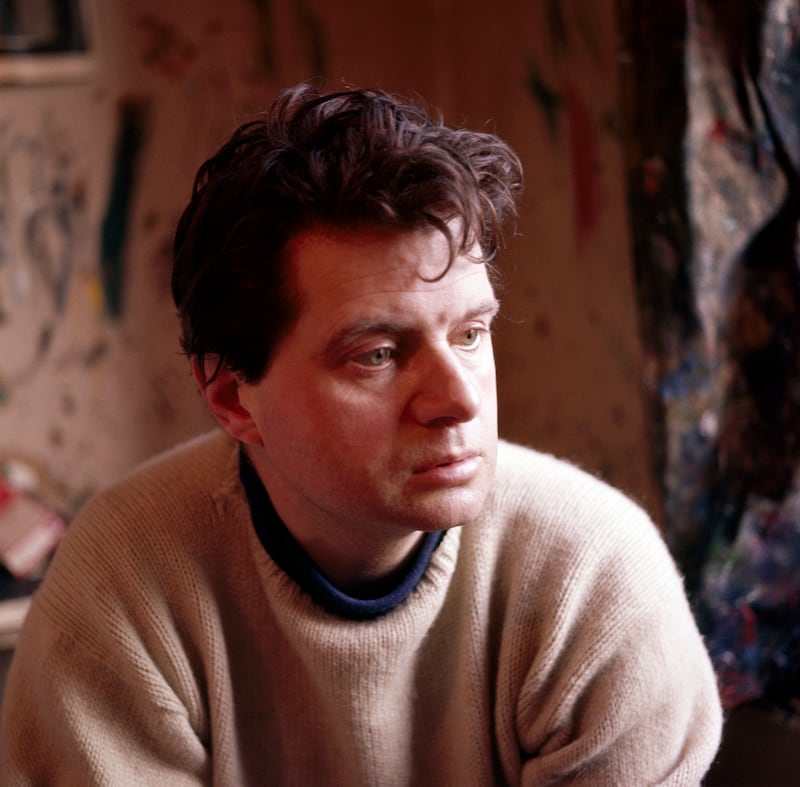 Francis Bacon in his studio around 1960. Photograph: Popperfoto/Getty
Francis Bacon: a Hidden Irish History (Four Courts, autumn) by Margarita Cappock explores how Bacon’s artistic life can be traced to his upbringing in Ireland.
The Irish Soldier (Four Courts, November), edited by Thomas Bartlett, reviews the Irish military experience throughout the world over the past 1,000 years.
Stop Your Shenanigans (New Island, February) by Micheál Ó Conghaile celebrates the origins of some of Ireland’s more colourful and interesting words.
In Walking to the Foot of the Sky (Eriu, May) by Miriam Mulcahy (This Is the Sea), a woman in middle age, crushed by the grind of single parenthood, rediscovers her spirit and strength by walking in the wildest places she can find.
The Wisdom of Farmers (Allen & Unwin, April) by John Connell (The Cow Book) offers observations from rural life which can be applied to our urban world.
The Ice House Murder (Allen & Unwin, April) by Robin Schiller and Pat Marry revisits the vicious murder of Irene White at her home in Dundalk in 2005.
RTÉ: Den of Inequity (Atlantic, April) by Shane Ross offers an inside account of Ireland’s scandal-hit national broadcaster.
The Plot Against Ireland (Head of Zeus, September) by Myles Dungan is the story of The Forger, Spies, Tories, Conmen and Terrorists who conspired against Irish Home Rule.
Home Economics (New Island, April) is Caitríona Lally’s memoir of her time working in the housekeeping department at Trinity College Dublin while she awaits the publication of her first two novels in 2015 and 2021.
Late Heaney (OUP, January) by Nicholas Allen follows Seamus Heaney through the landscapes, friendships and events that shaped his last four collections.
In Banshee: Mythological Irish Women Retold (John Murray, February) edited by Ailbhe Malone, Irish female writers breathe new life into ancient Irish myths, reclaiming the stories of women.
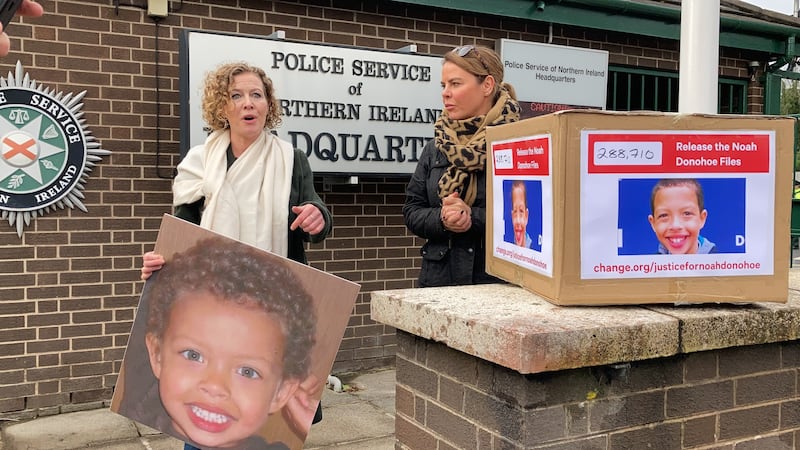 Fiona Donohoe, left, the mother of Noah Donohoe, a 14-year-old who was found dead in a storm drain in north Belfast in June 2020, delivering a petition to PSNI headquarters in Belfast. Photograph: Rebecca Black/PA
Noah Donohoe: The Search for Truth (Mirror Books, May) by Donal MacIntyre is the veteran investigative journalist’s account of the tragic and mysterious death of a 14-year-old Belfast Catholic schoolboy in 2020.
A Bigger Life (HQ, September) is novelist Louise O’Neill’s post-breakup memoir of sex, heartbreak and questioning received wisdom about happiness.
Exposed: The Scandals that Shook the Irish State (Merrion, September) by Frank Connolly recounts the shocking stories of political, corporate and Garda corruption that shook the State over his career.
Rory O’Connor: To Defend the Republic (Merrion, February) by Gerard Shannon is the first biography of this prominent member of the anti-Treaty IRA.
Veil of Silence: How the Irish State Covered Up an IRA Murder and Framed a Garda Whistleblower (Merrion, March) by JP O’Sullivan discloses how Garda Intelligence ignored warnings that led to the 1985 murder of IRA informer John Corcoran.
We Need to Talk About Roy: The ‘Keaneification’ of Modern Ireland (Merrion, March) by Dave Hannigan explores the footballer’s vast impact on Irish sport, culture, and identity. Rory (Simon & Schuster UK, March) by Alan Shipnuck is a biography of golfer Rory McIlroy.
The Story of Us: Independent Ireland and the 1926 Census (Irish Academic, April) by Orlaith McBride & John Gibney (eds) brings the 1926 census to life through vivid storytelling, expert insight, and stunning visual material.
Neither Confirm Nor Deny: Lawless Agent Running, the Suppression of Truth, and MI5 (Merrion, May) by John Ware charts in forensic detail the murderous activities of two notorious high value state agents, Brian Nelson and Freddie Scappaticci.
Bad Nanny (Merrion, May) by Alan Bradley is the story of Samantha Cookes, a highly skilled scammer working across Ireland for a decade.
Western Washed Genocide (Merrion, June) by Fintan Drury sets out how, despite ongoing atrocities in Gaza, Israel’s support among western powers remained steadfast.
The Irish Presidency (Palgrave, May) edited by John Coakley and Kevin Rafter is a revised and updated edition on the politics of the office with new chapters including judging the Higgins presidency and the recent election of Catherine Connolly.
Vincent Browne and Magill (New Island, September) by Kevin Rafter focuses not just on the history of the influential current affairs magazine, told with dozens of interviews with leading media figures, but also revisits the politics and controversies of the 1980s.
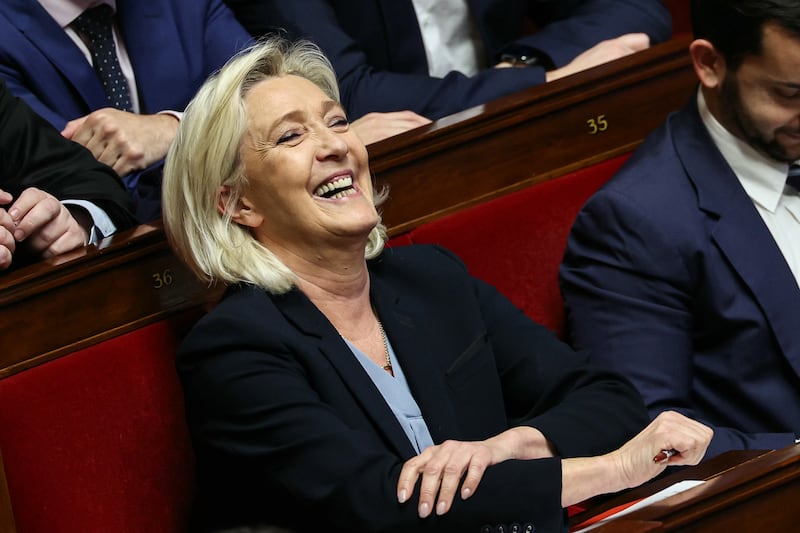 Marine Le Pen. Photograph: Thomas Samson/ AFP via Getty
The Dark Side of France (Apollo, July) by former Irish Times journalist Enda O’Doherty is a gripping exploration of the French far right, from the Dreyfus Affair to Marine Le Pen and the National Rally, whose candidate is strongly placed to seize the leadership of France.
Seán Lemass: The Lost Memoir (Ériu, May), edited by Ronan McGreevy, is the political memoir of Ireland’s transformational taoiseach in his own words.
International
London Falling (Picador, April) by Patrick Radden Keefe (Say Nothing, Empire of Pain) relates the mysterious death of a London teenager posing as the son of a Russian oligarch – a family tragedy, a story of greed, power and deception, and an indictment of the culture that has transformed London into a haven for dirty money.
In A Hymn to Life (Bodley Head, February), Gisèle Pelicot’s aim is to nurture “strength and courage” in other survivors.
Light and Thread (Hamish Hamilton, March) by Nobel Prize winner Han Kang, translated by Maya West, e yaewon, and Paige Aniyah Morris, traces the connections between her interior and exterior worlds through essays, poems, photographs and diaries.
Nation of Strangers (Canongate, February) by Turkish political thinker Ece Temelkuran promises a powerful reappraisal of the concept of exile, migration and home.
Rana Dasgupta’s After Nations: The Making and Unmaking of a World Order (William Collins, February) traces the formation and rise of the nation-state system to explain its multiple failures today.
My Year in Paris with Gertrude Stein (Hamish Hamilton, April) by Deborah Levy explores the life of the avant-garde American poet, art collector, godmother of modernism and queer icon in a genre-bending fashion.
The Great Good Places (Canongate, April) by Margaret Drabble explores age and memory through previously uncollected short stories, meoir and essays.
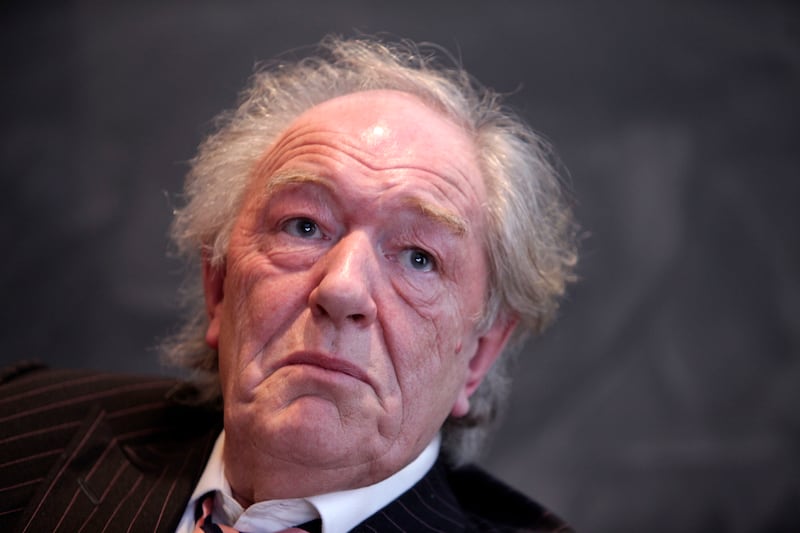 Michael Gambon. Photograph: Collins Photo Agency
Michael Gambon: The Authorised Biography (Century, October) by Jasper Rees is a portrait of the Irish actor, who died in 2023.
Baldwin: A Love Story (Bloomsbury, March) by Nicholas Boggs, the first big biography of the great black American in three decades, reveals how profoundly the writer’s personal relationships shaped his life and work.
More (Bloomsbury, September) by Gillian Anderson, follow-up to her bestseller Want, presenting a new collection of letters that reveal the unfiltered desires and sexual fantasies of anonymous women across the globe.
Ghost Stories (Sceptre, May) by Siri Hustvedt, a memoir of her final years with husband Paul Auster, who died of cancer in 2024.
The Steps (Seven Dials, May) is Sylvester Stallone’s first autobiography.
Alan Bennett’s diaries Enough Said (Faber, March) span the period 2016-2024, taking in such momentous events as Brexit and the death of the Queen.
Melvyn Bragg’s Another World (Sceptre, February), revisits his time at the University of Oxford in the late 1950s.
Naomi Klein teams up with documentary maker Astra Taylor to describe End Times Fascism (Allen Lane, September).
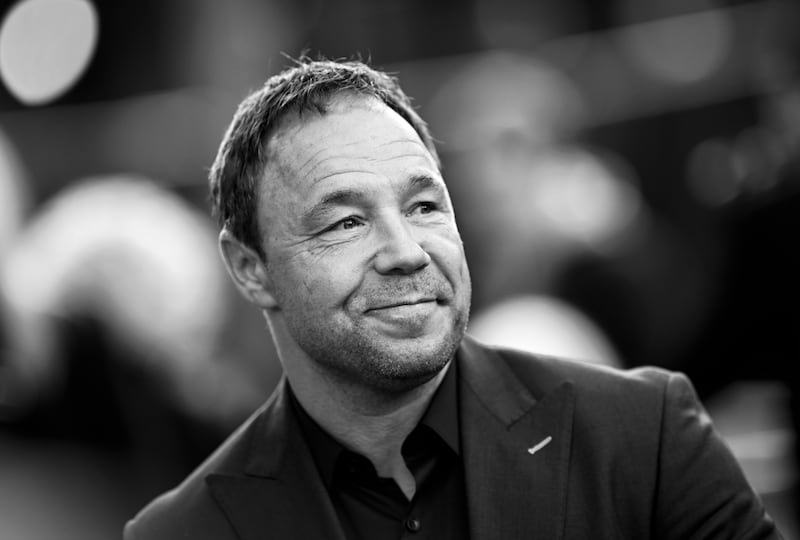 Stephen Graham. Photograph: Gareth Cattermole/Getty for BFI
Stephen Graham has teamed up with psychologist Orly Klein to compile Letters to Our Sons (Bloomsbury, October), a collection of fathers’ reflections on “what it means to be a man”, including one from the actor himself.
In The Castle (Viking, August), Jon Ronson tries to discover what led his son Joel to attend a mysterious event at a multimillionaire’s mansion in New England, in the process uncovering “a world of unmoored men on a desperate search for purpose”.
Kids, Wait Till You Hear This! (Coronet, March) is Liza Minnelli’s memoir as told to her friend and singer Michael Feinstein.
Talking Heads frontman David Byrne’s Sleeping Beauties (Canongate, October) explores works of art or inventions that are ignored at the time but resurface after years of dormancy – from Bruegel to antiseptics.
In Tonight the Music Seems So Loud (Picador, June), journalist Sathnam Sanghera examines the career and influence of George Michael 10 years after the singer songwriter’s death at the age of 53.
Auden (Reaktion, March) by Peter Ackroyd explores the evolution of his poetic voice in tandem with his shifting beliefs – existentialism, Marxism, Freudianism and Anglo-Catholicism.
The New Dark Ages: The End of Reading and the Dawn of a Post-Literate Society (Bodley Head, May) is an impassioned attack on the culture of the screen and a defence of the written word, from the Times columnist and critic James Marriott.
Ukrainian Lessons: Art in a Time of War (Jonathan Cape, August) by the Guardian’s chief culture writer Charlotte Higgins tells of the resilience and perseverance of artists and civilians in Ukraine fighting to preserve their culture as well as their land.
In Leaving Home: A Memoir in Full Colour (Chatto & Windus, February), Mark Haddon turns to his own life for material, growing up in the cultural wastelands of the English Midlands in the 1960s and 1970s.