
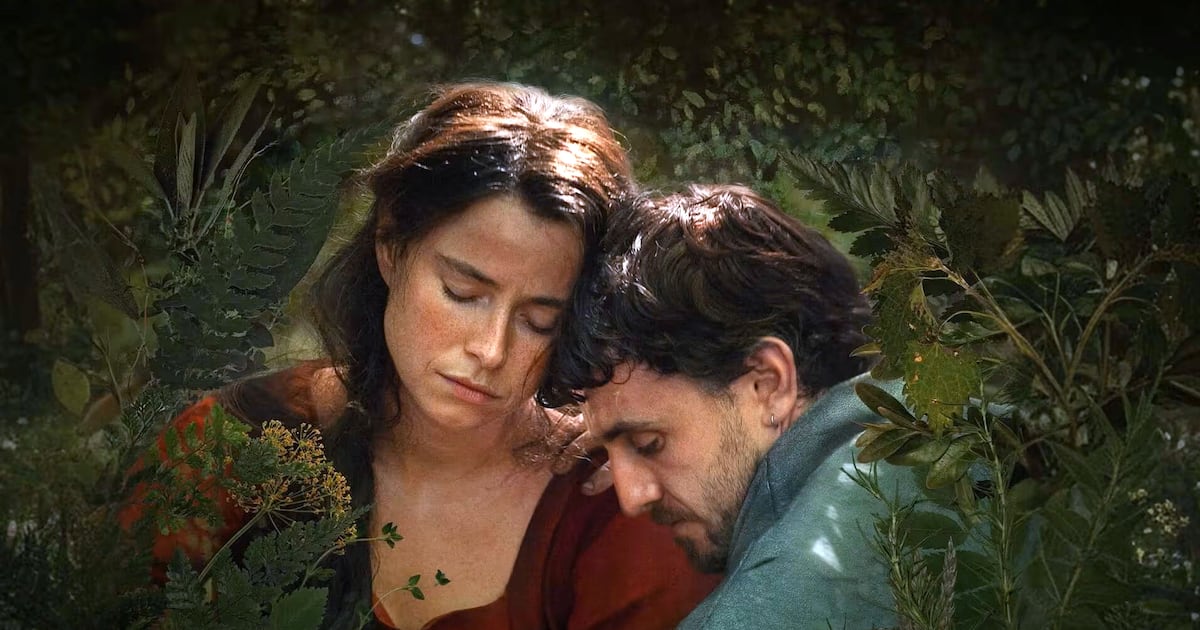
While the film and television world quakes and shudders, Irish actors and production talent have seemingly never had it so good.
Existential worries currently dominate the minds of many in the entertainment business.
Netflix and Paramount Skydance are fighting to acquire Warner Brothers in what feels like a seminal moment for the film industry. Actors and production crew fret about artificial intelligence replacing them. And all the while, the decline of cinema and theatrical releases continues.
Yet, at the Golden Globes in Hollywood being held on Sunday, the Irish will again set foot on the red carpet to be feted by the international press.
Jessie Buckley is nominated for best female actor in a motion picture for her portrayal of Shakespeare’s wife Agnes in Hamnet, while her costar Paul Mescal is in contention for best supporting actor.
Buckley’s best actress win in the Critics Choice Awards in California last weekend puts her in strong contention for further gongs in this year’s awards season.
 Jessie Buckley at Critics Choice Awards in Santa Monica, California, earlier this month. Photograph: Matt Winkelmeyer/Getty Images for Critics Choice Association
Elsewhere, Blue Moon, which was filmed in Ireland and co-produced by Wild Atlantic Pictures, is among the Golden Globe nominees for best picture in the musical or comedy category.
“The talent agencies in LA are now watching who is coming through here,” says Andrew Lowe, co-founder of Element Pictures.
Lowe and Ed Guiney launched their production house 25 years ago and have been at the forefront of the Irish success story.
The Lenny Abrahamson-directed Room garnered Oscars and Golden Globes, while Element’s hugely successful television adaptation of Normal People brought Mescal to a global stage.
Element is regularly represented at the industry’s most prestigious award ceremonies such as this weekend’s Golden Globes. The company’s black comedy Bugonia is nominated for best picture in the musical or comedy category along with its lead actors Emma Stone and Jesse Plemons.
Lowe says the snowball effect of Irish success has been “discernible” in the level of interest being shown in Irish acting and production talent.
“There is no question that there is an awareness and interest in Ireland that just wasn’t there 25 years ago,” he says.
“There is a curiosity about the country – and how one so small produces so much talent.
“Jessie Buckley, Saoirse Ronan and Paul Mescal are all at the top of their game and are actors who can get a film made on the strength of their profile. They would regularly be on a list of five to 10 actors who can get a movie made in Los Angeles.”
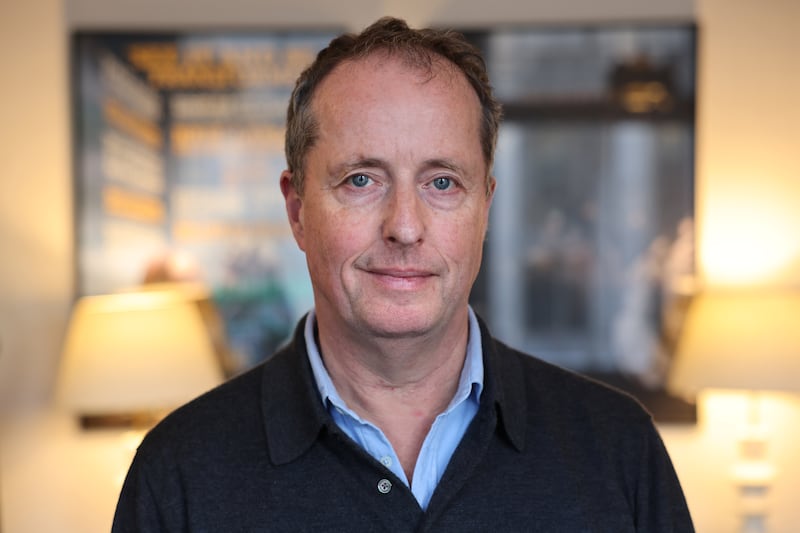 Andrew Lowe of Element Pictures. Photograph: Dara Mac Dónaill
Lowe says the work of the national development agency Screen Ireland, in particular, has been critical to the boom in talent.
“You could always sort of expect there would be one or two people who make it – say the likes of [film directors] Neil Jordan and Jim Sheridan – talent just rises – [Gabriel] Byrne, [Liam] Neeson – people of that ilk. But we are now undoubtedly seeing a much deeper talent base – in acting, directing and producing.”
Screen Ireland deserves “the lion’s share of credit” for talent development for the past decade or so, he says.
“They have put a lot of money into both production and development finance for the whole industry – allowing it to evolve and grow”.
Other production houses agree that Screen Ireland’s role, along with the Section 481 film tax credit, have underpinned much of the success.
The rebate is worth 32 per cent to producers of film, TV and gaming projects and is subject to a cap of €125 million. Last year it was enhanced with an additional 8 per cent tax relief to production companies producing small- to medium-sized feature films or animated feature films.
Despite the extensive support extended to film-makers choosing to make movies in Ireland, many smaller domestic players still describe the industry as a tough place to operate in.
Yvonne Donohoe is creative director and producer at Dublin’s Keeper Pictures. While this is an undoubtedly “amazing” moment for Irish film and TV talent, big challenges remain for many companies such as her own, she says.
“There is incredible support from Screen Ireland and there is so much that they are doing to foster the local industry, but their resources are limited,” she says.
“More success has meant more competition for funding and the cost of production is at least a third more expensive since Covid.”
Donohoe says rising costs have made it extremely challenging to produce a film for under €4 million. While the high profile earned by many Irish actors now means they can help deliver a project financially, they are “out of reach” to many smaller producers.
“Local producers struggle to get access to that A-list talent that would make a difference to getting the finance for your project,” she says.
Donohoe believes the implementation of the proposed “streamer levy” – which will funnel some money from the big online streamers such as Netflix and Prime Video towards local productions – would be “transformative”. It was shelved last year amid concerns that the Irish consumer wouldn’t stomach the levy.
“I don’t really accept that,” she says.
“If it did lead to a big increase in local production, I think the Irish customer would be willing to pay an increase of a few cents. The streamers would have to keep their subscriptions competitive – all of it wouldn’t be passed on.”
Donohoe says it is still a good time to be working in film and TV in Ireland, but it remains a tough business to operate in regardless of the overall economic picture.
“We are boom and bust resistant,” she says.
Brendan McCarthy, co-owner of Fantastic Films, agrees that while the international spotlight on Irish talent is to be welcome, the day-to-day business of making films in this country remains a “labour of love”.
“You still have to fight your corner and everything takes much longer than you think it will – but it’s what we want to do,” he says.
Fantastic Films are in what McCarthy calls the “horror-related, horror-adjacent space”, making smaller movies that attempt to punch above their weight and budget.
He points to their production of the Kate Dolan-directed You Are Not My Mother in 2021 as a good example of “a modestly budgeted Irish film that did really well and found an audience all over the place”.
[ Donald Clarke: Who’s to blame for the end of cinema? It’s not who you thinkOpens in new window ]
Set in a Dublin suburb, the psychological horror enjoys a very robust rating on the movie website Rotten Tomatoes and was described by the Guardian as a “creepy, hugely effective feature”.
Fantastic Films is pinning its hopes on The Restoration at Grayson Manor – “a queer, severed hand movie”, says McCarthy. It premiered in Austin, Texas last September and enjoys a similarly good rating online.
McCarthy says cost pressures are ever present when first considering a production, but the nature of the horror genre can lend itself to saving money.
“That’s the model – not spending too much money on them but delivering at the same time. The haunted house movie doesn’t need a cast of thousands or lots of locations, but can still have effective stories that people love,” he says.
“Keep the lights off and make the music scary”.
Like many others in the industry, he applauds the work of Screen Ireland – noting that it weighs in on horror projects such as his, unlike some European counterpart organisations which are more focused on “high culture”.
“There is a little bit of recognition that some people do watch horror films, but mostly they fear it. Screen Ireland has been much more supportive across a range of content,” he says.
Looking ahead, Andrew Lowe of Element identifies the “precarious nature of RTÉ’s finances” as a potential threat to the health of the wider industry in the longer term.
He says it is a vital part of the “talent development chain” where young producers, directors and performers can cut their teeth. Should there be an underinvestment in new dramas, this will leave a big gap, he says.
“Unfortunately, RTÉ is seen through the prism of payment scandals, but it is so much more than that,” he says.
“It is an important institution that needs as much support as can be provided. If they have the resources, then they can invest in drama and young Irish film-makers can learn their craft.”
He notes that British broadcasters are pumping “huge resources” into drama while RTÉ’s budget is “minuscule” in comparison.
Back in Hollywood, the industry is ramping up towards the Oscars ceremony due to be held in March.
Following Cillian Murphy’s best actor win for his portrayal of J Robert Oppenheimer in 2024, the fortunes of Buckley and Mescal will become apparent when nominations are revealed at the end of this month.
Should either pick up a gong, the spotlight on Irish acting and production talent will remain firmly fixed.