
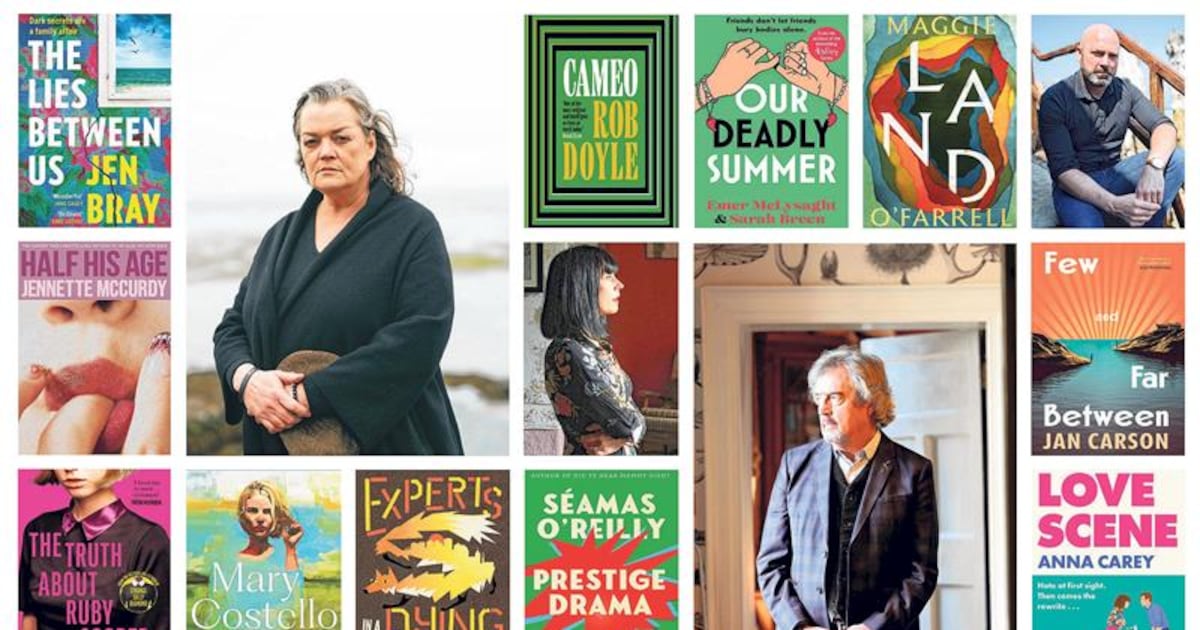
The new novel by Hamnet author Maggie O’Farrell will be her most Irish yet. Land (Tinder Press, June) is a multigenerational epic ranging from the west of Ireland to Canada and India, inspired by the author’s own family history and her deep attachment to the Irish landscape.
Where Are the Kings (Doubleday, August) is Donal Ryan’s follow-up to Irish Book of the Year and Orwell Prize for Political Fiction winner Heart, Be at Peace. A shattered teenage boy is apprenticed to his strange and hilarious uncles while his family’s secrets threaten to overwhelm him.
Stations (Bloomsbury, September) is Louise Kennedy’s follow-up to her hit debut novel, Trespasses, recently adapted for Channel 4. Róisín and Red meet as teenagers in their Irish hometown in 1982, are separated when Red leaves for London, then reunited. It’s a story of love and friendship, and the choices we blithely make when we are young, unaware that the consequences will reverberate throughout our lives.
The Newer World (Faber, September) by Sebastian Barry returns to the world of Costa Novel of the Year Days Without End and its sequel A Thousand Moons. It follows the fortunes of freed slave Tennyson Bouguereau in the United States post-civil war.
Beginning in Dublin in 1985 and unfolding over 25 years, A Beautiful Loan (Canongate, March) by Mary Costello (winner of Irish Book of the Year in 2014 for her debut novel, Academy Street) is the story of 19-year-old Anna, in thrall to Peter, an older, worldly man, and her painful road to self-discovery.
Set in Cork city, Rituals (Stinging Fly Press, April), a novella by Danielle McLaughlin, takes us inside an obsessive mind and invites us to experience the power and beauty of ritual, alongside the dark grip of compulsion.
From the authors of the bestselling Aisling series, Emer McLysaght and Sarah Breen, Our Deadly Summer (Bloomsbury, May) marks a major change of direction. Set in New York, Dublin and London, it follows Laura and Dee, two Trinity students off to New York for the summer of their lives. But the book opens with them standing over the body of a dead man.
From the Women’s Prize longlisted author of Nothing But Blue Sky and The Home Scar, Other People’s Lives (Sandycove, May) by Kathleen MacMahon is the story of Justine and her best friend Iseult and their marriages.
Into the Wreck (Bloomsbury, April) by Susannah Dickey (Tennis Lessons, Common Decency, ISDAL) is the story of Anna, Gemma and Matthew, gathering for their distant father’s funeral with their imperious mother Yvonne and aunt Amy, an award-winning poet.
Sarah Gilmartin’s Little Vanities (One, May), her third novel after the acclaimed Dinner Party and Service, is a tense story of desire and betrayal, exploring the relationships of two couples over decades from their Trinity College days to the reckonings of midlife.
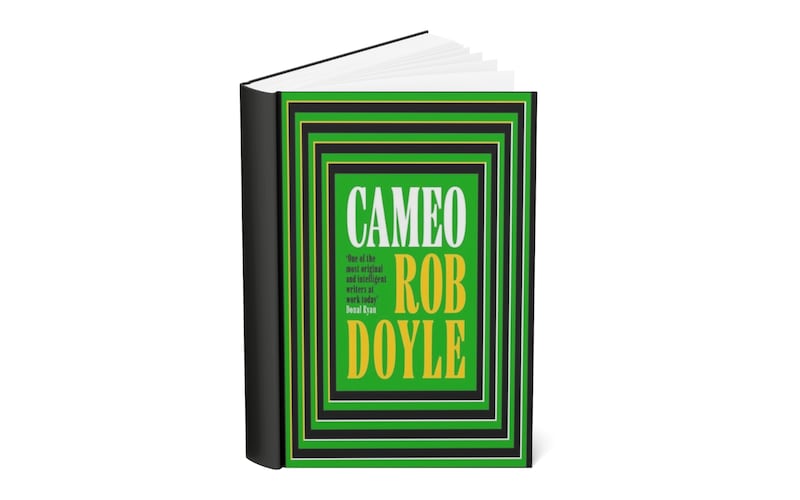
Cameo (W&N, January) by Rob Doyle, whose successful novels include Threshold and Here Are the Young Men, is the life story of fictitious Irish author Ren Duka, a literary satire and a self-portrait across multiple dimensions.
Love Scene (Hachette, May) by Anna Carey follows Annie, writing for an iconic Dublin soap opera when the real-life plot thickens.
In Make Strange (W&N, June) by Niamh Campbell (This Happy), Sunny, only four years old, looks up from the tub of toys in the living room and asks, “Mama, do you remember when I died?”
Few and Far Between (Doubleday, April) by Jan Carson, acclaimed author of The Fire Starters and The Raptures, imagines an alternative version of Northern Ireland’s recent past – a prime minister’s mad plan to drain Lough Neagh and create a new county and a community seeking refuge from the Troubles.
The Woman in the Water (Hachette, March) by Henrietta McKervey dares to answer one of literature’s unsolved mysteries: in Daphne du Maurier’s classic novel Rebecca, who is the woman in the water?
Anakana Schofield (Bina) returns with Library of Brothel (Knopf Canada, May), where we follow a building (and its dwellers) in an unnamed city as it generates, develops and dies.
Runaway Road (First Ink, May) by Sue Divin is a story of family and belonging set in contemporary Northern Ireland.
Rousseau’s Lost Children (John Murray, February) by Gavin McCrea (Mrs Engels; The Sisters Mao) is a philosophical novel, set in Paris in 1777 and 2022, that brings Jean-Jacques Rousseau’s investigations of human nature and society into the present day as he and Gavin, a middle-aged Irish academic writing his biography, wander the city and open up to each other.
In Dooneen (Fitzcaraldo, June) by Keith Ridgway (The Long Falling; Hawthorn & Child; A Shock), Mew steps into the bushes in a London park and steps out of the bushes in a Dublin that is alive with song, rumour, ghosts and an unmistakable sense of insurgency.
Adrian Duncan’s debut novel Love Notes from a German Building Site won the 2019 John McGahern Book Prize. A Thought Without Collision (Tuskar Rock, August), his fifth novel, is in two strands – a meditation on how we construct our relationship to the world around us. Summer, 1923: Six-year-old Catherine Carolan grows restless on her parents’ farm. Summer, 1951: To ease him through his final days, Dr Josef Alois summons someone from his past. Enter Catherine Carolan, now an Oxford professor.
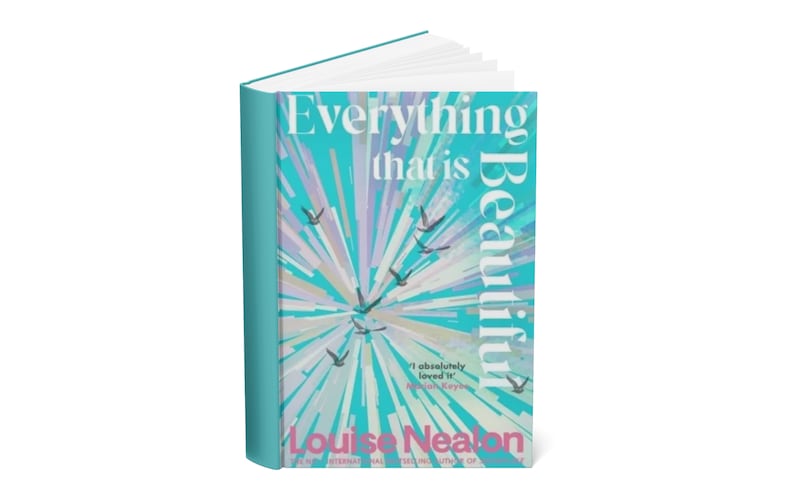
Everything That Is Beautiful (Manilla, April) is Louise Nealon’s follow-up to her award-winning debut, Snowflake. Told through the perspectives of three very different women, it unfolds the story of Niamh Ryan and the Foleys, a complicated Irish family she grew up alongside.
Field Notes From An Extinction (Seven Stories, March) by Eoghan Walls, a novel-as-notebook, features a 19th-century ornithologist on a remote Irish island, from the author of indie favourite The Gospel of Orla.
In Nothing Good Happens after 2am (HarperCollins, January) by Niamh Hargan, Robbie Saunders and El Tippett are cocktail-making stars on the rise in Love and Death, a tiny speakeasy in east London.
The Nowhere Girls (Headline, January) by Carmel Harrington is the story of two young girls found abandoned on a platform at Pearse Station in Dublin in 1995.
In Secrets Between Friends (Headline Review, March) by Sheila O’Flanagan, Ailie, Sybil and Rua form an unexpected friendship and discover new perspectives on old problems.
The Perfect Match (Orion, March), by Adiba Jagirdar, is an enemies-to-lovers and angsty queer Bend it like Beckham meets Cross the Line.
The Library of Traumatic Memory (Head of Zeus, March) is Neil Jordan’s first science fiction novel. Set in 2084, a librarian spends his days archiving the world’s most painful memories. But when his lover dies in a car crash, he secretly resurrects her as a digital consciousness – an act of grief, obsession and defiance.
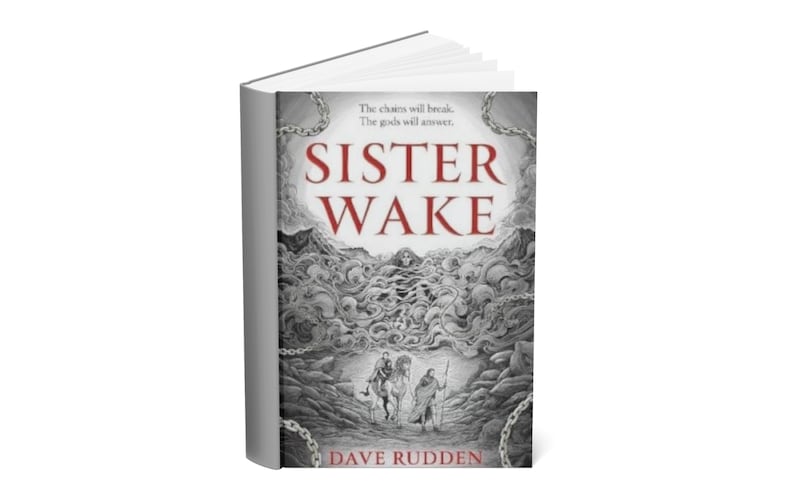
Sister Wake (Hodderscape, January) by Dave Rudden features an island overrun by bestial gods and a girl with the power to raise the fallen.
Sweep the Cobwebs off the Sky (Époque, March) by Mary O’Donnell is a tender exploration of ageing, memory, place, and the desire for reconciliation.
The Coast of Everything (Sagging Meniscus, June) is Guillermo Stitch’s follow-up to the acclaimed novel Lake of Urine. A daughter’s devotion parts her from her father. A dutiful soldier sentences his daughter to a loveless exile and her mother to madness. With her last breath, a dying woman exhales the whole world. A young girl with a broken body holds it up.
The Red Mouth (Bloomsbury, July) by Sheila Armstrong (How to Gut a Fish, Falling Animals) explores an Irish bog’s secrets and their effect on the lives of a peat-cutter, an archaeologist’s daughter and a young environmental scientist.
The Lock Keeper’s Wife (Lilliput, February) by John MacKenna is told through the journal entries of a woman recently released from “The Mental”, a psychiatric institution in rural mid-century Ireland.
Saoirse (Eriu, February) by Charleen Hurtubise (The Polite Act of Drowning) follows an artist living an outwardly idyllic life in Donegal with the safe home that she has always longed for, but success threatens to expose her troubled past life in the United States.
In what promises to be a strong year for debuts, one of the most keenly awaited is Said the Dead (Faber, May) by Doireann Ní Ghríofa, author of memoir A Ghost in the Throat, winner of the James Tait Black Prize and Irish Book of the Year. A woman flinches as she walks past a derelict mental hospital in Cork. A “for sale” sign is the first of many signs she follows, drawing her into an irresistible river of forgotten women’s voices.
Irish Times writer Patrick Freyne is one of several Irish journalists to turn to fiction this year. He follows his admired essay collection OK, Let’s Do Your Stupid Idea with the novel Experts in a Dying Field (Sandycove, May), in which the surviving members of The Heathens, “the 1,000th best band of all time”, reunite in Dublin to understand the tragedy that changed their lives and music’s magical powers.
Esther is Now Following You (Bantam, January) by Tanya Sweeney is a debut novel about obsession, fandom and spiralling. Esther falls for actor Ted, stalks his every move, then ditches her husband, takes all their savings and buys a one-way ticket to Canada to be with Ted.
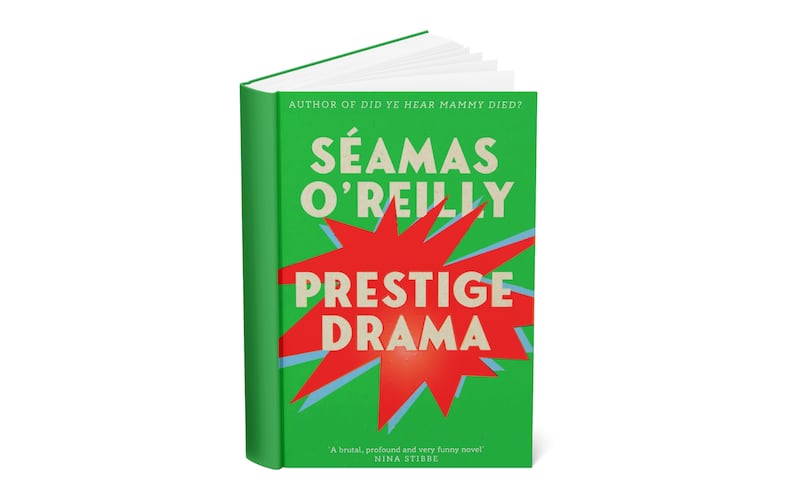
In Prestige Drama (Fleet, May) by Séamas O’Reilly (Did Ye Hear Mammy Died?) Derry is abuzz with news that famous actor Monica Logue will be starring in a new series set during the Troubles. Then she goes missing… All eyes are on Diarmuid, the flaky scriptwriter who was the last to see her alive.
Somewhere (Lilliput, May) by Jessamine O’Connor is a raw, intimate portrait of a woman balancing on the edge of survival, seeking meaning and love amid isolation and addiction.
Darkrooms (Sphere, January) by Rebecca Hannigan finds Caitlin back in her small Irish hometown, drifting from temporary jobs to temporary men, trying to escape memories of the Hanging Woods.
Tom Burne Has Left the Chat (Faber, May), Dubliner Seán Farrelly’s YA debut, explores grief and loneliness.
Four Night Seas (Lilliput, March) by Niamh Mac Cabe is the ATU Sligo lecturer’s debut collection, featuring characters navigating emotional or existential thresholds.
The Lies Between Us (Sandycove, February) by Jen Bray is a thriller about three sisters, Lucy, a disgraced former garda; Susannah, a famous novelist, and the estranged Tara. On a seaside getaway, Susannah disappears and a body is found, forcing Lucy to step back into her former role.
Love & Other Liabilities (Poolbeg, February) by Fiona McCann is a romantic comedy set on an island in west Cork.
The Nun of Ravensbrook (Hachette, July) by Cathi Fleming is based on the remarkable true story of how Sr Kate McCarthy, Irish nun and French Resistance leader, changed lives in Ravensbrück Concentration Camp for women.
Set over an Easter weekend, Wild Iris (Dedalus, May) by Ruth McKee, editor of Books Ireland and the Irish Writers Handbook, follows Eve as she enters a psychological crisis: will she reconnect with an old lover, or end her life?

All Them Dogs (John Murray, March) by Djamel White is a literary crime novel set in west Dublin gangland. Dirtpickers (Manilla, May) by Edie May Hand is a novel of love, trauma and found family, set around a failing silver mine in 1980s Idaho.
Neil Tully’s The Visit (Eriu, May) is a tender portrait of a Wexford small town under pressure.
In The Lightning (Bluemoose, May) by Jamie Guiney (The Wooden Hill), an old lighthouse-keeper at the end of his rope gives an ultimatum to the universe.
Colin Morgan’s The Ballad of Ronan McCoy (HQ, June) is a coming-of-age story about friendship, first love, loss, and the ultimate question: who am I going to be?
Frida Slattery As Herself (Scribner UK, May) by Ana Kinsella traces the evolving relationship of actor Frida Slattery and director John Reddan over several years, exploring ambition, desire and creativity.
All the Old Clocks (New Island, April) by RP O’Donnell finds a former garda trying to solve a murder in her home town in west Cork.
In Contentious Spaces (Skein Press, March) by Rosaleen McDonagh, author of acclaimed memoir Unsettled, the Traveller families who live in Saint Rita’s are on borrowed time. In just a week they will be evicted by the local council, threatening not only their homes but also their history and the stories that have shaped them.
In The Long Way Home (Poolbeg, June) by Helen Dwyer, Fiona becomes a teenage mother in 1970s Ireland and is forced to give her child Grace up for adoption. Fate reunites them, then tragedy strikes.
Short story collections to look out for include The News from Dublin (Picador, March) by Colm Tóibín, delving into the lives of people living far from home; Devotions (Faber, April) by Lucy Caldwell, the BBC National Short Story Award-winning author of Multitudes, Intimacies and Openings, and Getting the Electric (Picador, May) by Louise Hegarty, author of the novel Fair Play and inaugural winner of the Sunday Business Post/Penguin Ireland Short Story Prize. Tóibín also introduces An Arrow in Flight (Vintage Classics, March) by Mary Lavin, his selection of the author’s finest stories.
Liz Nugent has written five No 1 bestsellers, most recently Strange Sally Diamond, and won five Irish Book Awards. In The Truth About Ruby Cooper (Sandycove, March), Ruby and her sister live an idyllic life in their close-knit church community in Boston until an incident when she is 16 causes her family’s world to implode.
Sharp-eyed nun Nora Breen returns in Murder at the Spirit Lounge (Faber, March) by Jess Kidd. In If These Walls Could Talk (Hachette, July) by Michelle McDonagh, in the shadows of a forgotten asylum, deadly secrets wait to be unearthed.

In A Plot to Die For (Simon & Schuster, April) by Ardal O’Hanlon, celebrity gardener Finn O’Leary returns home to Abbeyford to care for his ageing mother, but soon finds himself with a murder to solve. Edel Coffey follows the success of Breaking Point and In Her Place with In Glass Houses (Sphere, February). Eddie’s journalism career was destroyed by the Juliet Fox case. Twenty years later, she seizes the opportunity to get to the truth of the rich young Manhattanite’s murder.
In Whatever Happened to Madeleine Stone (Bantam, April) by Louise O’Neill (Asking For It), twins Madeline and Chelsea Stone are stars of the sitcom Double Trouble, but just as Chelsea’s career takes off, Maddie disappears. Twenty years later, a chance discovery gives Chelsea hope.
The Keeper (Penguin, April) is the latest thriller by bestselling author Tana French. When Rachel Holohan, sweetheart of her rural Irish hometown, is found dead in the river that runs through the land, it splits the community in two. Why would anyone want her dead?
Such A Nice Girl (Penguin, May) by Andrea Mara (No One Saw a Thing) is the story of two friends, whose 24-year-old daughters, also best friends, have disappeared from what looks like a crime scene. They need to work together to find them, testing their friendship to its limits. Which girl is the killer and which is the victim?
Everything She Didn’t Say (Hemlock, June) is bestselling crime writer Jane Casey’s first book set in her native Ireland. Three Reasons for Revenge (HarperCollins, June) is the latest from Dervla McTiernan.
International
Departure(s) (Jonathan Cape, January) by Julian Barnes is the story of Stephen and Jean, who fall in love when they are young and again when they are old. It is about how we find happiness, and when it is time to say goodbye.
As If (Hamish Hamilton, February) by Isabel Waidner has two men meeting in a flat in London. They are strangers yet look remarkably alike. Lewis is grieving his dead wife; Korine is hiding from his very-much-alive one.
In Vigil (Bloomsbury, January) by George Saunders, we accompany an oil company chief executive, in the twilight hours of his life, as he is ferried from this world into the next.
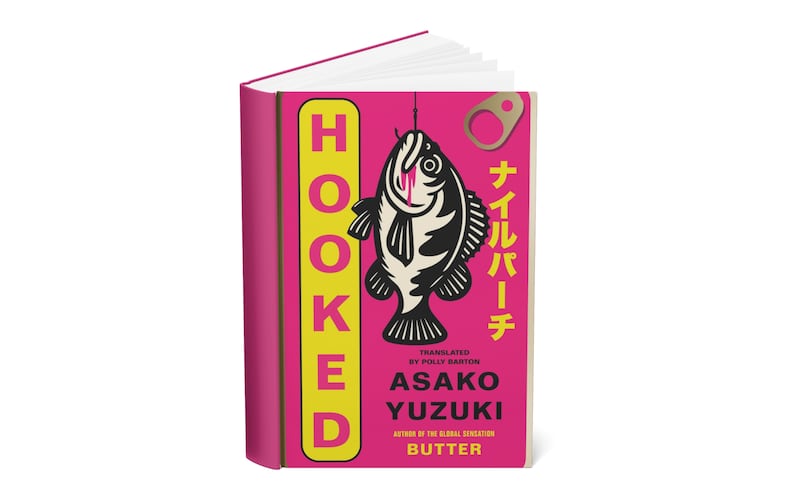
Hooked (4th Estate, March) by Asako Yuzuki, translated by Polly Barton, is a tale of loneliness, friendship and obsession by the team behind the global bestseller, Butter.
In John of John (Picador, May) by Booker Prize winner Douglas Stuart, a young man, broke and with little to show for his art-school education, returns home to the island of Harris to find that not much has changed except for him.
Whistler (Bloomsbury, June) by Ann Patchett is a warm, intimate tale about family, memory and connection.
In Transcription (Granta, April) by Ben Lerner, a writer returns to his college town to conduct what will be the final published interview with his 90-year-old mentor. But after his smartphone falls in the sink, he arrives with no recording device.
From Yann Martel, author of Booker winner Life of Pi, comes Son of Nobody (Canongate, April), a novel connecting a foot soldier in the Trojan War with a struggling scholar in modern-day Oxford.
In Nonesuch (Faber, February) by Francis Spufford, an ancient system is awakening in the streets of London.
In The Irish Goodbye (Mantle, February) by Heather Aimee O’Neill, an Irish–American family gathers for Thanksgiving to confront the decades-old tragedy that haunts them all.
The Things We Never Say (Viking, May) from Elizabeth Strout explores how grief reverberates through decades, the comfort found in deep friendships and the freedom that comes when we break free of our secrets.
The Rouse (Picador, September) by China Miéville is a decade- and continent-spanning epic: forced to investigate a devastating personal tragedy, an ordinary woman stumbles on dark conspiracies, and provokes the attention of uncanny forces.
Look What You Made Me Do (Faber, March) by John Lanchester is a satirical psychological thriller – the acid black wit of Jesse Armstrong meets Notes on a Scandal by way of the British middle-class.
David Keenan (For The Good Times) returns with Boyhood (White Rabbit, April). In Glasgow, in 1979, a young boy is abducted. Nine years later, his brother is facing the final days of his youth and grappling with the fallout.
Gwendoline Riley follows 2021’s My Phantoms with The Palm House (Picador, April), the story of a lifelong friendship between a man and a woman, tested when one falls into despondency. The Things We Never Say (Viking, May) from Elizabeth Strout about mothers and daughters, a lifelong friendship and the complexities of being a woman in the American South.
Geetanjali Shree follows up her 2022 International Booker winner Tomb of Sand with The Roof Beneath Their Feet (And Other Stories, February), translated by Rahul Soni. Chachcho and Lalna use their roofs to build a friendship that transcends time and memory, free from the male gaze.
In The End of Everything (Serpent’s Tail, June) by Goldsmiths Prize-winner M John Harrison, Phillip has fished out of the water an object he can’t keep. A creature that keeps changing. An artefact he must take inland, before it destroys everything he thinks he knows.
Queenie is Working on It (Orion, July) by Candace Carty-Williams is a welcome sequel to Queenie.
Blending psychological suspense with intimate family drama, and with echoes of Virginia Woolf and Shirley Jackson, The Steps (Tramp, April) by Juliano Zaffino is both deeply moving and eerily unsettling – a meditation on trauma, family bonds and the thin line between tenderness and violence.
The Left and the Lucky (Faber, May) by Willy Vlautin is described as a heartbraker, Boyhood meets My Name Is Leon.
The Enchanting Lives of Others (Yale, February) by Can Xue, translated by Annelise Finegan, is a celebration of the beguiling power of literature, from a leading Nobel Prize contender.
Sophie, Standing There (Bloomsbury, August) by Meg Mason (Sorrow and Bliss) is a sharp and funny reflection on obsession and loneliness.
The Bishop of Durham Attempts to Surrender the City (Bloomsbury, October) by Susanna Clarke is a long-lost chapter in the lore of Jonathan Strange & Mr Norrell, an enchanted adventure into the magic of medieval England.
Cool Machine (Fleet, July) by Colson Whitehead is the final volume of his Harlem Trilogy.
White River Crossing (February) by Ian McGuire (The North Water) transports us to the edge of the 18th-century British empire where indigenous and European worlds collide with calamitous and deadly results.
The Housekeeper (Chatto & Windus, September) by Rose Tremain, inspired by Daphne du Maurier, is an original and fictional imagining of how Rebecca came to be.
In debut novel Communion (Atlantic, April) by Jon Doyle, a young man reckons with his community, his faith, and the violent confession of a young woman from his past.
Go Gentle (W&N, April) by Maria Semple relates one woman’s mid-life transformation, a globe-trotting mother-daughter story, all wrapped in a mystery.
Sigrid Nunez’s career-spanning first story collection It Will Come Back to You (Virago, August) explores the philosophical questions we have come to expect from her writing.
Last One Out (Macmillan, April) by Jane Harper reveals what happened to a young man who vanished five years ago in a small Australian town.
Country People (John Murray, July) by Daniel Mason is a joyous, absurd exploration of marriage, family, friendship, storytelling and how people find connection in an increasingly fragmented world.
From Jennette McCurdy, bestselling author of memoir I’m Glad My Mom Died, comes Half His Age (Fourth Estate, January), a novel about sex, class, desire, and power.