
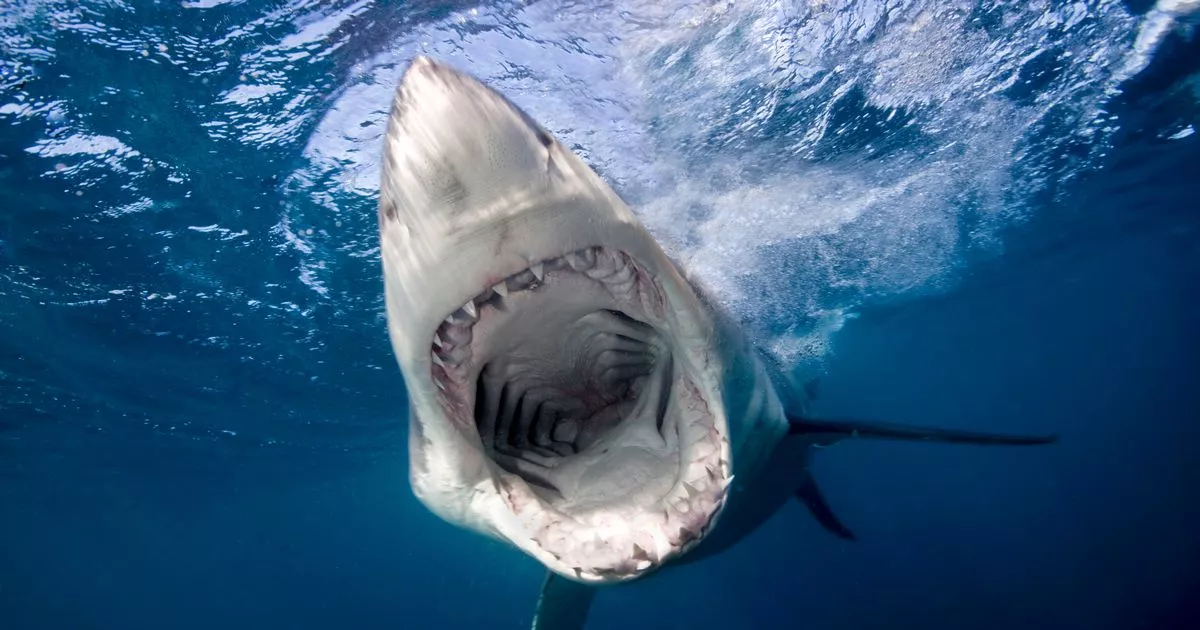
One brave man fought off the sharks for days on end as his group of US naval sailors waited to be rescued from the Pacific Ocean after their ship went down in minutes
Emilia Randall GAU Writer
08:00, 11 Jan 2026
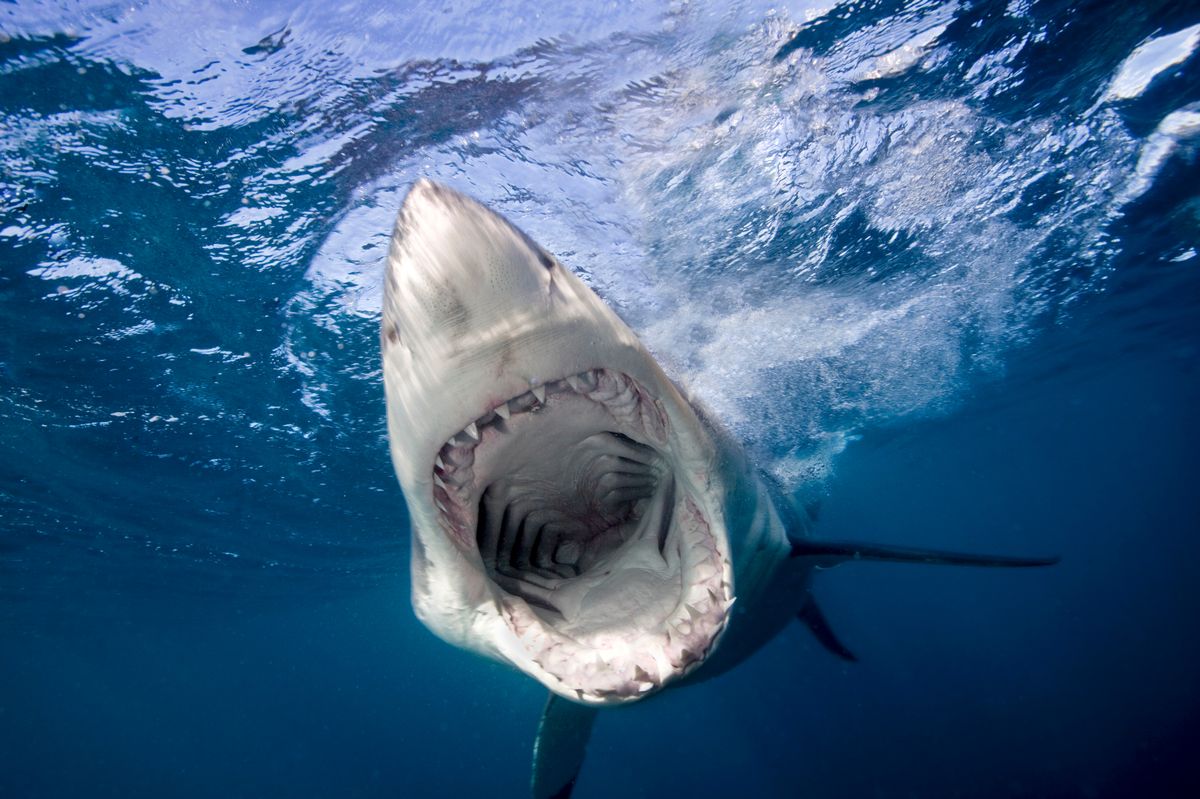
The injured sailors were picked off by the sharks(Image: Getty Images)
One courageous man battled sharks for days as his group of US naval sailors awaited rescue from the Pacific Ocean after their vessel sank within minutes.
On July 26, 1945, Harlan Twible’s ship – the Indianapolis or “Indy” – had, unbeknownst to him, just delivered the crucial components of the world’s first nuclear weapon to be deployed in combat to scientists on Tinian. The then 23-year-old and the Indy were dispatched to Guam, a southern island in the Pacific.
Disheartened by what appeared to be an insignificant assignment, Twible believed he would be forgotten in the records of naval history – but he was gravely mistaken.
Whilst the Indy was travelling at a speed of 17 knots, it was struck by two Japanese torpedoes launched from submarine I-58 just after midnight on July 30.
One missile hit the bow whilst the second struck close to the ship’s powder magazine, causing it to break in two.
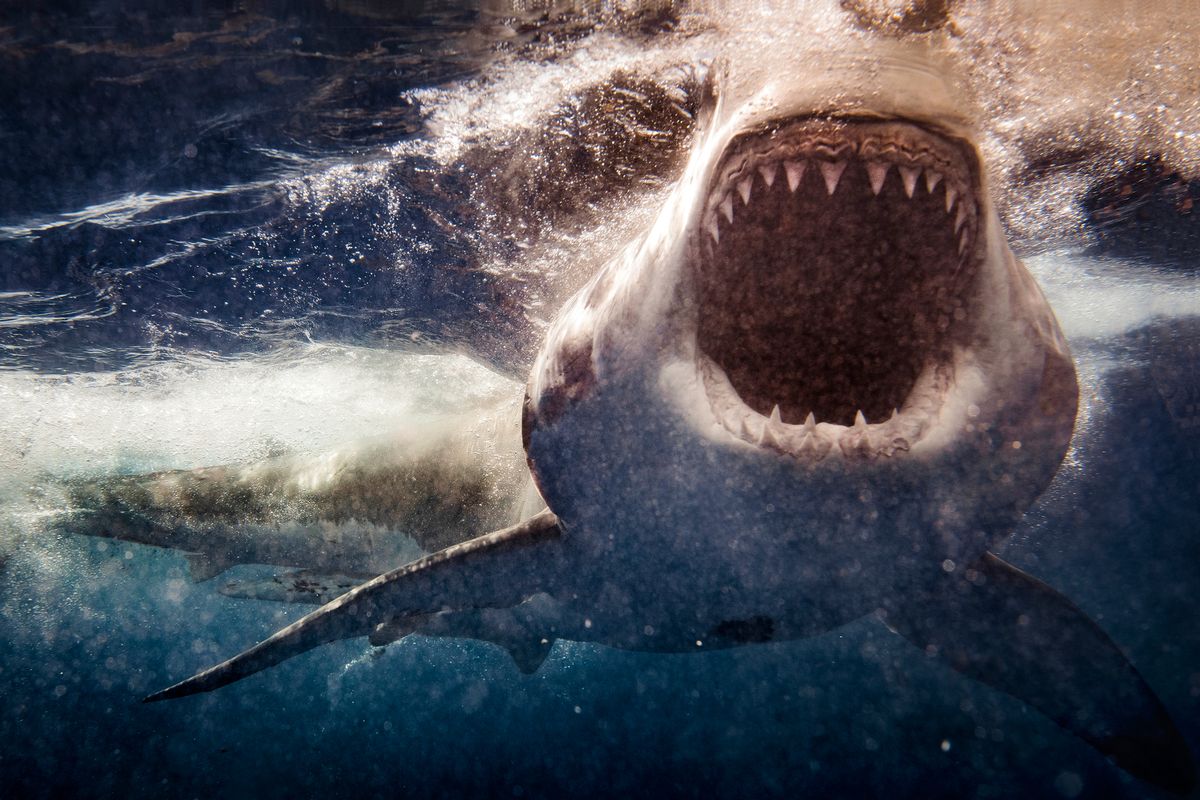
Twible fought off sharks with his bare hands(Image: Getty Images)
Twible could only witness frantic officers “we knew we were in trouble,” he said, according to the National WW2 Museum. He added: “So I took command and I told them to hang on to anything they could hang on to. . . . Then when the tilt became too great . . . I gave the order to abandon ship. Nobody abandoned, then I yelled, ‘Follow me!’ And the bodies came in so fast it was unbelievable.”, reports the Mirror.
Twible threw himself into the ocean and escaped the doomed vessel. The Indy went down in a mere 12 minutes – claiming 300 lives in that brief window. Yet, thanks partly to Twible’s courage, another 900 made it through the sinking.
However, far worse lay ahead as the crew found themselves in shark-infested waters – and many would not make it out alive.
“Everybody was scared to death,” he said. “These were all 18 and 19-year-old kids. There wasn’t any fighting, any turmoil. But everybody was scared.”
By dawn, the group had tragically shrunk to just 325 survivors by Twible’s count – and he himself would soon encounter the predators that had decimated his crew.
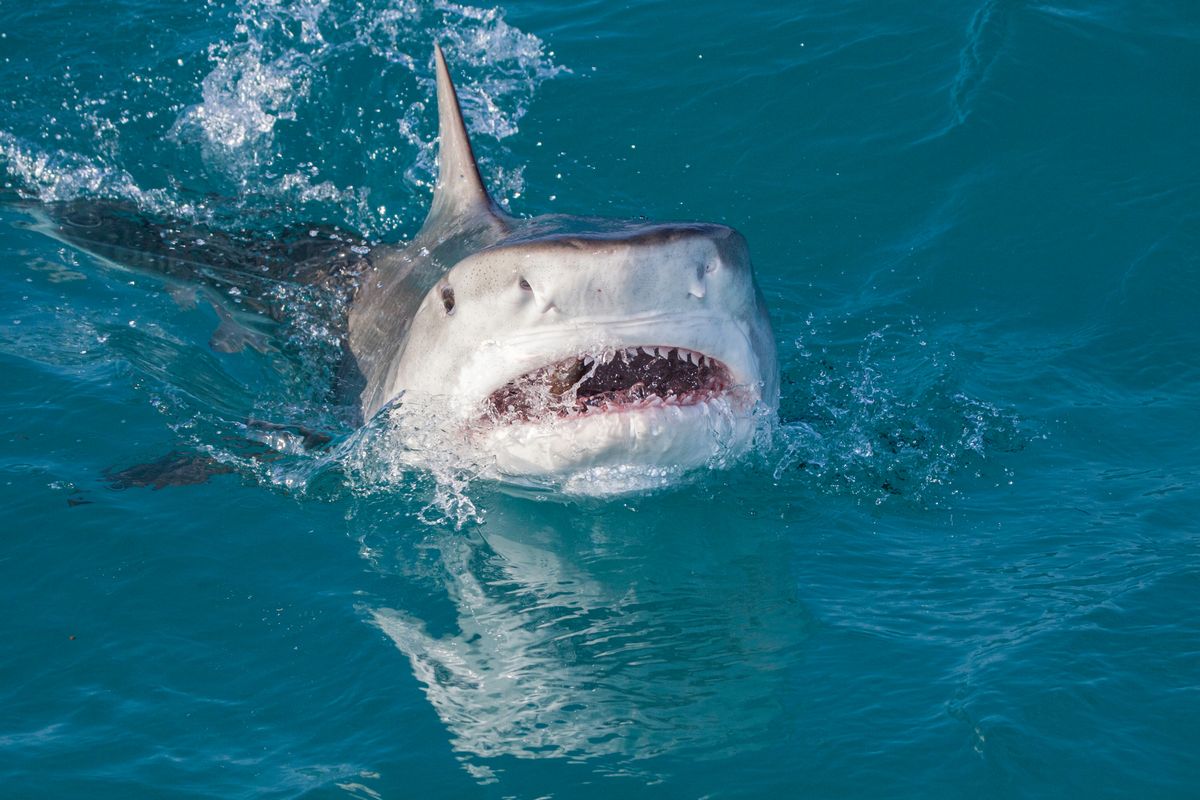
The sharks arrived after the boat sank(Image: Getty Images)
He said: “We tried to keep the men thinking that they would be saved, but there was no way in God’s green earth that I knew we were gonna be saved. My fear was really for the men, not for myself. My biggest concern was that the people we could save, we saved them.”
The precise toll of the savage shark attacks remains unclear – but Twible and his group faced the creatures repeatedly – and were forced to fend them off with nothing but their bare hands. He began to realise that any isolated individuals would swiftly be taken by what had become a horrific feeding frenzy.
Twible understood it was a matter of safety in numbers and he established “shark watches” to ward off the massive jaws of the predators. In a desperate and brutal decision, Twible cut the deceased from the floating debris and pushed them out to sea in a final attempt to spur his fellow survivors to continue their fight for life.
After an agonising four days and five nights adrift, the survivors were eventually spotted by a US Navy aircraft on routine patrol. Just 316 made it out alive – making it one of the most devastating tragedies in US Naval history.
Twible, who remained in the navy, said he believes it’s vital to continue sharing the story of what happened.
Reflecting on his choice to abandon ship, he said: “What decision could I ever make that was anywhere near as important (as) the decision to tell those men to throw their lives into the water? That was one of the biggest decisions I ever made. I was gambling everybody’s life that we were gonna win.”