
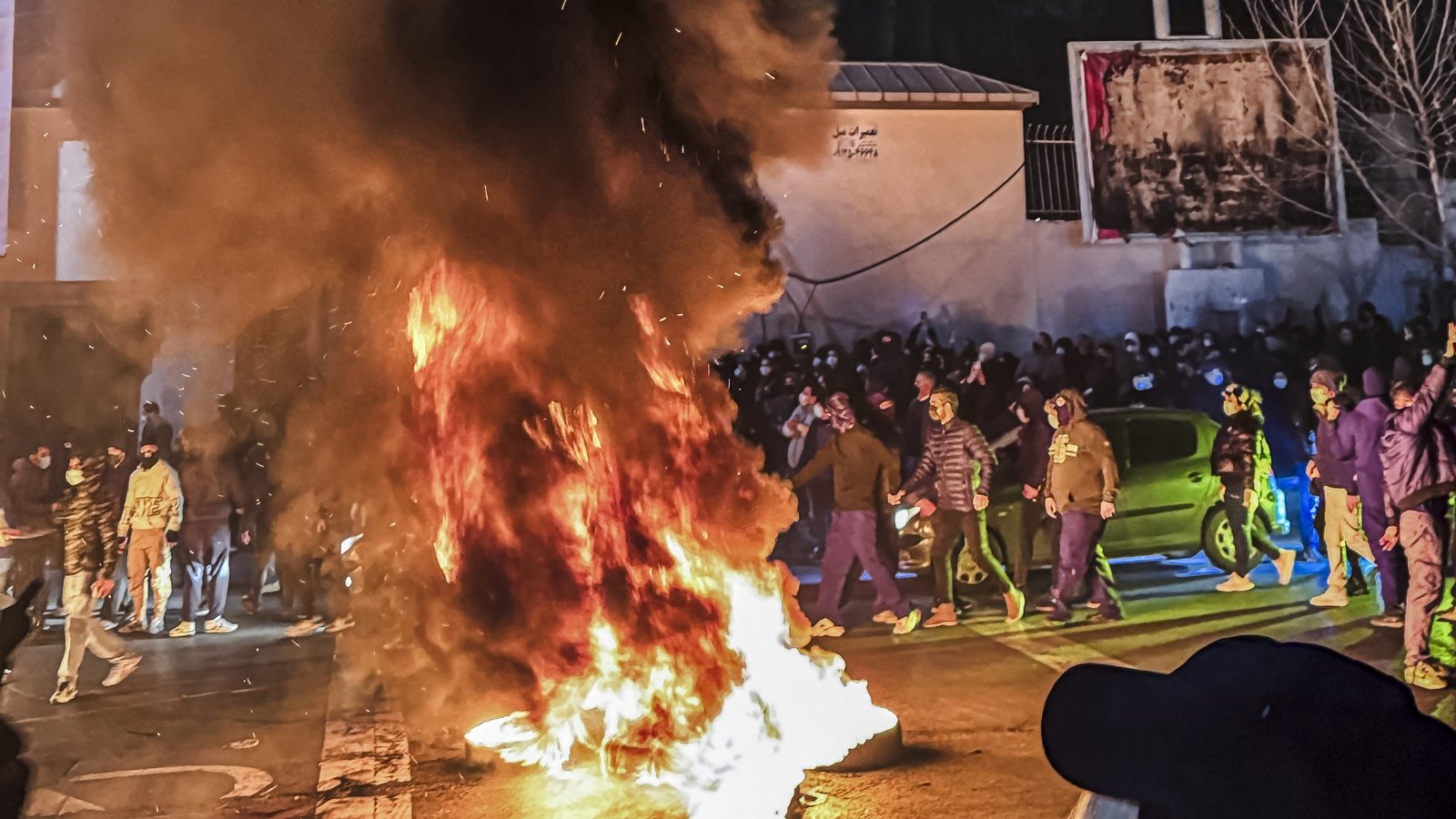
President Donald Trump has said the United States may meet Iranian officials and is in contact with the opposition amid escalating unrest in Iran.
He is weighing a range of strong responses, including military options, as the protests pose one of the biggest challenges to clerical rule since the 1979 Islamic Revolution.
President Trump said that Iran called to negotiate its nuclear programme, which Israel and the US bombed in a 12-day war in June.
He warned Iran’s leaders that the US would attack if security forces opened fire on protesters.
US-based rights group HRANA said that it had verified the deaths of 490 protesters and 48 security personnel, with more than 10,600 people arrested.
Iran has not given an official toll and the tallies cannot be independently verified.
President Trump is to meet senior advisers tomorrow to discuss options for Iran, a US official said.
The Wall Street Journal reported that options included military strikes, using secret cyber weapons, widening sanctions and providing online help to anti-government sources.
“The military is looking at it, and we’re looking at some very strong options,” Mr Trump told reporters travelling on Air Force One.
Iranian Parliament Speaker Mohammad Baqer Qalibaf warned Washington against “a miscalculation”.
“Let us be clear: in the case of an attack on Iran, the occupied territories (Israel) as well as all US bases and ships will be our legitimate target,” said Mr Qalibaf, a former commander in Iran’s elite Revolutionary Guards.
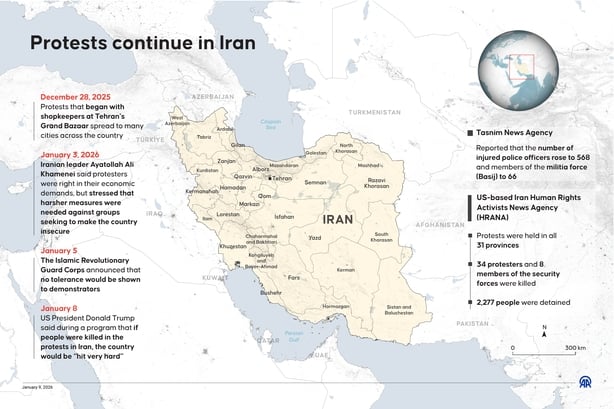
The protests began on 28 December in response to soaring prices, before turning against the clerical rulers who have governed since the Islamic Revolution.
Iranian authorities accused the US and Israel of fomenting trouble and called for a nationwide rally today to condemn “terrorist actions led by the United States and Israel,” state media reported.
The flow of information from Iran has been hampered by an internet blackout since Thursday.
President Trump said that he would talk to businessman Elon Musk about restoring internet access in Iran through his Starlink satellite service.
Footage posted on social media on Saturday from Tehran showed large crowds marching at night, clapping and chanting.
The crowd “has no end nor beginning,” a man is heard saying.
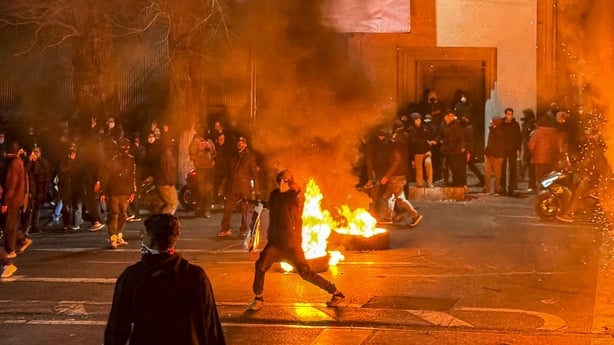
The protests began on 28 December in response to soaring prices
Authorities declared three days of national mourning “in honour of martyrs killed in resistance against the United States and the Zionist regime,” according to state media.
Three Israeli sources, who were present for Israeli security consultations over the weekend, said Israel was on a high-alert footing for the possibility of any US intervention.
Israel and Iran fought a 12-day war in June 2025, which the US briefly joined by attacking nuclear installations.
Iran retaliated by firing missiles at Israel and an American air base in Qatar.
While Iranian authorities have weathered previous protests, the latest have unfolded with Tehran still recovering from last year’s war and with its regional position weakened by blows to allies such as Lebanon’s Hezbollah since the 7 October 2023 attacks against Israel.
Iran’s unrest comes as President Trump flexes US muscles internationally, having ousted Venezuelan leader Nicolas Maduro, and discussing acquiring Greenland by purchase or force.
Alan Eyre, a former US diplomat and Iran expert, thought it was unlikely the demonstrations would topple the establishment.
“I think it is more likely that it puts these protests down eventually, but emerges from the process far weaker,” he said, noting that Iran’s elite still appeared cohesive and there was no organised opposition.
Mr Trump, posting on social media on Saturday, said: “Iran is looking at FREEDOM, perhaps like never before. The USA stands ready to help!!!”