
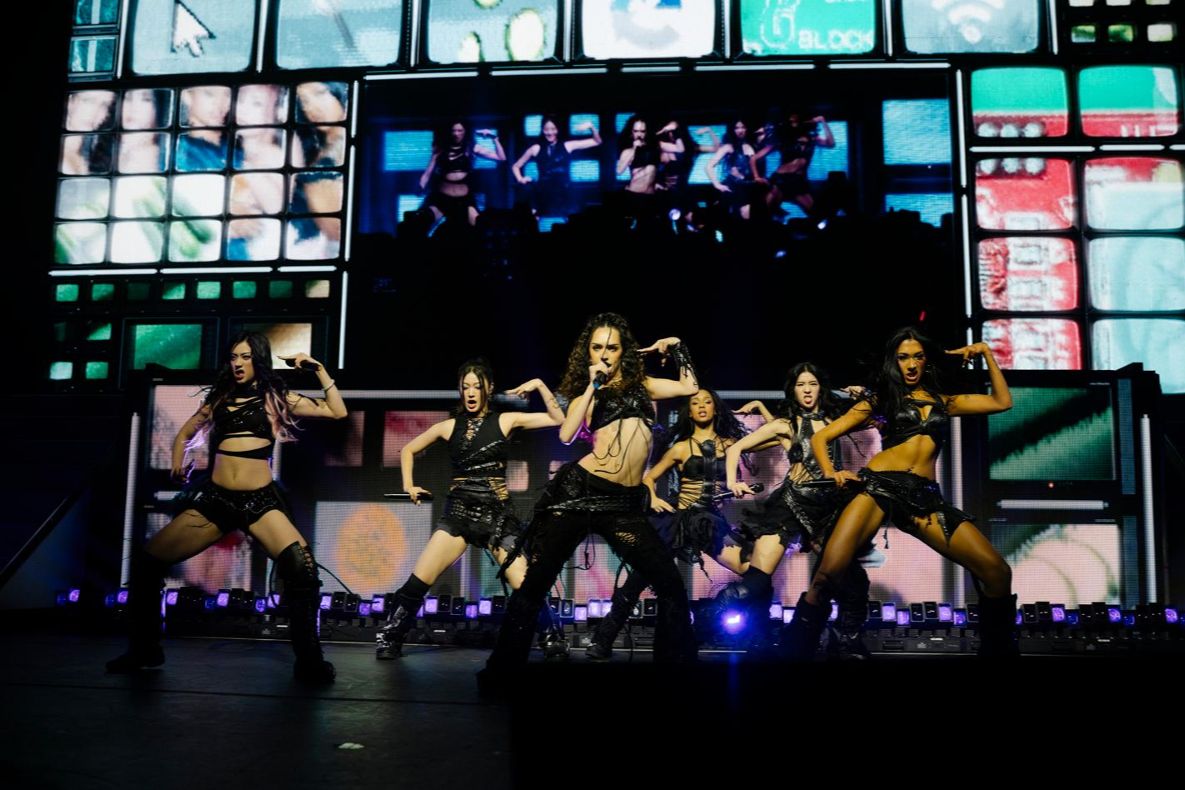
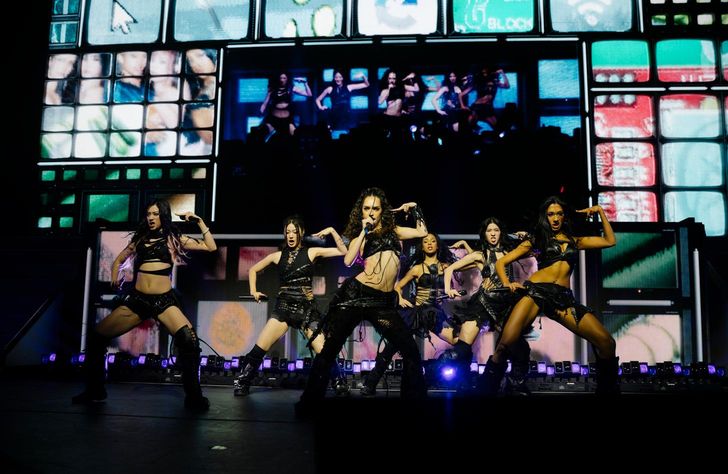
Girl group KATSEYE performs in Minneapolis, Minnesota, on Nov. 15, 2025, as part of its ″The Beautiful Chaos″ tour. Courtesy of HYBE Labels
A joke usually lands best the first time it is told. When it is repeated too quickly, especially in an obvious attempt to get the same laugh, it usually falls flat. What once felt unexpected is now starting to feel forced.
That dynamic sits at the heart of the mixed fan response to “Internet Girl,” the latest single from global girl group KATSEYE, released Jan. 2. The song follows last year’s smash hit “Gnarly,” a divisive track that went from a rocky start to viral success.
While “Gnarly” eventually worked in the group’s favor, “Internet Girl” shows how hard it is to recreate that kind of polarizing buzz and momentum on demand.
KATSEYE announced the news of its release just hours before the New Year, surprising fans with a message promising “one more surprise before this year ends.” The track had previously been teased as a surprise during the group’s “The Beautiful Chaos” live show in Minneapolis, Minnesota, in November 2025, where it had already begun generating excitement online.
According to HYBE Labels, which co-created the group alongside American record label Geffen Records, “Internet Girl” is meant to be “a playful take on online culture,” responding to the constant attention that comes with being visible on the internet. The lyrics are described as light and witty, while the choreography includes a so-called “emoji dance” that appears designed with social media in mind.
The idea itself is not unusual in today’s pop landscape. However, the problem with “Internet Girl” lies in when, and how it enters KATSEYE’s discography.
“Internet Girl” arrives directly after “Gnarly,” a track that initially faced heavy criticism for its repetitive, loosely structured lyrics and chaotic production. Early reactions were blunt, with many listeners dismissing it as something that “didn’t feel like real music.”
Over time, however, that backlash became part of the song’s appeal. Fans began to appreciate its ambition and sense of freshness, while the group’s commanding live performances helped reshape the conversation. The KATSEYE members’ choreography played a key role in making the track go viral.
What made “Gnarly” work was that none of it felt calculated, but rather like an artistic gamble. Its success seemed to stem from how people reacted to it, not from any obvious attempt by the production team to provoke them.
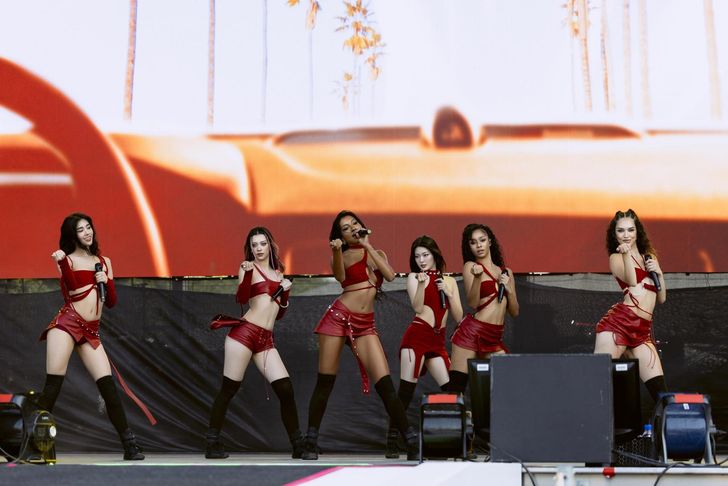
Girl group KATSEYE performs during their set on the T-Mobile Stage at Lollapalooza Chicago in Grant Park, Aug. 3, 2025. Courtesy of HYBE Labels
“Internet Girl” does not benefit from that same narrative.
The song, again, leans heavily into disorder. Its lyrics rely on repeated, nonsensical phrases — “eat zucchini” — while its structure feels intentionally scattered. A baby-voice line saying “I’m getting out of here” stands out as a clear attention-grabber.
Coming so soon after “Gnarly,” these choices no longer read as authentically playful. Instead, they come across as deliberate, making the track feel overly eager to chase controversy rather than stumbling upon it with style.
When the same tactics are reused, they become predictable, and “Internet Girl” reads as an all-too-obvious attempt from KATSEYE’s producers to repeat the blowup of “Gnarly,” this time with less success.
Thus, rather than offering a fresh take on toxic internet culture as it intends, the song struggles to make a meaningful statement and instead ends up embodying the very chaos it aims to critique.
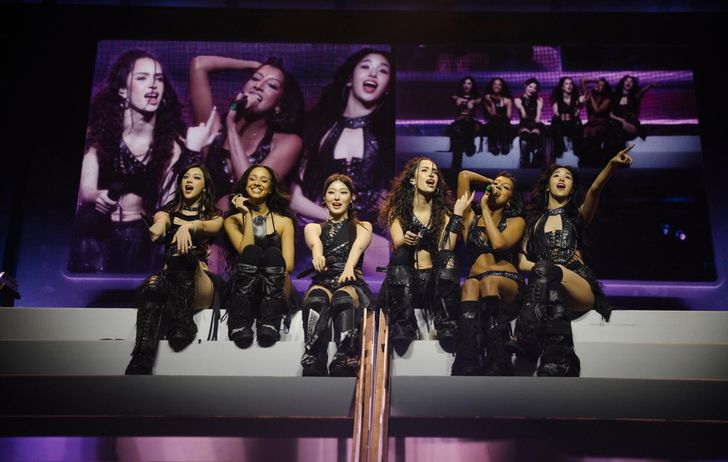
From left, KATSEYE members Megan Skiendiel, Manon Bannerman, Jeung Yoon-chae, Daniela Avanzini, Lara Raj, and Sophia Laforteza perform in Minneapolis, Minnesota, on Nov. 15, 2025, as part of the group’s ″The Beautiful Chaos″ tour. Courtesy of HYBE Labels
This approach is especially frustrating because the members of KATSEYE have already displayed their potential. Earlier tracks like “Touch,” “Mean Girls,” “M.I.A.” and “Gabriela” presented a group capable of delivering solid pop with artistic value and strong performances.
“Internet Girl” feels disconnected from that momentum. Rather than building on the group’s growth, it leans into short-term reactions, with KATSEYE’s production team seeming more focused on grabbing attention than on artistic progress.
Commercially, the strategy has worked — again. “Internet Girl” debuted at No. 24 on the U.K. Official Singles Top 100, surpassing the group’s previous peak set by “Gabriela,” and posted career highs on Spotify in both the U.S. and globally.
But success built on reaction is not the same as success built on direction.
“Gnarly” felt like a moment that happened to KATSEYE, but “Internet Girl” feels like a moment loosely planned around them. The difference may be subtle, but over time, it shapes how fans listen and how long they stay.