
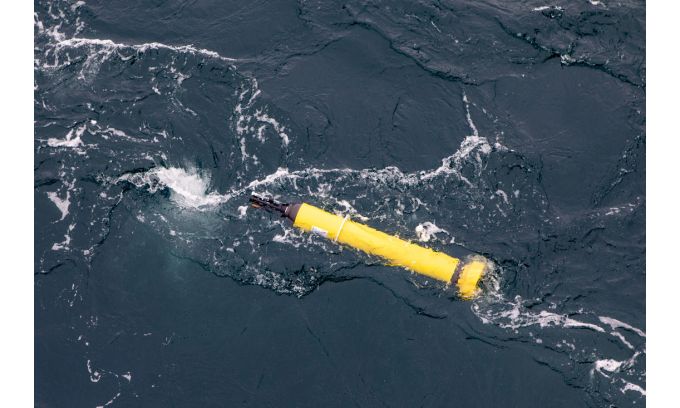
A robotic ocean float has collected the first-ever continuous measurements from beneath floating ice shelves in East Antarctica, shedding new light on how ocean heat may influence the stability of some of the continent’s most sensitive ice.
Over two-and-a-half years, an autonomous Argo float equipped with oceanographic sensors travelled around 300 kilometres beneath the Denman and Shackleton ice shelves. During its mission, it collected nearly 200 profiles of ocean temperature and salinity, including an eight-month period spent entirely beneath the ice – a region that has remained largely beyond the reach of direct observation.
Ice shelves play a crucial role in controlling Antarctica’s contribution to sea level rise. As glaciers flow from land into the ocean, they form floating shelves that act as buttresses, slowing the discharge of ice into the sea. When these shelves thin or weaken due to melting from below, glaciers can accelerate, increasing ice loss.
Contrasting conditions beneath ice shelves
The new measurements reveal contrasting conditions beneath neighbouring ice shelves. The Shackleton ice shelf, the most northerly in East Antarctica, is currently not exposed to warm water capable of causing significant melting from below. By contrast, the Denman Glacier – which rests on bedrock well below sea level and has the potential to make a substantial contribution to global sea level rise – appears far more vulnerable. Warm water is already reaching beneath the ice, and relatively small changes in ocean conditions could sharply increase melt rates and trigger unstable retreat.
The float also captured detailed observations of the thin boundary layer immediately beneath the ice shelf, where heat is transferred from the ocean to the ice. Conditions in this roughly 10-metre-thick layer play a decisive role in determining melt rates, yet have been poorly constrained due to the difficulty of making measurements beneath ice shelves.
“Our intrepid float drifted beneath the ice and spent eight months under the Denman and Shackleton ice shelves, collecting profiles from the seafloor to the base of the ice every five days,” said Dr Steve Rintoul, an oceanographer at Australia’s CSIRO and a partner in the Australian Antarctic Program Partnership at the University of Tasmania. “These unprecedented observations provide new insights into the vulnerability of the ice shelves.”
Researchers say the data will be used to improve how ice-ocean interactions are represented in computer models, helping to reduce uncertainty in projections of future sea level rise. The successful mission also highlights the growing role of autonomous instruments in observing some of the most remote and inaccessible parts of the planet.
For more information, read the paper ‘Circulation and ocean-ice shelf interaction beneath the Denman and Shackleton Ice Shelves’ as published in Science Advances.
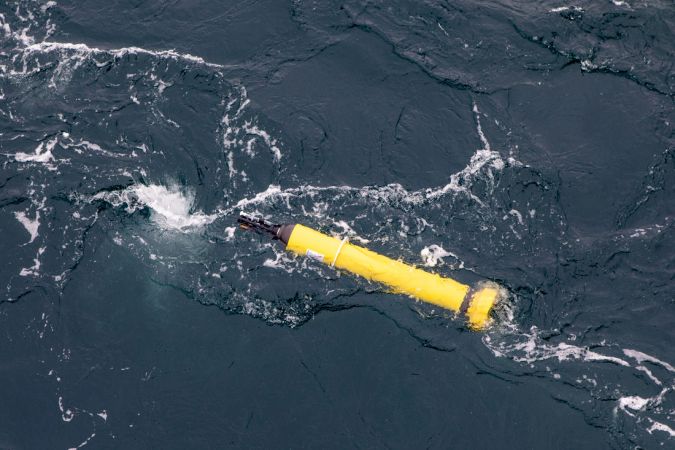
Over a period of two–and–a–half years, an Argo float fitted with oceanographic sensors gathered nearly 200 ocean profiles during a 300–kilometre journey beneath the Denman and Shackleton ice shelves. (Image courtesy: Pete Harmsen / Australian Antarctic Division)