
Experts have warned more younger people with ‘complex challenges’ are seeking help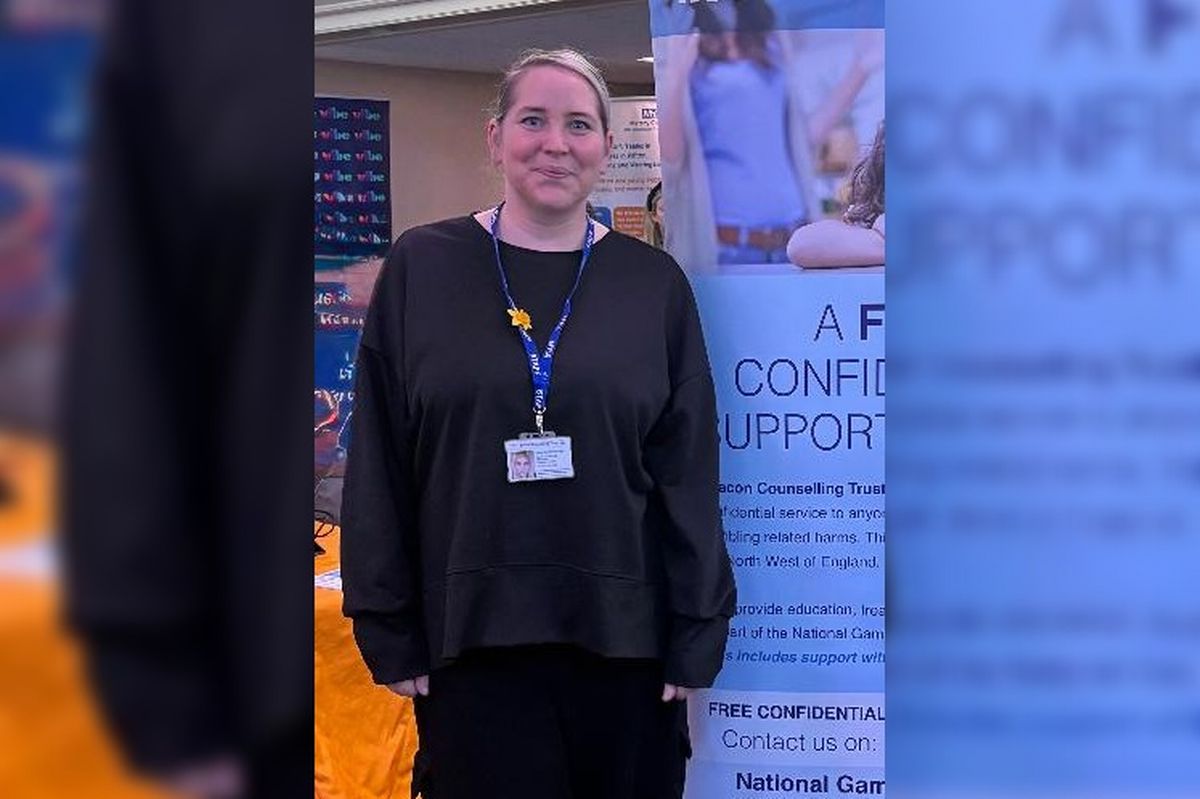
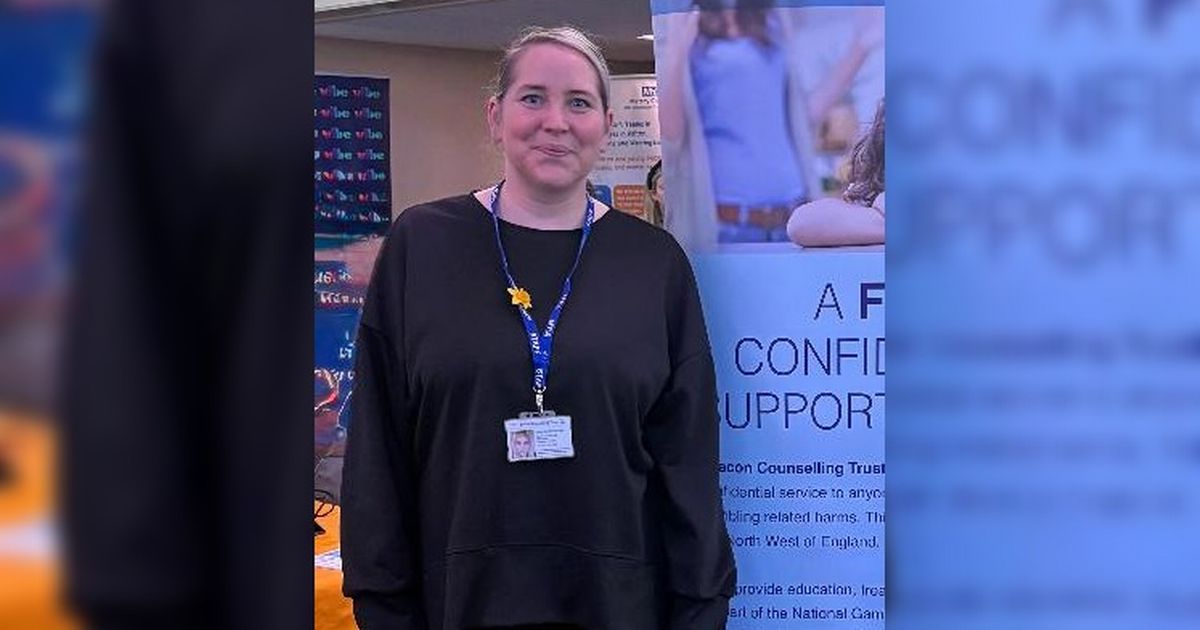
Sian Mclear-Dyer, who lost around £400,000 during her gambling addiction(Image: Supplied)
Experts have warned teenagers in Merseyside are becoming gambling addicts with a Liverpool charity reporting a surge in referrals. Sian Mclear-Dyer, 36, from Wallasey, lost around £400,000 through gambling over a four year period.
Sian had gambled before at the races but started to really enjoy it after she went to bingo with her work colleagues in around 2015. A finance manager for a property law firm at the time, Sian started receiving promotions from the bingo app she used that night and began to get hooked.
Within a few months, Sian was secretly staying up all night, playing slots on her phone, while her husband was in bed asleep. She then started using payday loans and taking out new credit credit cards to cover what she was spending.
When Sian reached this stage, she began stealing money from work. Two events in quick succession in 2018 gave Sian the push she needed to get help. The first was losing her job and the second was finding out she was pregnant.
A Google search sent her in the direction of Beacon Counselling Trust (BCT), which gave her the support she needed to beat her addiction. She said the trust “saved her life”. The charity, based in Liverpool, delivers free treatment and support across the north west.
However, Sian still had to face the consequences of the law for stealing more than £320,000 from work. She served just under a year in prison from 2019 to 2020, and for the first four months of her sentence was separated from her newborn son.
He was later allowed to stay with her in a mother and baby unit.
Sian now works as an education and brief Intervention lead in BCT, the organisation which helped her at her lowest ebb. She is now raising the alarm about Merseyside’s growing issue with gambling addiction.
BCT has reported an 810% rise in third-party referrals from partners over the past year, while its outreach teams have engaged with more than 20,000 individuals through its support programmes.
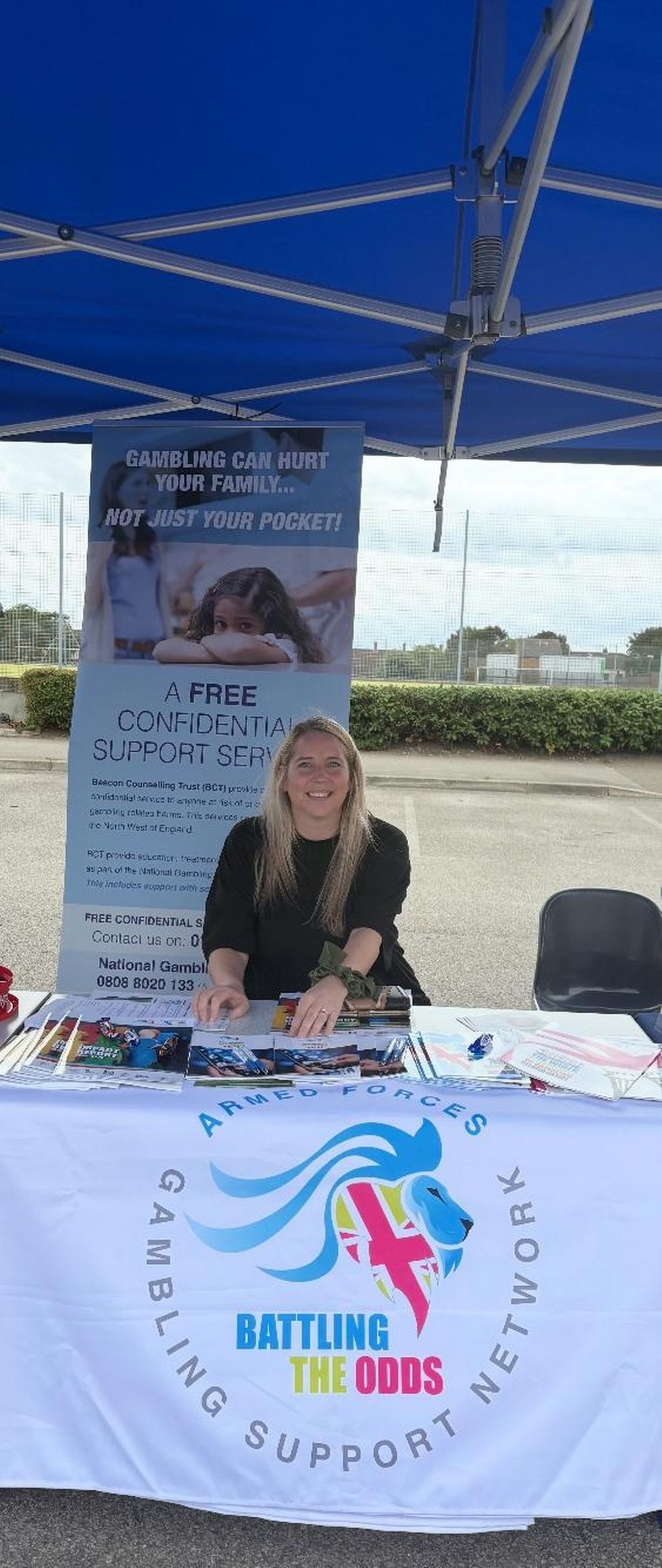
Sian now works for Beacon Counselling Trust(Image: Supplied)
Asked if gambling addiction is becoming a bigger problem in Liverpool and Merseyside, Sian said: “It’s getting worse because there’s just so much of it now and there’s this illegal market that’s coming through as well, where younger people become addicted before they’ve even reached the age of 18.
“I don’t say to people now, oh, don’t gamble, because not everybody is going to get addicted to it. That’s not the issue. It’s about seeing the signs of the dangerous games, the more addictive games.”
BCT says service users seek help from areas ranked highest on the Index of Multiple Deprivation (IMD). The charity’s treatment team says the trends mirror findings of an early research paper Patterns of Play report, one of the UK’s most comprehensive studies of online gambling behaviour, with gambling harms playing out in real time throughout Merseyside.
The charity’s Bet You Can Help training programme has also equipped hundreds of professionals to spot the signs of gambling harm early.
Lauren Campbell, treatment manager at BCT said: “We’re seeing data come to life. The vulnerable communities identified are where we’re seeing a sharp rise in need.
“People are coming to us earlier, but they’re also coming to us with more complex challenges, mental health issues, financial stress, and social isolation.”
BCT’s frontline teams say the figures are being reflected in the demand for services, particularly in areas like Walton in Liverpool, where mental health-related disability claims are significantly above the national average.
The increase in demand follows the government’s NHS 10 year plan, which places a renewed focus on early intervention and prevention, principles BCT says are essential to tackling gambling harms in the UK’s most vulnerable communities.
The Bet You Can Help training programme has been delivered to professionals and community members across healthcare, education, criminal justice and armed forces sectors to identify and respond to gambling harms.
Sian believes different organisations need to unite to tackle the issue. She said: “It’s about working together and spotting the signs of the trouble.
“It’s not just the gambler, it’s the affected others as well and getting help for them. I think the more that agencies come together and work together, the better the help is going to be.
“There’s always going to be gambling addiction out there, but let’s do more to help people through it.”
Sian says shame is often what stops people from coming forward and asking for help. This is something she experienced for herself. She said: ”I was so embarrassed and ashamed of what I was doing but I physically couldn’t stop.
“It’s thought that there’s like around one to two suicides a day in the UK linked to gambling because people don’t talk about it. It’s a hidden addiction and people don’t see a way out of it.”
A new public-health campaign was launched this month to expose the manipulative design and marketing tactics of modern-day gambling through the lens of people with lived experience of gambling harm.
The campaign, titled “If I only knew”, features insights from people who have been impacted by gambling to help young people recognise how gambling companies design products, marketing strategies and their business model, as well as showing the benefits of stopping and getting help.
The campaign has been developed by national gambling harm prevention organisation Chapter One, in partnership with Liverpool City Council.
Professor Matthew Ashton, Director of Public Health at Liverpool City Council said: “Gambling harm is a public-health issue that affects people, families and communities across Liverpool.
“This new campaign is tackling the root causes of gambling harm by focusing on the commercial determinants of health, as well as showing hope by involving people with lived experience. Our goal is for this campaign to reduce stigma and empower young people in the city to live healthier and happier lives.”
The campaign will run across social media over the coming weeks and is backed by local partners including the NHS North West Gambling Service, which has a clinic in Liverpool City Centre.
If you or someone you know is struggling with gambling, you can contact Beacon Counselling Trust for free, confidential support at beaconcounsellingtrust.co.uk/get-support
You can also visit www.chapter-one.org for free support and information.
Mental health support
Helplines and support groups
The following are helplines and support networks for people to talk to, mostly listed on the NHS Choices website
Samaritans (116 123) operates a 24-hour service available every day of the year. If you prefer to write down how you’re feeling, or if you’re worried about being overheard on the phone, you can email Samaritans at jo@samaritans.org.CALM Campaign Against Living Miserably (0800 58 58 58) is a leading movement against suicide. It runs a UK helpline and webchat from 5pm to midnight 365 days a year for anyone who has hit a wall for any reason, who need to talk or find information and support.PANDAS (0808 1961 776) runs a free helpline and offers a support service for people who may be suffering with perinatal mental illness, including prenatal (antenatal) and postnatal depression plus support for their family or network.Childline (0800 1111) runs a helpline for children and young people in the UK. Calls are free and the number won’t show up on your phone bill.PAPYRUS (0800 068 41 41) is an organisation supporting teenagers and young adults who are feeling suicidal.Mind (0300 123 3393) is a charity providing advice and support to empower anyone experiencing a mental health problem. They campaign to improve services, raise awareness and promote understanding.Students Against Depression is a website for students who are depressed, have a low mood or are having suicidal thoughts.Bullying UK is a website for both children and adults affected by bullying.Amparo provides emotional and practical support for anyone who has been affected by a suicide. This includes dealing with police and coroners; helping with media enquiries; preparing for and attending an inquest and helping to access other, appropriate, local support services. Call 0330 088 9255 or visit www.amparo.org.uk for more details.Hub of Hope is the UK’s most comprehensive national mental health support database. Download the free app, visit hubofhope.co.uk or text SHOUT to 85258 to find relevant services near you.Young Persons Advisory Service – Providing mental health and emotional wellbeing services for Liverpool’s children, young people and families. tel: 0151 707 1025 email: support@ypas.org.ukPaul’s Place – providing free counselling and group sessions to anyone living in Merseyside who has lost a family member or friend to suicide. Tel: 0151 226 0696 or email: paulsplace@beaconcounsellingtrust.co.ukThe Martin Gallier Project – offering face to face support for individuals considering suicide and their families. Opening hours 9.30-16.30, 7 days a week. Tel: 0151 644 0294 email: triage@gallierhouse.co.ukJames’ Place – supports men over 18 who are experiencing a suicidal crisis by providing quick access to therapy and support. Call 0151 303 5757 from Monday to Friday between 9.30am and 5.30pm or visit https://www.jamesplace.org.uk/