
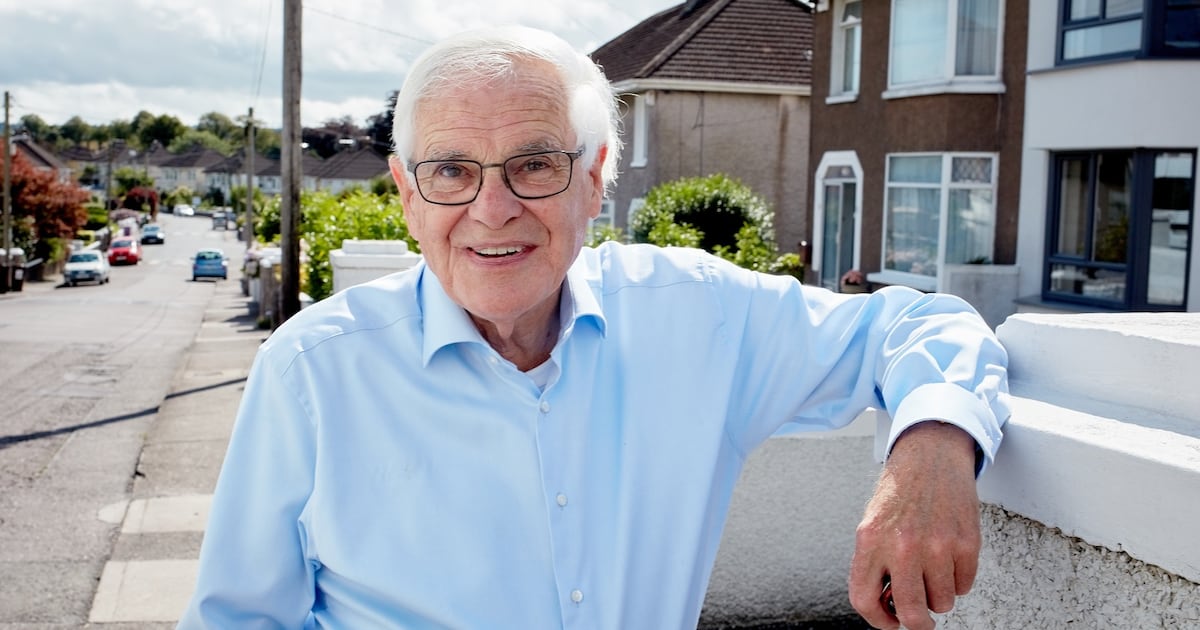
Cork singer Seán Ó Sé has died, aged 89.
Taoiseach Michéal Martin led tributes to the An Poc ar Buille singer, who died on Tuesday just three days short of his 90th birthday, describing him as someone who had “an extraordinary impact on Irish music and song.”
Ó Sé became a household name in the 1960s and was known for his later work with Seán Ó Riada.
He performed all over Ireland as well as in Europe, the US and Russia.
“I am deeply saddened at the passing of Seán Ó Sé,” Mr Martin said. “A legend, Seán was an iconic figure in Irish education, culture and traditional music who had an extraordinary impact on Irish music and song, He was also an outstanding school principal and educator.
“His friendship with the late Seán Ó Riada was a unique one. They had a very strong bond, and Seán was the definitive interpreter of Ó Riada’s music. He was renowned for his singing performances, particularly for An Poc Ar Buile, and did great work with Cór Cúil Aodha.”
Mr Martin said generations of people from Cork would associate him with the home coming of All Ireland teams, bringing celebrations to a rousing conclusion with a rendition of The Banks of My Own Lovely Lee.
“Seán was a good friend. He had a very happy and sunny demeanour. He was always wonderful company and a great person to meet. He leaves an outstanding legacy and will be sadly missed by his family. He will be deeply mourned on Leeside and indeed, across the country.”
Although born on South Terrace in Cork City, Ó Sé grew up in Ballylickey near Bantry where his parents taught in nearby Coomhola National School. He was to follow them into education, teaching in Baltinglass, Co Wicklow and Bandon, Co Cork before teaching in Knocknaheeney in Cork City.
He was appointed principal of the newly-opened St Mary’s on the Hill NS in Knocknaheeny in 1980 and oversaw its development into one of the largest primary schools in the country until his retirement in 1993.
But it was for his ability as a singer and interpreter of songs with Ó Riada that he was best known. His career followed a recording of An Poc ar Buile, a song with which he became forever associated after recording it for Gael Linn in 1962.
Ó Se recalled in an interview with The Irish Examiner how it was while attending Colaiste Iosagain in Baile Mhúirne that he first heard Cúil Aodha man, Dónall Ó Mulláin sing his own composition, An Poc ar Buile, charting the exploits of a mad puck goat.
“I heard Dónall Ó Mulláin sing it and the verse and chorus stayed with me forever. That was the first time I ever heard An Poc ar Buile. It’s a very catchy song and it remained in my mind,” said Ó Sé who went on to enjoy a close friendship with Ó Riada until his death at the age of 44.
Lord Mayor of Cork, Cllr Fergal Dennehy also paid tribute to Ó Sé, describing him as “one of Cork’s most recognisable cultural figures as well an educator, a storyteller and an ambassador for our music, and of course our native language.”
Mr Dennehy said while Ó Sé will forever be synonymous for An Poc ar Buile, generally regarded as the first pop hit in the Irish language, he was also famous for his rousing rendition of the Cork anthem, The Banks of My Own Lovely Lee, which he often performed at civic events.
“Most recently, he featured in the Remember and Renew gala concert marking the close of the national Decade of Centenaries, performing alongside orchestras and choirs in a night dedicated to reflection, remembrance, and celebration of Cork’s history,” he said.
“His presence at such significant civic occasions reflected not only his musical stature but his deep connection to the story of Cork and its people. His warmth, humour and devotion to our traditions helped shape the cultural life of Cork and Ireland for generations.”
Minister for Culture Patrick O’Donovan said he grew up listening to Ó Sé’s “incomparable voice” and described him as one of “Ireland’s most cherished cultural icons and a true gentleman of the arts”.
Predeceased by his wife, Eileen, Ó Sé, who lived in Ballinlough in Cork City, is survived by daughters Áine and Íde, his son Con and grandchildren Méabh, Seán and Ciara.