
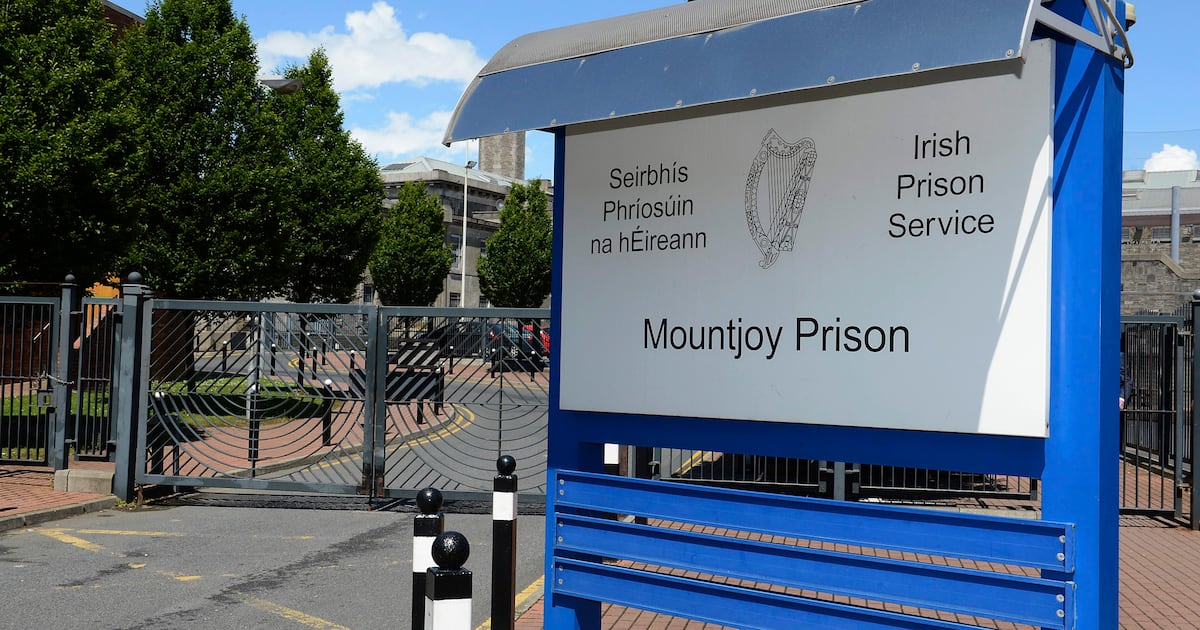
Irish prison conditions are among the worst in Europe, according to their most senior inspector, who has spent three decades reviewing jails across the Continent.
More than 600 inmates in Irish prisons are currently sleeping on mattresses, affecting a multiple of that number as most cells are occupied by three or four prisoners, an Oireachtas committee was told on Tuesday.
Prisoners are spending up to 22 hours a day locked in their cells, it heard, and “eating, drinking and sleeping near uncovered toilets”.
The chief inspector of prisons, Mark Kelly, addressing the Joint Committee on Justice, said he spent 30 years inspecting prisons in the 46 member states of the Council of Europe before taking on his current role in 2022.
“I can say with confidence that the current conditions for some people living in Ireland’s prisons are among the worst I have ever seen anywhere, at any time,” he said.
As of January 7th, there were 5,761 people incarcerated, against a capacity of 4,718, he said, a significant increase on the 5,001 inmates at the end of 2024. Of those, 613 were sleeping on mattresses on the floor.
The overcrowding is contributing to a violent atmosphere, the committee was told, and affecting the delivery of mental health services, education and training.
“Almost everyone agrees that the current situation is completely unacceptable, yet it continues to worsen day by day,” Mr Kelly said.
Independent Senator and former minister for justice Michael McDowell said Thornton Hall, the north Dublin site designated for a proposed new prison, has sat undeveloped for 20 years.
“Mountjoy is not capable of being rehabilitated as a new prison. We should go ahead with the Thornton Hall project,” he said.
Mr Kelly said he had reservations about Thornton Hall because of its proposed size but agreed there was need for “some added capacity”.
However, he said, reducing the size of the prison population should be a priority and no country comparable to Ireland had ever “built its way out of overcrowding”.
Labour TD Alan Kelly said the growth rate of the prison population was “not sustainable”.
Mark Kelly said there were people “who need to be locked up” but that most people in prison were not dangerous. Many were sent home a few days after being imprisoned because of overcrowding, while up to 20 per cent of all prisoners were on remand [awaiting trial], he said.
Thirty per cent of women prisoners were being held on remand, he said.
[ Overcrowded prison conditions ‘inhuman and degrading’, says inspectorOpens in new window ]
Fine Gael TD Paula Butterly said “we seem to peddle a little bit of narrative that every crime is down to a mental health issue or some sort of an addition and that is just not true.
“It is certainly part of the problem but the reality is the vast majority of people who find themselves in prison, it is because of a criminal activity and that has to have the element of punishment.”
That was a separate issue from bad prison conditions, she said.
Mr Kelly said he was sure the deputy did not mean anyone was before the committee peddling a narrative.
Fianna Fáil Senator Anne Rabbitte said that during a recent visit to Limerick Prison she had met a man suffering from Alzheimer’s disease who “didn’t know where he was”.
Mr Kelly said that, unfortunately, the man “is far from being the only person in that situation”.
Because of the number of people being prosecuted for historical abuse offences in Ireland, there is an “increasing cohort” of people aged 70 and over in Irish prisons, he said.
Mr Kelly noted that Ireland is the only EU member state that has not yet accepted its obligations under the United Nations Convention Against Torture.