

Running a business park provides an unusual insight into the pressures facing the small business owner.
Managing Ormeau Business Park at the Gasworks in Belfast, chief executive Patricia McNeill says conversations with clients quickly turn to the issues of rising costs, increasing labour costs and the costs of providing pension contributions.
Rising costs are rippling out across the economy putting pressures on small businesses no matter where the firm is located in Ireland. The pressures facing micro-businesses employing only a handful of people are particularly pressing.
McNeill says that small business owners tell her that recruiting and holding on to staff are also key worries.


The insights of business managers like McNeill, business advisers, small business owners and business groups reflect the concerns of a significant chunk of the economy.
The Irish News canvassed the views of small business owners on their frustrations – and asked for them to share their top tips in planning for the year ahead.
Across Belfast city centre, Jody Devlin, co-owner of hair salon Rogue, is juggling with many of the same issues.
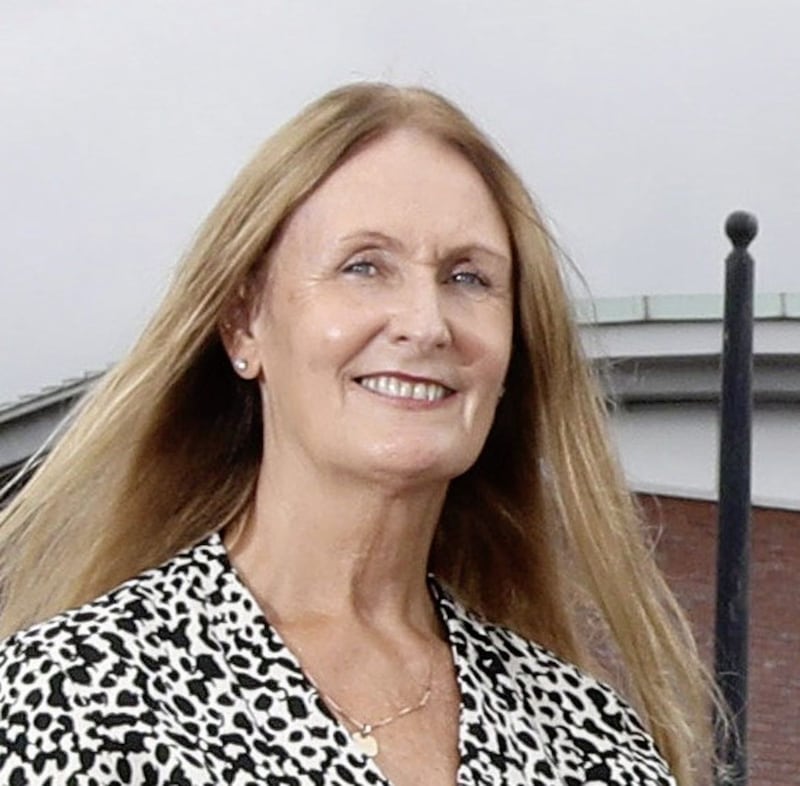 Patricia McNeill, chief executive of Ormeau Business Park
He says that salons have all but accepted that utility bills will rise every year but handling the increase in employer taxes has become a big burden.
Many salons, he says, haven’t fully recovered from the loss of trade from the Covid lockdowns and continue to struggle with big changes that have swept across the industry.
Customer spending habits and the flight of professional staff to set up on their own in the suburbs have forced salons to rent out chairs rather than bear the huge costs of employing staff by themselves.
Devlin also highlights the financial costs of anti-social behaviour in some city centre districts. The concerns of many customers have been heightened by the anti-immigration riots in Belfast and Dublin. The vulnerability of clients is deserving of more attention, he says.
The salon owner offers discounted vouchers to retain customer loyalty. His top tip for service businesses is to subscribe to one of the inexpensive counter devices that help customers post instant reviews on Google.
Devlin has also replaced the glossy photo shoots of yesteryear with daily social media posts that highlight ‘before-and-after’ pictures of the salon’s haircuts. He works on the social media activity for the business from home in the evening.
In Dublin, Adrian Cummins, the chief executive of the Restaurants Association of Ireland, says he regularly advises fledgling hospitality businesses to get a good accountant and to find a broker to work out the appropriate tariffs for utility bills and for merchant fees.
“I often say that every year you should sit down with a broker for your energy, telecoms, insurance, and all the other utility bills to ensure that the business is on the right tariff,” says Cummins. A broker will help the business owner to unpick the complex tariffs that merchant service providers list for their card payment systems.
And the Restaurants Association encourages people starting up in the industry to seek out advice in understanding business accounts. “You may be an excellent chef, but you may still not know how to work out a gross profit for your business,” says Cummins.
Helping coordinate such information on an all-island basis is the business of Cork-based Small Business Advice Ireland.
Director JJ O’Connell explains the free voluntary association was set up in the grim early days of the banking crisis in 2009 when many businesses were in financial trouble but still had nowhere to turn to. It puts business owners in touch with local business advisers across the whole of Ireland.
The continuous and subtle rise in costs for labour, goods, services and utilities remains the number one issue.
His top advice for owners of micro businesses is to list their goals for 2026. Such goals may be to boost sales or just to think through ways to develop a lifestyle, O’Connell says.
On a positive note, O’Connell says that many small businesses, including electricians, plumbers, and construction workers who may be swamped with work, will nonetheless still need “to be busy building the business” rather than merely reacting to business activity.
Neil McDonnell, chief executive of business group Isme, says that the costs of hiring staff is pushing retailers and providers to automate further. Other businesses involved in social care or services cannot react so nimbly, McDonnell notes.
However, If their finances allow, small firms may find it an opportune time to go for growth either by expansion or by acquisition, he adds.
An experienced manager of a hotel in central Dublin says the big lesson learned in recent years is the importance of holding onto staff.
“We worked out that retraining a housekeeper means a ‘dead’ two weeks because of the expertise lost and for the time it takes to train up and supervise a new employee to ensure the quality of the service doesn’t deteriorate,” says the manager speaking on condition of anonymity.
To help keep people motivated and involved in the business, he hosts monthly gatherings where staff can win awards and vouchers.
Back at the Ormeau Business Park in Belfast, the talk of clients is also about wage costs and all such items that make “it more difficult for an employer to hire people”, McNeill says.
 Eamon Quinn
And just like many households, small business owners are likely to spend frustrated hours waiting to get through to the call centres of their banks and utility providers.
Her top tip for any small business is to do business with a telecoms provider or utility that provides an account manager. “In business, you want to talk to a real human,” she says.