
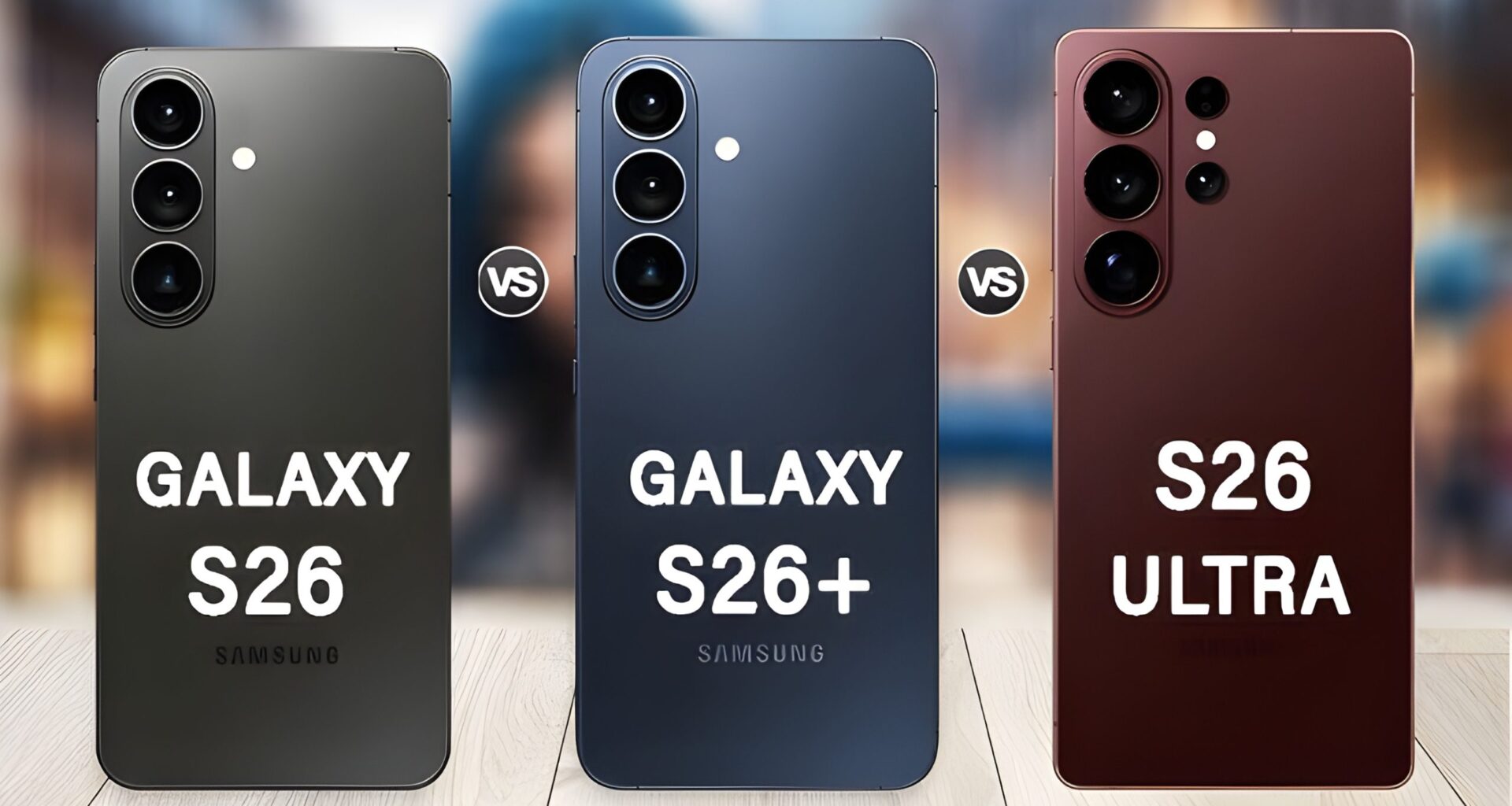
The fans of Samsung’s upcoming flagship smartphone series, the Galaxy S26 lineup, will have to wait for an inordinately long period this time around to get their hands on the beloved handsets.
Ice Universe: Samsung will hold its ‘Galaxy Unpacked’ event on February 25, with the Galaxy S26 series expected to hit the shelves on March 11
Samsung Galaxy S26 Series Timeline (South Korea)
Unpacked Event: February 25
Pre-order period: February 26 to March 4
Pre-sale period: March 5 to March 10
Market launch date: March 11
— Ice Universe (@UniverseIce) January 21, 2026
According to the renowned tipster Ice Universe, Samsung will unveil its Galaxy S26 series at the ‘Galaxy Unpacked’ event on February 25, with the lineup actually hitting the shelves on March 11.
This echoes a similar claim by Dealabs, which recently reported that Samsung’s Galaxy S26 series will go on sale in France on March 11.
As per a recently leaked 3C certification in China, the Samsung Galaxy S26 Ultra is expected to sport a 5,000mAh battery, which is an apparent downgrade from previous suggestions of a 5,200mAh battery. However, the certification did confirm the Galaxy S26 Ultra’s support for wired charging at 60W. This setup is reportedly capable of charging a fully depleted battery to 75 percent in 30 minutes. Do note that the S26 series is also getting support for iPhone-level, 25W wireless charging.
Also, the Galaxy S26+ is expected to sport a 4,900mAh battery, with support for wired charging at 45W, although a separate report has cited a noticeably smaller 4,755mAh battery as well. In the same vein, the base Galaxy S26 is expected to sport a 4,300mAh battery, but with support for wired charging speeds at only 25W.
Elsewhere, as we reported recently, Samsung is mulling an increase in the prices of the Galaxy S26 series of between $30 and $60 in specific regions, including South Korea. However, Samsung has decided to implement no price hikes within strategically important markets such as the US, where the base Galaxy S26 is expected to go on sale for $799.99, the S26 Plus for $999.99, and the S26 Ultra for $1,299.99.
Do note that the Samsung Galaxy S26 Ultra is expected to sport rounded edges, a dedicated camera island, an all-black color option (including the frame), a USB-C port, an S Pen, and a SIM card tray. We already know that the base Galaxy S26 will get a slightly bigger screen, while the S26 Ultra will be somewhat thinner. Additionally, the Galaxy S26 Ultra is expected to feature a selfie camera hole that will be around 4mm bigger than its predecessor’s, resulting in a wider field of view.
Meanwhile, in what constitutes a new star attraction for the upcoming Galaxy S26 series, Samsung is bringing its Flex Magic Pixel OLED technology to the lineup, enabling what is now being dubbed as a ‘Privacy Display.’ Basically, the technology leverages AI to dim angular viewing angles without affecting the screen brightness for a head-on viewing experience. This would prevent anyone from snooping on your smartphone-related activities from lateral angles. Samsung is calling this feature ‘Privacy Display.’
Bear in mind that the Galaxy S26 Ultra will be exclusively powered by Qualcomm’s Snapdragon 8 Elite Gen 5 chip, while the Galaxy S26+ and the base Galaxy S26 will feature Samsung’s in-house Exynos 2600 chip in select regions.
Also, the Samsung Galaxy S26 Ultra is expected to sport the following camera sensors:

A 12MP ISOCELL 3LD S5K3LD 3x telephoto (possibly with a smaller, 1/3.94-inch aperture)
A single 200MP ISOCELL HP2 main camera (possibly with a wider aperture)
A 50MP ISOCELL JN3 or Sony IMX564 ultrawide camera
A 50MP IMX854 5x periscope camera (possibly with a wider aperture)
A 12MP IMX874 selfie camera
Even though the Galaxy S26 Ultra’s camera hardware is barely changing relative to the Galaxy S25 Ultra’s, Samsung is still expected to bring major improvements to the overall camera experience by bringing the following:
An Advanced Video Professional (AVP) codec that would allow users to capture RAW videos with a higher bitrate and more granular details, enabling greater flexibility in the post-production phase.
Support for TILTA wireless lens controllers, which is the same hardware that is used to adjust focus in professional cameras.
‘Enhanced lens and coating technology’ will no longer turn skin tones yellow in images.
The Camera Assistant app will allow users to reduce harsh details, yielding a softer, more natural-looking photo.
Follow Wccftech on Google to get more of our news coverage in your feeds.