
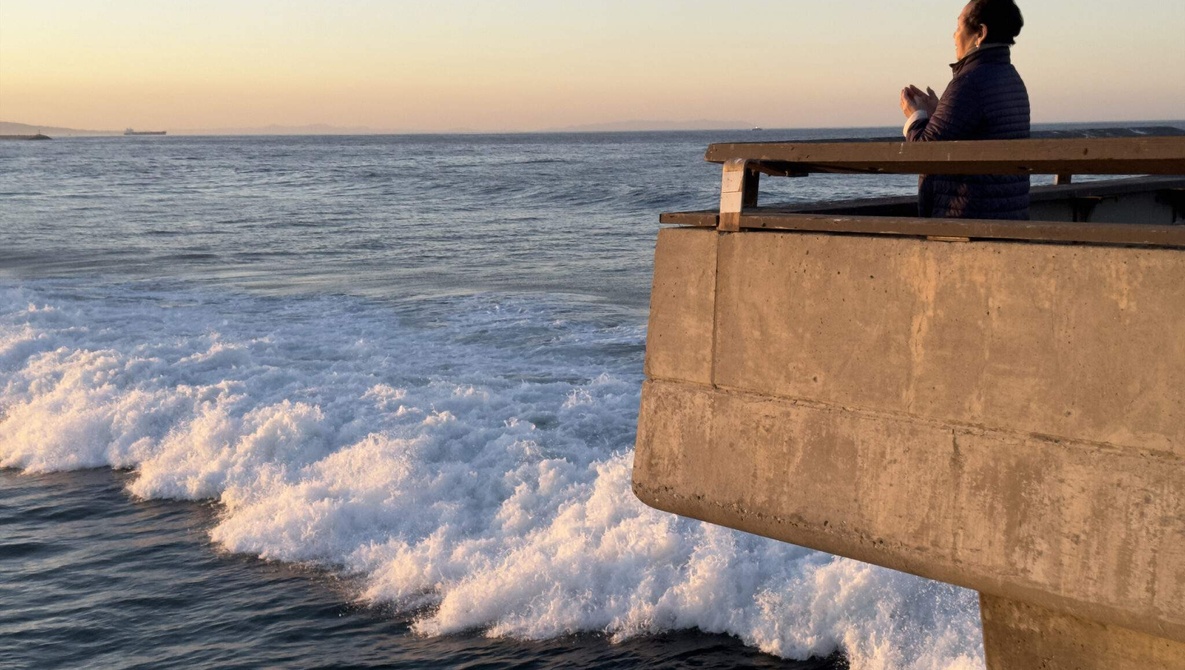
Sam Abell has pursued a career in documentary photography, spending 33 years with National Geographic. He concurrently taught and authored numerous books, including The Life of a Photograph, Seeing Gardens, and The Photographic Life. In 2024, Sam received the Lifetime Achievement Award from The Photo Society and was inducted into the International Photography Hall of Fame. Here, he explains why he shoots in an automatic mode, sticks with shorter lenses, and why Dorothea Lange is his North Star.
What are must-carry items always in your bag?
What are must-carry items always in your bag?
First, there’s my highly valued, very versatile bag—Peak Design Everyday Backpack 20L. No bag has ever fit my needs better. Inside the bag is my curated-to-be-minimal camera gear:
When do you shoot in an automated mode, and which mode?
I almost exclusively shoot in “P” mode. I adjust exposure using the exposure compensation wheel. I favor this mode for the trust I have in it. When working, I want to think about the composition, or the moment—not the camera. On “P,” the camera thinks for itself. But I can quickly customize the exposure. Critical exposure is important to me, as I prefer to render what I call “fully finished” photographs. My ideal is to see the equivalent of a Kodachrome 64 transparency on the back of my camera and in the file. No post-production.
If you were starting, what would you do differently?
I would have discontinued use of “extreme” wide and long lenses earlier in my career. I grew to prefer standard focal lengths that don’t distort what the human eye sees. 28-70mm is the focal range I work within. But I had to work my way through other lenses and “looks” to gradually grow into the “normal-looking” result I wanted.
What art books should every photographer own?
“Dorothea Lange” 1965. (Museum of Modern Art.) Any book by Bruce Davidson or Peter Beard,
Which photographers inspired you? What about their work inspired you?
Dorothea Lange. Her humanism and devotion to social justice. Also Bruce Davidson. There is thinking in all of his images, but also heart.
What is your best photo skill?
Composition.
What do you do to refine your skills?
I practice composition continuously, including when I’m making snapshots. I have a small set of thoughts about how to compose and make pictures. They constitute my “way” of seeing and shooting. No matter how humble the situation, these thoughts kick in when I bring the camera to my eye. Almost all of the thoughts are about composition. That’s because I’m a “setting first, subject second” photographer. I critically compose the scene that’s stopped me, then wait for someone or something to bring the setting—and the photograph—to life. “Compose and wait” is the name I give to this practice—and practice it is. Every image, especially including snapshots, gets the same consideration. Make solid snapshots, and you’ll make stronger photographs.
Do you have anything that is a daily practice or habit?
Critically looking at life through a photographer’s eye. That means a continuously heightened awareness of graphic structure, light, space, texture, and, especially, layers. I compose life as I pass through it, ever looking for a combination of visual elements that will stop me. It means leading the photographic life even when you’re not photographing.
Photographers are always told to develop a style or find a voice, but there is little advice on how to find that voice. What guidance can you offer?
Consider your childhood. We are creatures of our upbringing. Who our parents are, the landscape we were born into, the books we read as children. From that deep well comes your voice.
When you look back on earlier work, what are your thoughts?
John Updike said his early writing seemed like “fresh paint” to him. That’s how my early photographs seem to me. The potential is there. Refinement of that potential was ahead of me. I see that now.
How has your work changed over time?
In important ways, my work is unchanged. But my aspiration is to make increasingly complex photographs that rise from the same unchanging foundation of seeing. Early in life, I chased events, or action. Now I’m interested in examining the ineffable. Can “loyalty” be rendered in a photograph? Or love? Or loss?
Bio: Sam Abell is a legendary teacher, artist, photographer, and International Photography Hall of Famer. Sam learned photography from his father, also a teacher, at their home in Sylvania, Ohio. Sam worked for National Geographic as a photographer for 33 years, producing iconic images from cowboys across the American West to small towns in Japan to life in 1980s Soviet Russia. In 1990, his work was the subject of a one-person exhibition and monograph titled Stay This Moment at the International Center of Photography in New York City, New York. Since then, he has published 3 collections of his work: Seeing Gardens; Sam Abell: The Photographic Life; and The Life of a Photograph. In addition, Sam maintains an international career as a writer, teacher, and lecturer on photography.
All photos by permission of Sam Abell