
On Thursday, by contrast, Trump’s Energy Secretary Chris Wright will hold “An Honest Conversation about How to Fuel Our Lives” with Occidental Petroleum President Vicki Hollub. POLITICO reported that the WEF had consulted with the White House throughout 2025 to ensure the participation of the U.S. and Trump’s own attendance.
“We select meeting themes based on their global relevance. No government influences our editorial independence or the agenda of our meeting,” the WEF said in an emailed statement. “The Forum continues to see the energy transition as an economic opportunity. Moving toward a nature-positive economy could unlock $10 trillion in annual business opportunities and create nearly 395 million jobs by 2030, demonstrating how sustainability can drive inclusive growth.”
Each year, the WEF publishes a survey of expert views on what will spark a global crisis in the year ahead. In 2024, “extreme weather” — the primary symptom of global warming — was considered the No. 1 risk to stability. In 2025 that slipped to No. 2 behind state-based armed conflict. This year the issue is a distant third as concerns about geo-economic confrontation took top spot. Only 8 percent of experts thought climate change was the most likely issue to spark a global crisis in 2026.
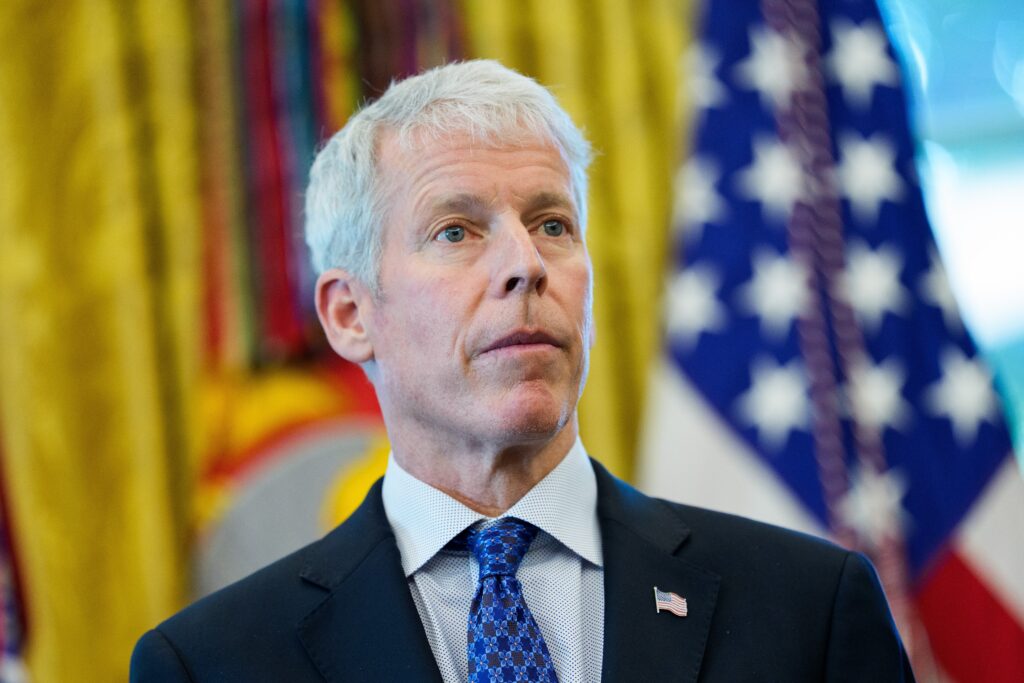 Donald Trump’s Energy Secretary Chris Wright will hold “An Honest Conversation about How to Fuel Our Lives” with Occidental Petroleum President Vicki Hollub. | Pool photo by Aaron Schwartz via EPA
Despite the steady decline in political salience, the scientific reality is that climate change has only grown more dangerous. Research on the tipping points that could cause abrupt and dramatic shifts in the global climate, like the collapse of the Amazon rainforest or the ocean cycle that keeps Europe from freezing, shows they are ever more alarming and imminent.
That drift is understandable, given “we’re currently at this time facing such an amplification of other turbulent, urgent issues,” said the director of the Potsdam Institute for Climate Impact Research, Johan Rockström, who provides formal and informal advice to many governments and global companies.
The challenge, he said, is “to be able to have several balls in the air at the same time. And many politicians, I think, fail there. Will the World Economic Forum fail there? I don’t think so. But it’s a bit too early to say.”