
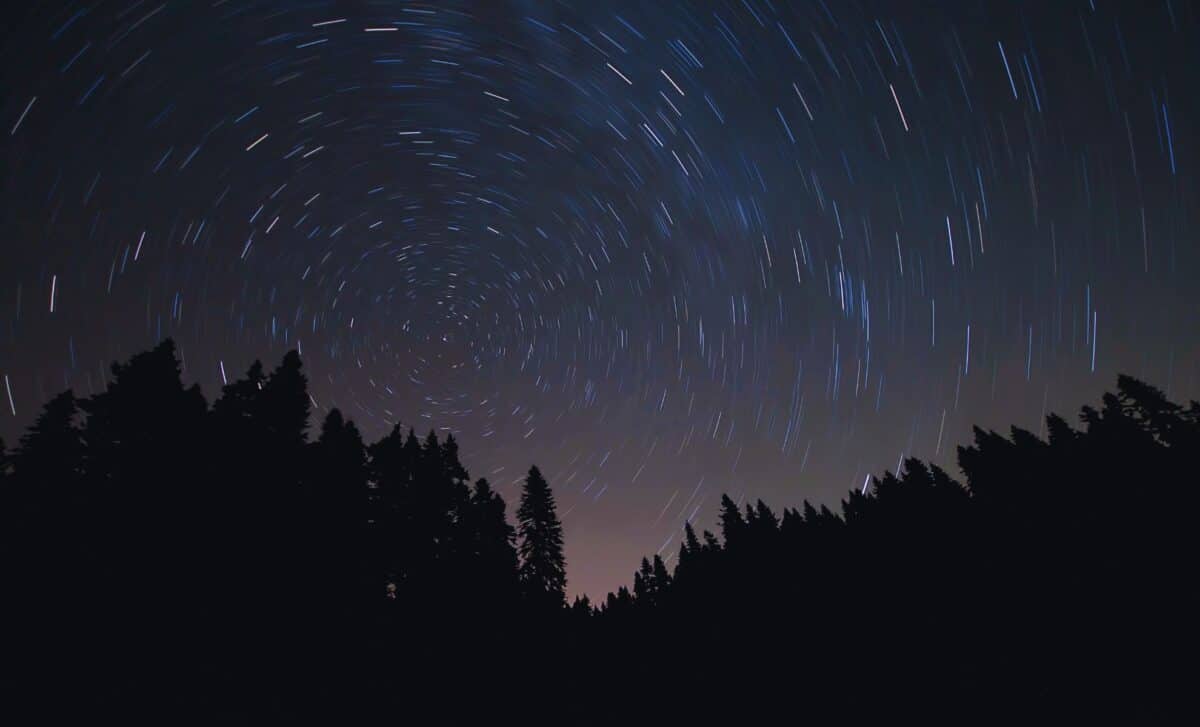
As 2026 gets underway, meteor enthusiasts are already looking beyond the year’s first major shower. The Quadrantids, which peaked earlier this month, were mostly drowned out by a full moon, but the months ahead promise far better conditions. With several key meteor showers expected to align with moonless or low-light skies, the rest of the year is shaping up to be unusually favorable for skywatchers.
August’s Meteors Go Full Dark
The Perseid meteor shower, active from mid-July to late August, will peak overnight on August 12–13. This year’s event is timed perfectly with a new moon, which will create exceptionally dark skies.
According to Royal Museums Greenwich, the Perseids are among the most beloved and reliable meteor showers, often producing dozens of bright meteors per hour. With no moonlight to compete, observers in 2026 can expect one of the most visually rewarding Perseid displays in recent memory.
The shower is best seen after midnight when the radiant, the point from which the shooting stars appear to originate, climbs higher in the sky. For those in rural or mountainous areas, the lack of artificial light will make the difference between a few sightings and a full night of shooting stars.
FIREBALLS ARE COMING🚨: 2026 is going to start with a spectacular cosmic event.
On the night of January 3, you can see up to 100 “shooting stars” per hour as the Quadrantid meteor shower peaks.
Don’t miss the dazzling light show! pic.twitter.com/KhEevcOfA7
— All day Astronomy (@forallcurious) December 29, 2025
Geminids To Close The Year On A High Note
While the Perseids may grab the spotlight in summer, the Geminid meteor shower is set to deliver an equally spectacular finale in December. Peaking during the night of December 13–14, the Geminids are known for their consistency and volume, with up to 120 meteors per hour under ideal conditions.
This year, a waning crescent moon will allow for mostly dark skies during the peak, offering an excellent chance to see both faint trails and bright fireballs. The Geminids, as Space.com pointed out, are known for delivering not only a high number of meteors but also a visually rich show, with colorful and slower streaks that are ideal for long-exposure captures.
The top astronomy events of 2026.
— On January 3–4, the Quadrantid meteor shower will peak, spraying bright fireballs across the Northern Hemisphere.
— On January 10, Jupiter reaches opposition — its closest, brightest point all year, visible all night.
— On February 17, an… pic.twitter.com/p97vZpVrQh
— Massimo (@Rainmaker1973) January 5, 2026
Not All Showers Shine Early
Before the summer highlights, the Lyrids in April and the Eta Aquariids in May will offer modest but meaningful activity. The Lyrids, peaking on April 22, are expected to be visible under a waxing crescent moon, providing decent conditions with around 18 meteors per hour at their peak.
The Eta Aquariids, on the other hand, are predicted to peak around May 5–6, but a bright waning gibbous moon will likely interfere with viewing, especially in the Northern Hemisphere. Still, this shower, linked to Halley’s Comet, can occasionally produce bright, fast-moving streaks in the hours before dawn.
In autumn, the Orionids (another product of Halley’s Comet) will reach their peak on October 21–22 under a waxing gibbous moon. As noted in the same report, this level of moonlight may obscure many fainter meteors, though a few brighter ones may still cut through after midnight.