
Key Takeaways
Wall Street strategists, optimistic about the outlook for stocks, are approaching the recent turmoil over President Trump’s efforts to acquire Greenland as a buying opportunity. Jonathan Curtis, CIO of Franklin Equity, said he expects the AI boom to continue to support tech mega-caps, but that the AI rally was likely to broaden out to other segments of the stock market this year. Small cap indexes and the equal-weight S&P 500 have outperformed mega-cap tech indexes since the start of the year, but some experts warn the first weeks of the year rarely reflect sustainable trends.
Yesterday’s sell-off struck many Wall Street strategists as a good buying opportunity, and investors appeared to agree.
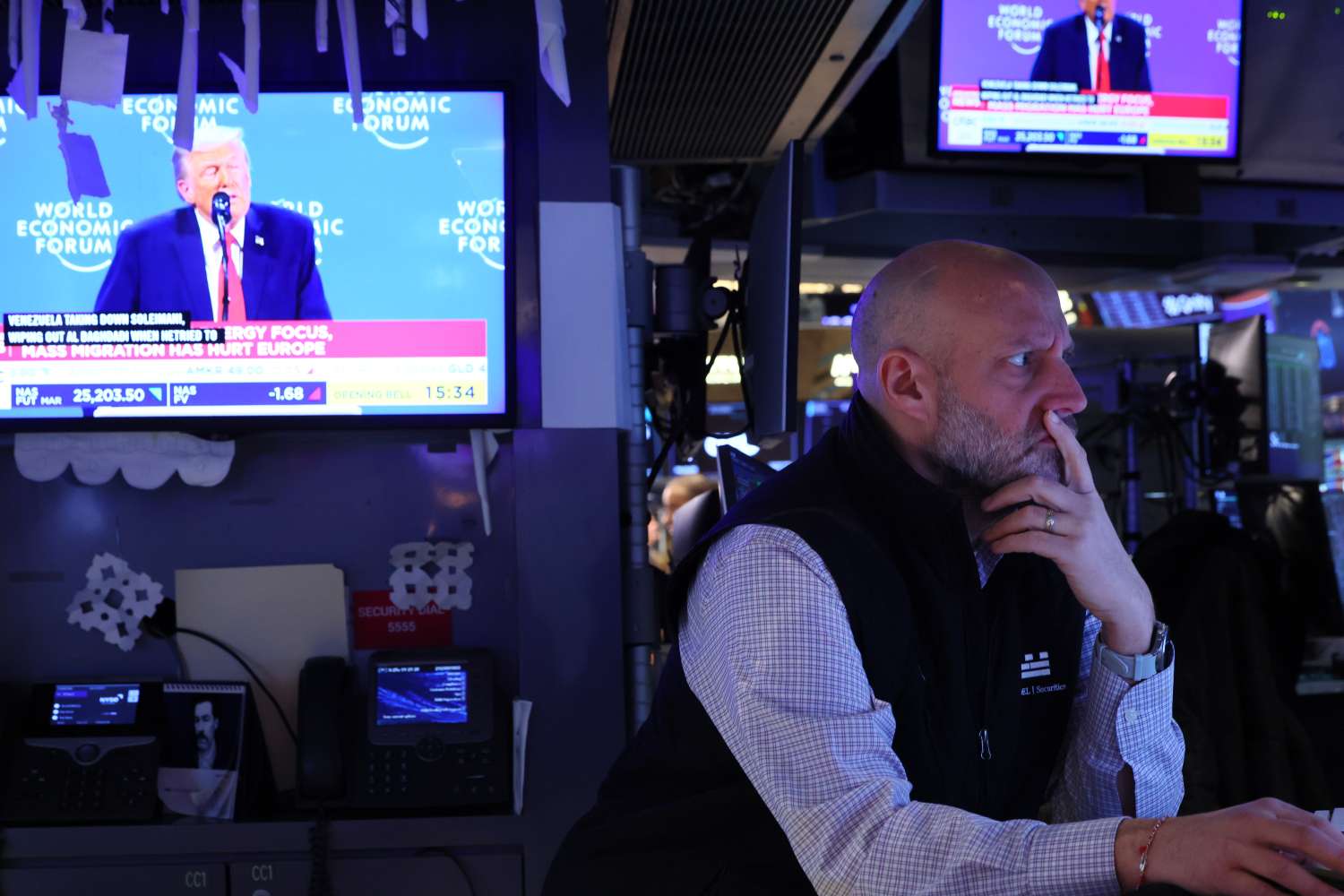
Stocks rose on Wednesday after President Trump said he would not use force to acquire Greenland, helping to ease concerns that yesterday drove stocks to their worst day in months. (Follow Investopedia’s live markets coverage here.)
Many on Wall Street have taken this week’s volatility as an opportunity to buy stocks on sale. “The long-term trends around innovation, and in particular the building of artificial intelligence and the application of artificial intelligence, are squarely intact,” said Jonathan Curtis, chief investment officer of Franklin Equity, during an appearance on CNBC Tuesday night. “And quite frankly I still think markets are under-appreciating what lies ahead. So this volatility is good for us.”
Why This Is Important
President Donald Trump’s unpredictable approach to diplomacy and trade policy has repeatedly roiled financial markets in the past year. Nonetheless, artificial intelligence and interest rate cuts lifted stocks to record after record, vindicating investors who bought the dips or stayed the course.
Many mainstays of the AI rally were hit by Tuesday’s rout. Every member of the Magnificent Seven closed in the red, while shares of Broadcom (AVGO) slumped more than 5%. “Those are all the types of names that we would want to be active in in this volatility,” Curtis said of the tech giants.
He was not alone in that assessment. Cathie Wood’s ARK Investment Management bought shares of Broadcom and Advanced Micro Devices (AMD) yesterday, adding to its bet the AI boom will continue to buoy chip stocks in 2026.
The Magnificent Seven stocks were mixed on Wednesday, with shares of chip giant Nvidia (NVDA) and Alphabet (GOOG), a recent favorite of AI investors, each up about 1%. Competitors Broadcom and Microsoft (MSFT) were down more than 2% in recent trading. The memory and data storage stocks that have led the AI rally for the past few months, including Sandisk (SNDK), Micron (MU), and Western Digital (WDC), were sharply higher after dodging yesterday’s sell-off.
Curtis expects shares of the Magnificent Seven to continue to perform well this year. “But I think we’re also going to see a broadening out of the markets as the application of AI diffuses,” especially in knowledge-work intensive industries like financial services and healthcare, said Curtis.
“What we’ve been telling clients is ‘Take advantage of this volatility. Continue to own the Mag 7. But also diversify your portfolio into those other companies,'” he added.
The broadening that Curtis forecasts has, to a certain extent, already begun. The equal-weight S&P 500 has outperformed the capitalization-weighted version so far this year, and the small-cap Russell 2000 is outpacing the mega-cap tech heavy Nasdaq 100.
“Part of this shift seems to be driven by a growing belief that the economy is settling into something resembling a so-called ‘goldilocks’ environment” in which inflation is contained and the Federal Reserve is easing monetary policy, wrote Kristian Kerr, head of macro strategy at LPL Financial, in a note on Tuesday. Investors may also be optimistic that the Fed will lower rates more aggressively starting in May, and that the federal government could pursue targeted stimulus to ease financial pressure on lower-income consumers ahead of this year’s midterm elections, according to Kerr.
Though Kerr warned that trading at the start of the year is often distorted by rebalancing and “tactical jockeying” among institutional investors. “In most years, it is not until mid-February or early March that the genuinely sustainable trends begin to really reveal themselves,” wrote Kerr.
Look for next week’s big tech earnings—including reports from Microsoft, Meta (META), Tesla (TSLA) and Apple (AAPL)—for signs of a more sustainable broadening. “If the market continues to reward smaller names and equal weight indices even after the mega caps report, then the probability of a meaningful and durable broadening rises in a significant way,” he said.