
NASA has quietly designed, built, and successfully launched an entirely new kind of spacecraft, and most people have not heard about it.
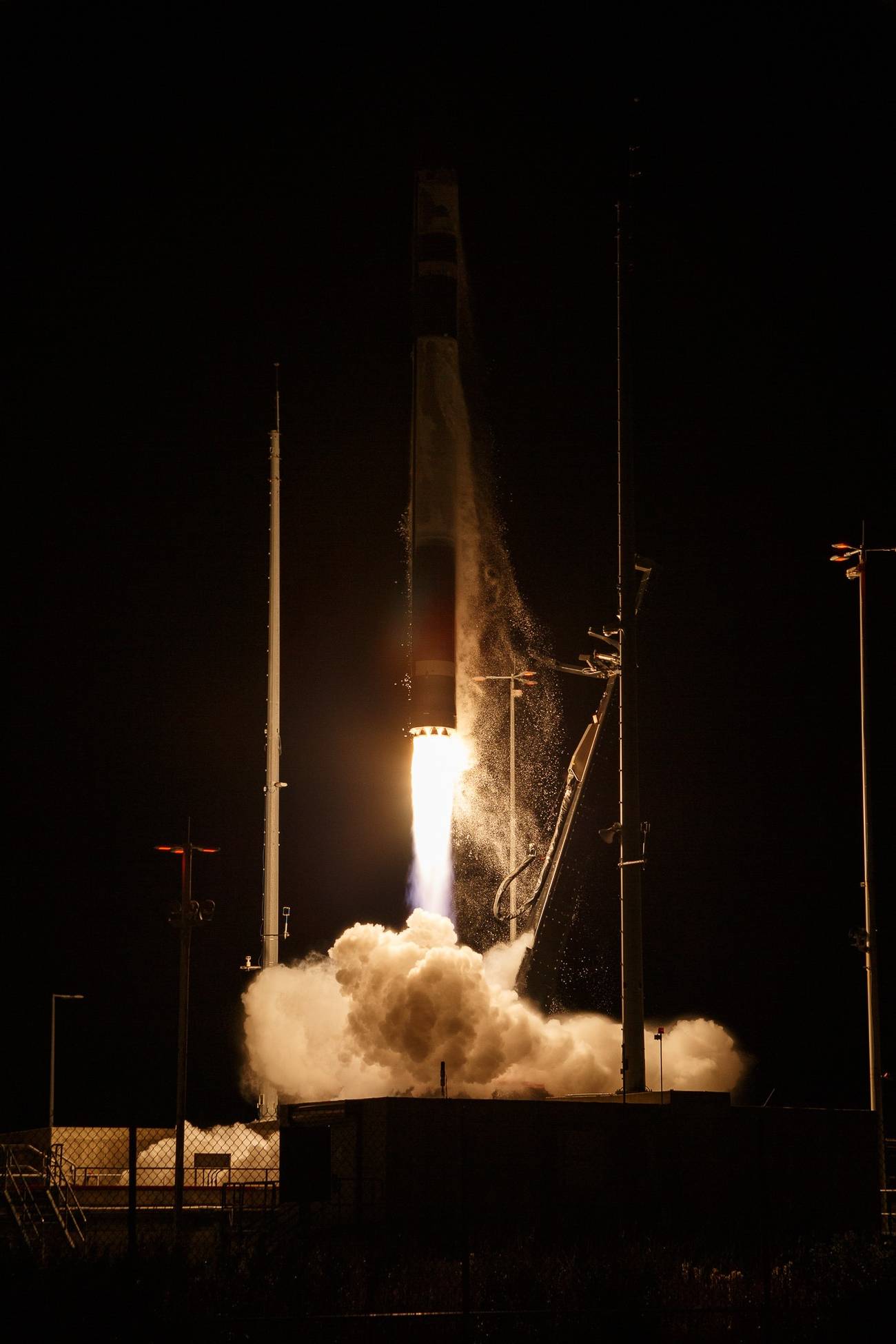
On December 18th, 2025, NASA and The Aerospace Corporation placed four experimental satellites called DiskSats into orbit. Unlike routine small satellite launches, this milestone mission represents the first successful demonstration of a completely new spacecraft design, one that abandons the box-shaped designs that have dominated small satellites for decades in favor of a thin, flat, disk-shaped form.
Until this launch, DiskSat existed only as a concept and ground-tested hardware with entirely different geometry (hence the name). With all four spacecraft from the test now deployed and communicating from orbit, NASA has confirmed that the design functions in the space environment.
NASA/Garon Clark
After the launch, I spoke with members of NASA and The Aerospace Corporation’s DiskSat demo mission team, who provided detailed responses explaining why the agency pursued this design, what problems it is meant to solve, and why this mission could quietly influence how future satellite constellations are built.
“DiskSat is not intended to be a CubeSat replacement. Instead, it is more akin to adding tools to the toolbox available for mission designers.”
How NASA Successfully Deployed Four Flat Satellites Into Orbit
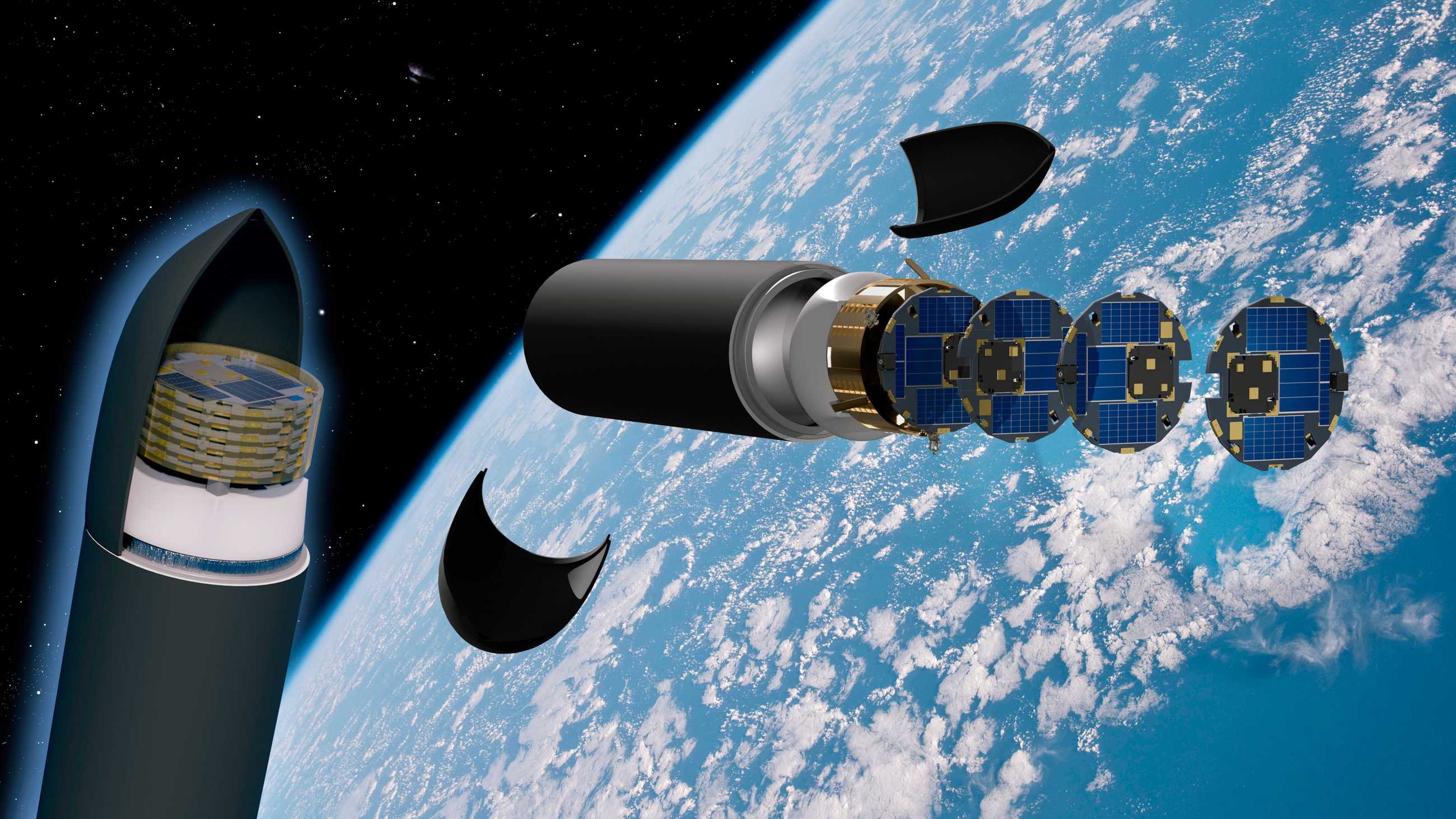
The DiskSat demo mission launched aboard a Rocket Lab Electron rocket, where the four spacecraft were mounted side by side inside a custom-built dispenser, arranged flat more like records than traditional box-shaped satellites.
After separation from the kick stage and clearing the payload fairing (think of the nose of the rocket opening to expose the satellites to space), each DiskSat was individually released into orbit.
Rocket Lab is a commercial launch provider that flies small satellites to orbit using its Electron rocket, which NASA often uses for technology demonstration missions.
According to information provided by the mission team to ScreenRant, the deployment sequence worked as designed, and contact was successfully established with all four satellites.
This mattered because DiskSat adds complexity after launch. As the mission team explained in their written responses, “Designing a dispenser that could securely hold the DiskSats during launch and deploy them was complex, but following its successful deployment the technical teams are pleased with its performance.”
This deployment system is central to the DiskSat concept, which is focused on deploying multiple satellites at once and reducing the number of launches required to build constellations.
As the mission team also noted, “The current demonstration dispenser was designed to be scalable.”
Why NASA Designed DiskSat as a One-Inch-Thick Satellite
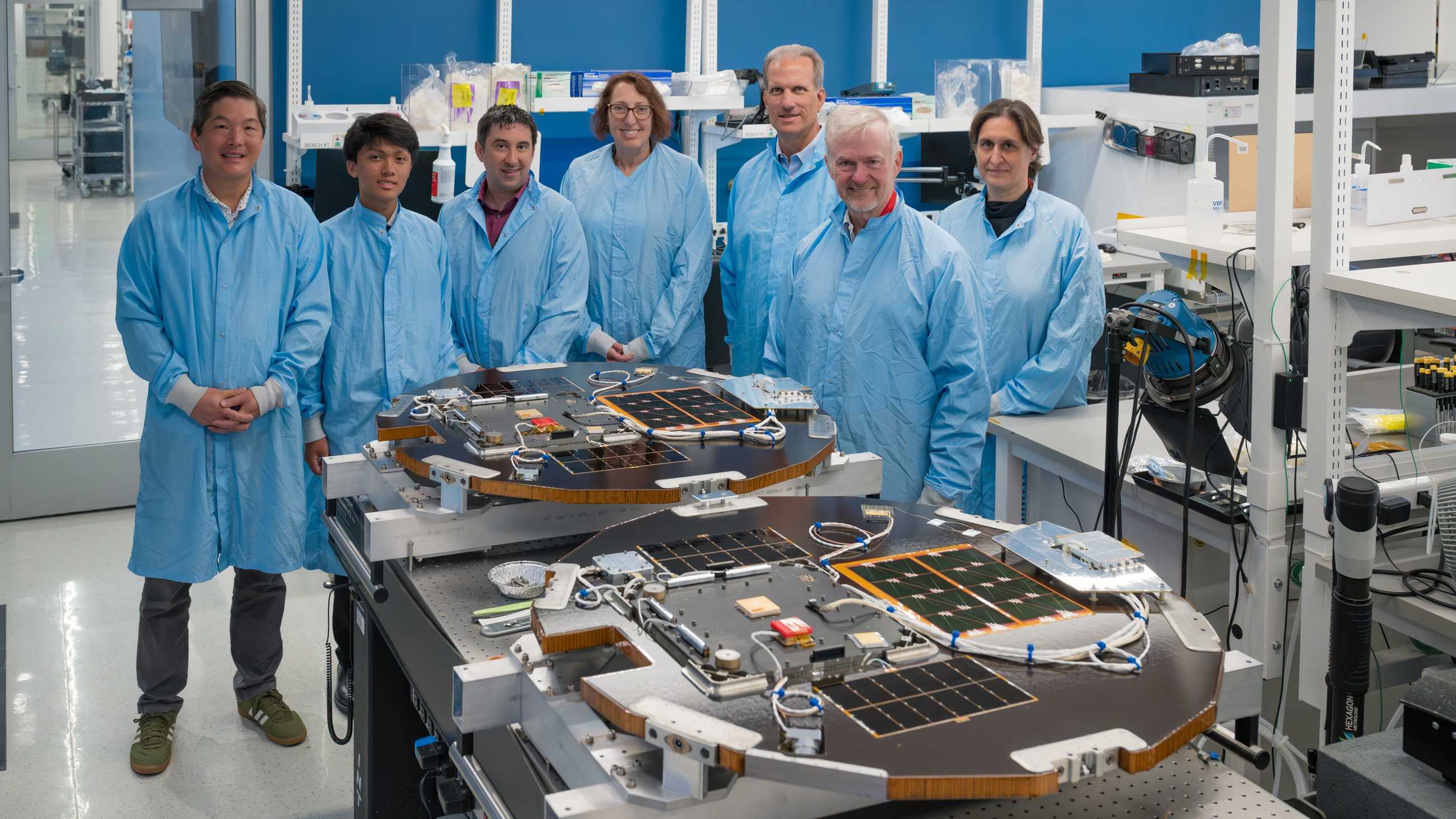
A team of engineers at The Aerospace Corporation’s facility in El Segundo, California, gather around two completed DiskSats as they conduct final checks before shipment. From left: Albert Lin, DiskSat system engineer, Elijah Balcita, intern, Darren Rowen, DiskSat chief engineer, Catherine Venturini, DiskSat principal investigator, and Eric Breckheimer, NASA program office program manager at The Aerospace Corporation; Roger Hunter, Small Spacecraft & Distributed Systems program manager The Aerospace Corporation
One of the most visually striking aspects of DiskSat is its thickness, or lack of it. Each spacecraft is just one-inch thick, an extreme design choice that almost seems unbelievable at a glance.
Each DiskSat is also roughly one meter across, giving it a wide, flat profile that looks more like a large coin than a traditional box-shaped satellite.
Members of NASA’s DiskSat engineering team tell me that the thin profile was driven by launch economics and the goal of rapidly deploying satellite constellations using small launch vehicles.
“The concept of DiskSat originated from the need for low-cost launch to quickly proliferate a satellite constellation using dedicated small satellite launch vehicles. The thinness of the design of the demo satellites allows us to maximize the number of satellites that can fit in a launch payload fairing.”
Structural considerations also played a role. The demonstration satellites needed to be thin enough to pack efficiently while still being strong enough to survive launch loads and operate reliably in orbit.
The flat geometry also changes how DiskSat behaves once in space. When oriented edge-on, the spacecraft presents a lower drag profile, enabling sustained operations at very low Earth orbit altitudes where atmospheric drag would normally shorten mission lifetimes.
DiskSat also notably does not rely on spinning for stability. It uses active attitude control systems to maintain its orientation, and during the demo mission NASA is closely monitoring how those systems perform as the spacecraft begins using its electric propulsion thruster (a low-thrust engine used to slowly change orbit) to adjust its path around Earth.
DiskSat vs CubeSats: Why NASA Built a New Satellite Design for High-Power Missions
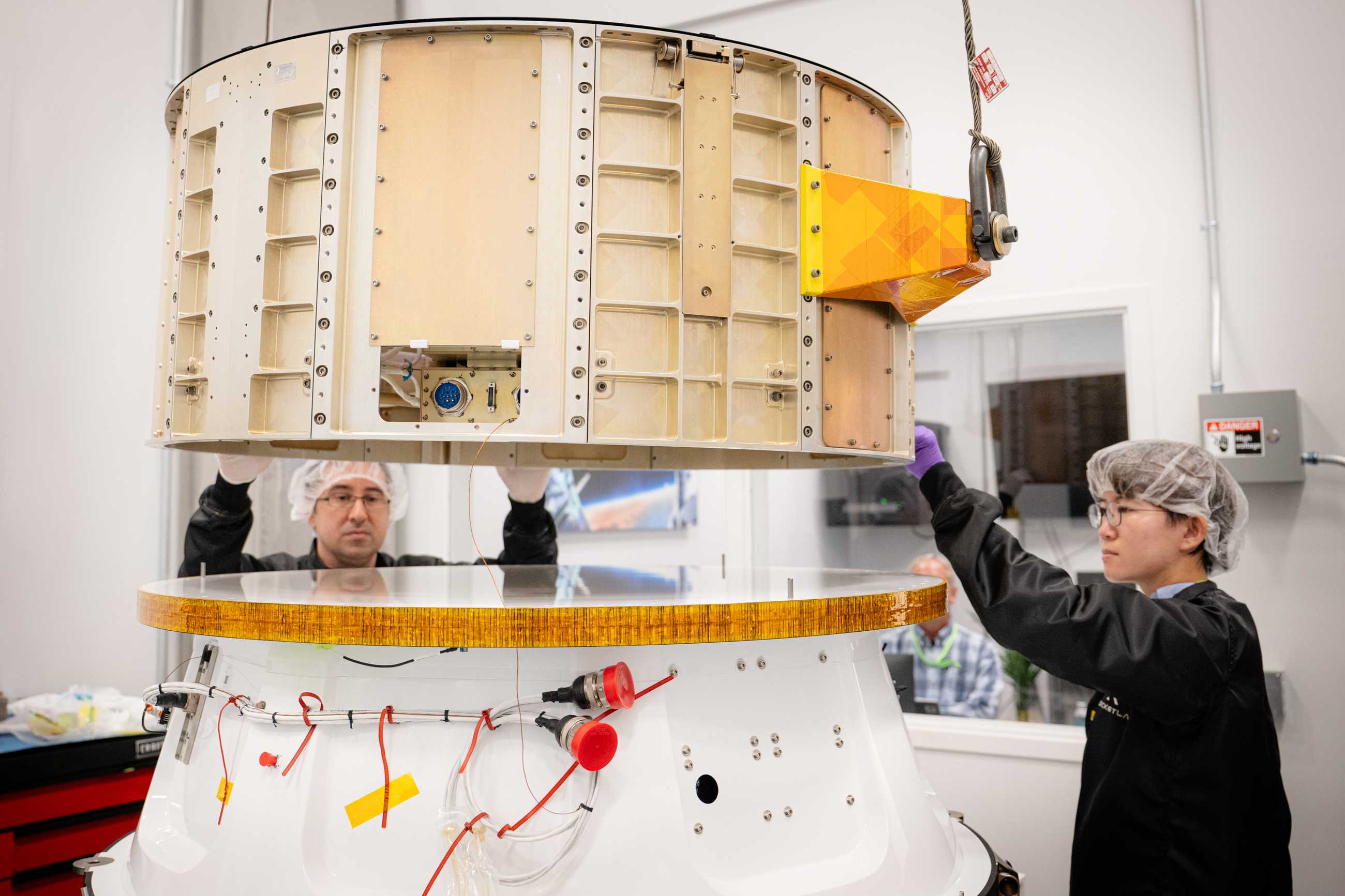 The Aerospace Corporation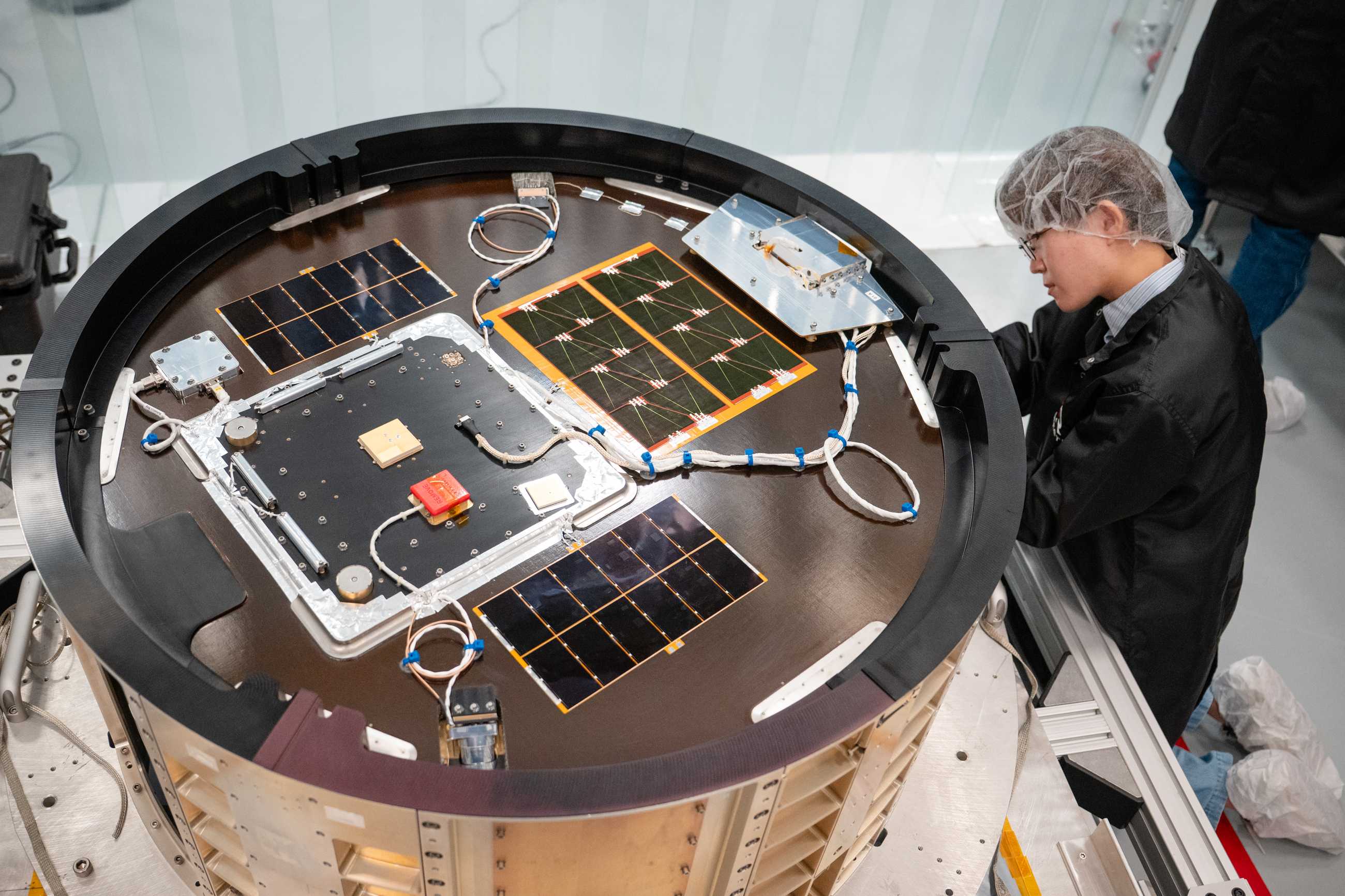
NASA has emphasized that DiskSat is not meant to replace traditional CubeSats, which remain widely used across science, commercial, and educational missions.
CubeSats are small, standardized satellites built from modular cube-shaped units, widely used by NASA, universities, and private companies for low-cost space missions.
Instead, DiskSat is intended to address specific limitations of CubeSat-based designs, particularly when missions require large surface areas for power generation. CubeSats often depend on deployable solar panels to meet power needs, which adds mechanical complexity and introduces common failure points.
“One of the biggest technical challenges for CubeSats is achieving large, deployed surface areas for payloads. DiskSat helps to address this challenge by offering a large, deployed surface area without the need for any deployment mechanisms or unfurling systems, which improves the manufacturability and reliability of the spacecraft.”
By spreading surface area outward rather than stacking volume vertically, DiskSat can host large numbers of solar cells directly on its body. Despite having a similar mass to a 6U to 12U CubeSat, a DiskSat offers more than 13 times the surface area on a single face.
As a result, the demo mission DiskSats are capable of generating substantial power without deploying any panels or moving structures.
“This DiskSat demo mission can generate over 100 watts of solar power without deploying any structures or solar wings.”
Eliminating deployable systems reduces mechanical complexity and removes one of the most common failure points in small satellite missions.
What Comes Next for NASA’s DiskSat Demo Mission
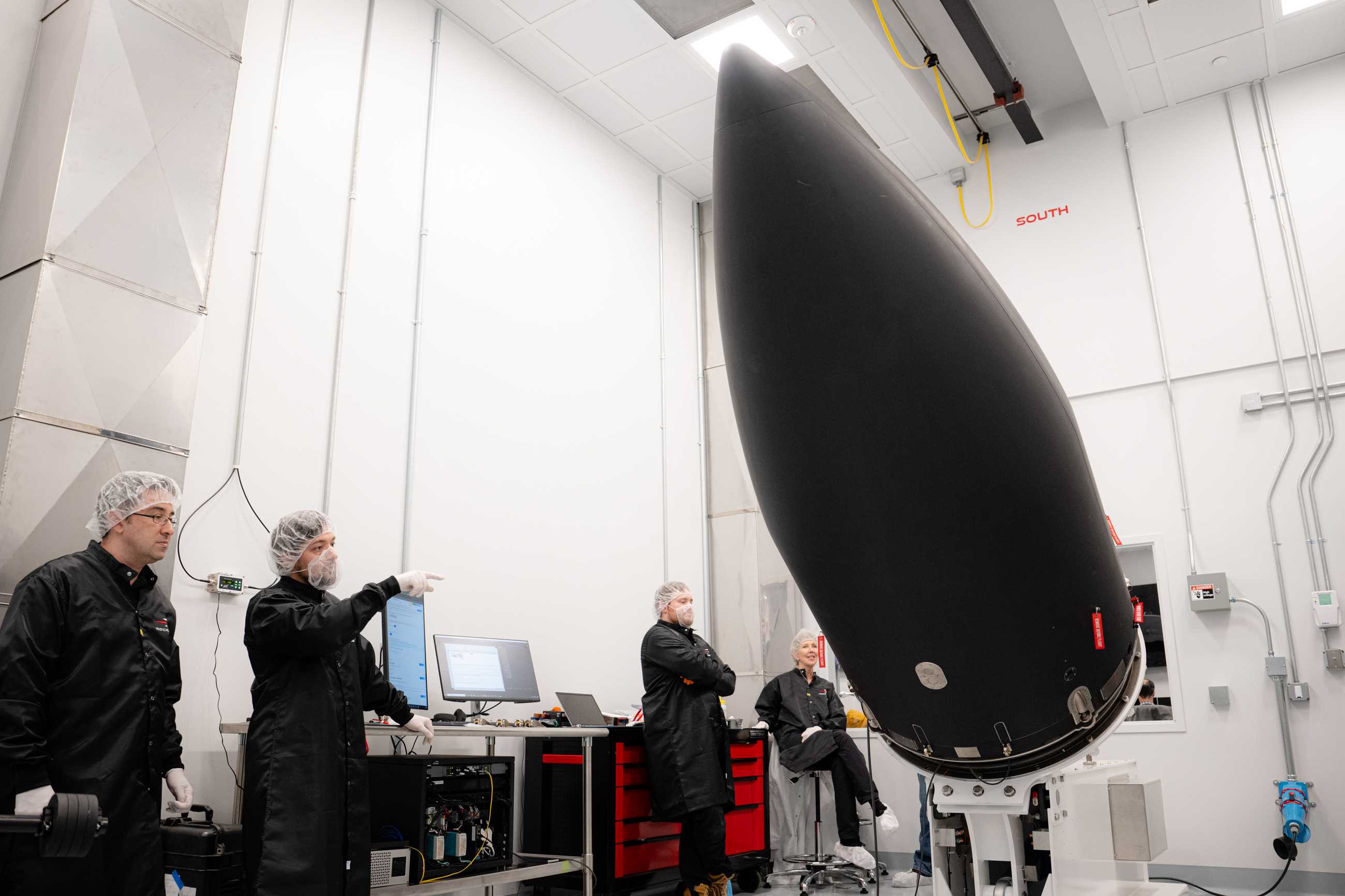
The Aerospace Corporation and Rocket Lab team finalize payload integration of DiskSats for the upcoming U.S. Space Force (USSF) STP-S30 missionThe Aerospace Corporation and Rocket Lab team finalize payload integration of DiskSats for the upcoming U.S. Space Force (USSF) STP-S30 mission. (credit: The Aerospace Corporation)
Since this is the first time a spacecraft with this geometry has flown, NASA is treating the DiskSat demo mission as a learning opportunity.
As the mission team explained in their written responses, “This is the first time we are testing this spacecraft geometry and its dispenser in the space environment.”
With deployment complete, attention is now shifting to how the spacecraft performs over time. According to the team, “The next complex element being closely monitored is the use of the electric propulsion thruster to achieve very low Earth orbit.”
Rather than making aggressive orbital changes, NASA is taking a cautious, step-by-step approach.
As the mission team noted, “The DiskSat team is planning to proceed incrementally during the orbit changes so that adjustments can be made to the software if required for the attitude control and thruster management.”
If the mission meets its objectives, DiskSat could enable a new class of small spacecraft that prioritize simplicity, power, and launch efficiency over traditional volume-based designs.
With NASA preparing for high-profile missions like Artemis II, which will send astronauts around the Moon, smaller technology demonstrations like DiskSat can easily pass with little public attention. One of the most notable aspects of the mission may be how quietly it happened.
DiskSat demo mission experts consulted for this article include:
Catherine Venturini, DiskSat Demo Mission Principal Investigator
Darren Rowen, DiskSat Demo Mission Chief Engineer
Eric Breckheimer, DiskSat Demo Mission Program Manager
Roger Hunter, Program Manager, NASA Small Spacecraft Technology Program